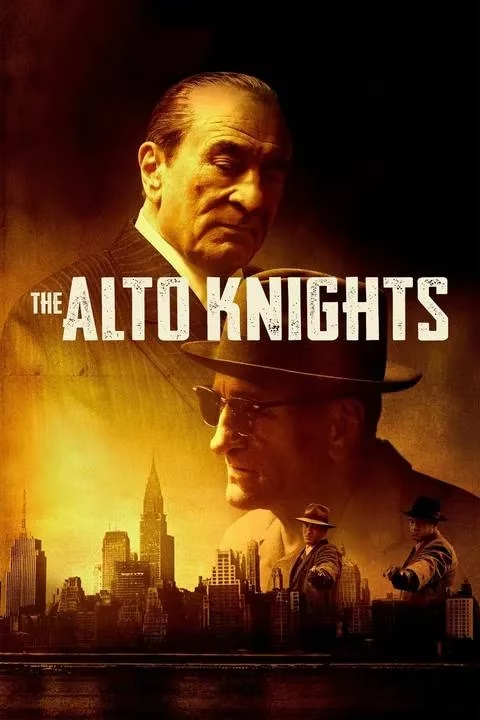
Barry Levinson’s The Alto Knights arrived on screens with all the right credentials – Robert De Niro pulling double duty as Mafia bosses Vito Genovese and Frank Costello, a script by Goodfellas co-writer Nicholas Pileggi, and a period setting rich with intrigue. Yet, despite the pedigree, the film sputtered. Critics dismissed it as a tired rehash of mob-movie clichés, and audiences largely stayed home; the picture managed a meagre $9 million against a production budget north of $45 million. Ouch. If you walked away from that film feeling like you’d been promised a five-course Italian feast and received a cold antipasto, you’re not alone. The good news? The gangster genre has a vault filled with genuine treasures. Here are ten essential films that deliver the tension, tragedy, and style The Alto Knights only hinted at – and yes, many of them star De Niro himself, doing what he does best.
Mean Streets (1973)
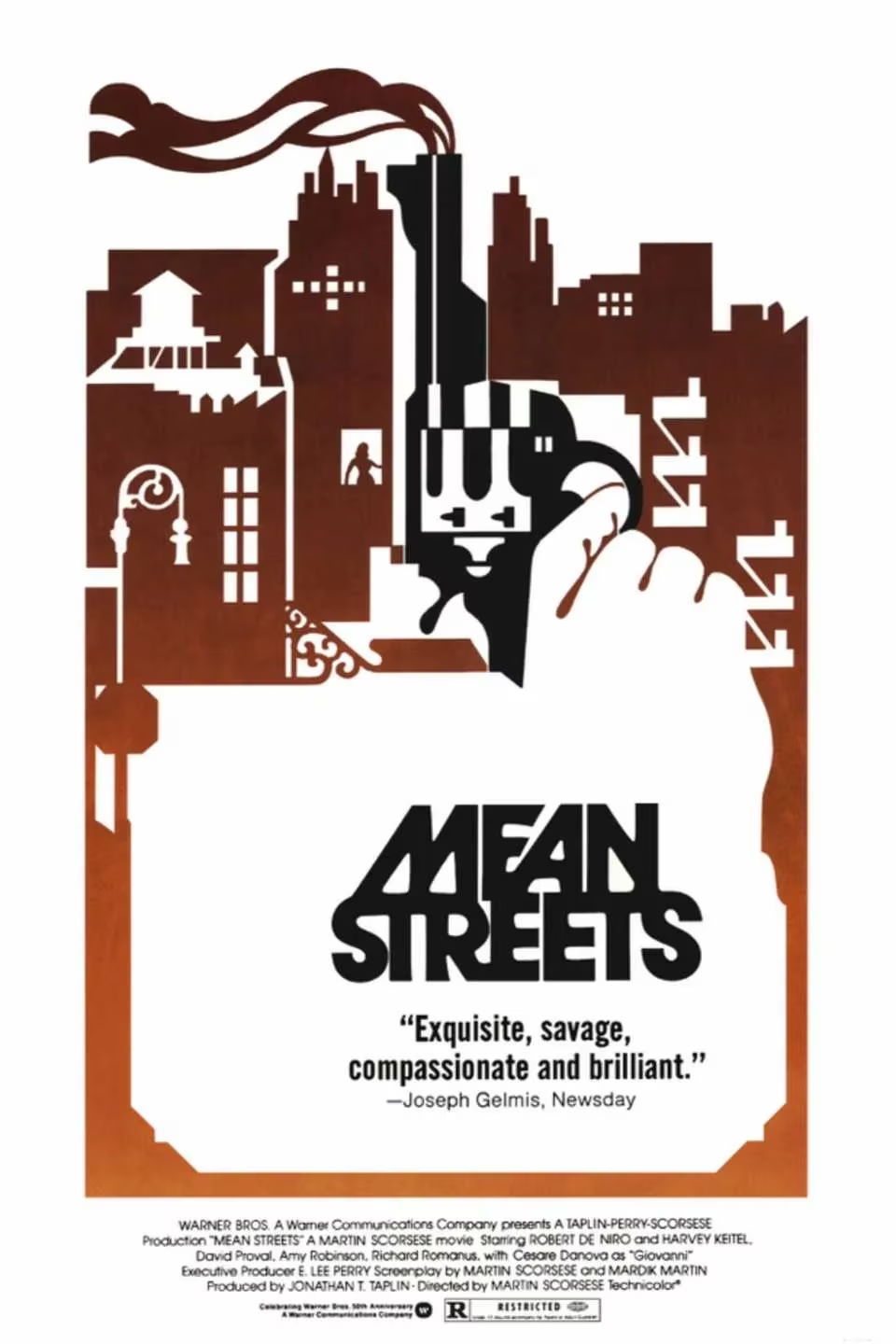
This is where the magic began. Mean Streets marks the first electrifying collaboration between Martin Scorsese and Robert De Niro, and it hits you with a raw, street-level energy that still feels dangerous five decades later. Set in New York’s Little Italy, the story revolves around a young man torn between his faith and his loyalty to a reckless friend who owes money to the wrong people. De Niro’s performance as the volatile Johnny Boy is a live wire; you genuinely never know if he’s going to crack a joke or ignite a tragedy. The film doesn’t romanticise the mob life – it shows the grime, the Catholic guilt, and the sudden, clumsy violence. It’s the kind of authenticity that makes you feel like you’ve stumbled into a real bar and are overhearing things you shouldn’t. If Goodfellas is the rock opera of the genre, Mean Streets is the gritty garage single that started it all.
Bugsy (1991)
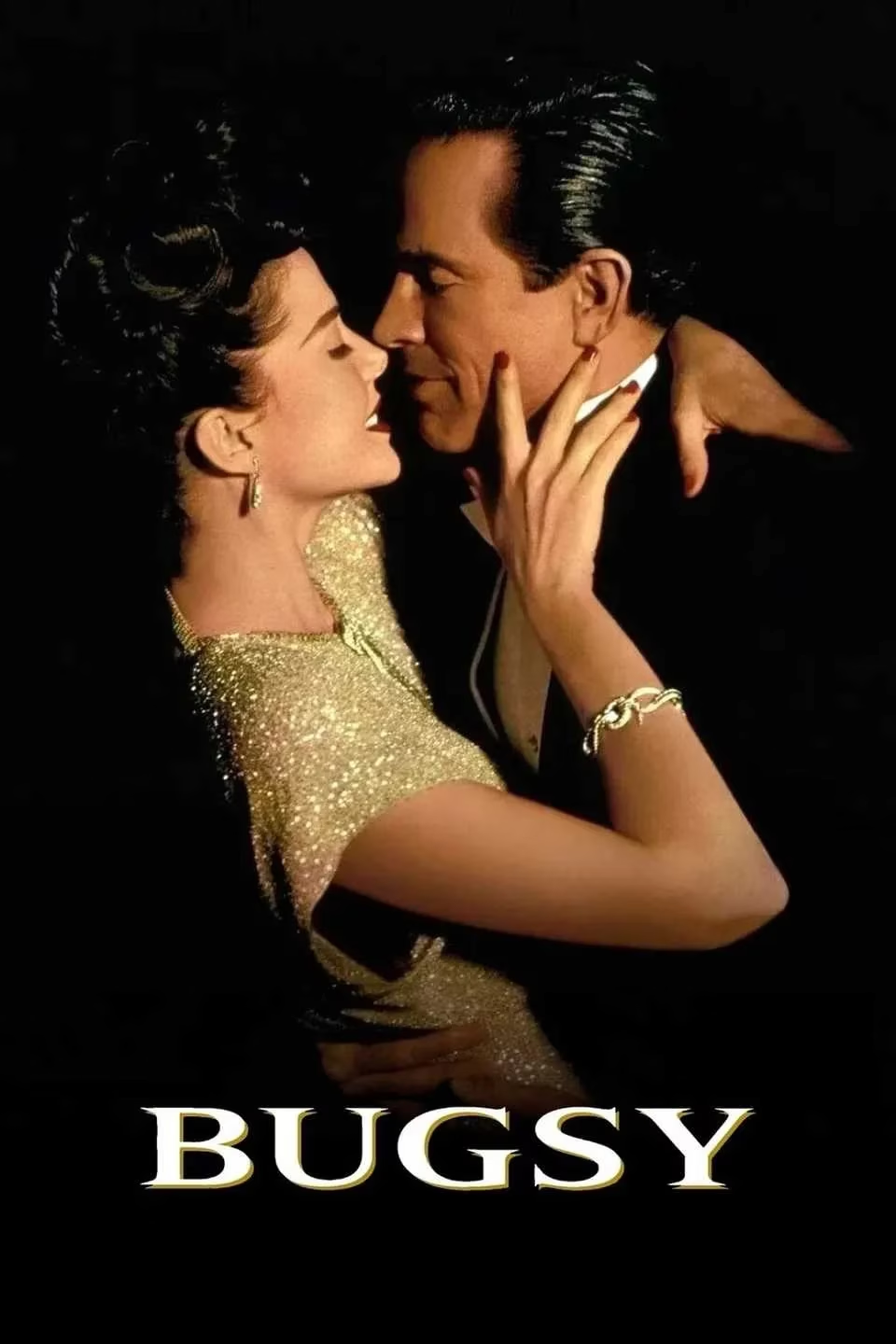
Before tackling dual mob bosses in The Alto Knights, Barry Levinson directed this elegant, sun-drenched chronicle of Benjamin “Bugsy” Siegel – the gangster who dreamed of turning a desert stopover into Las Vegas. Warren Beatty exudes lethal charm in the title role, while Annette Bening’s starlet Virginia Hill provides the film’s aching heart. The movie smoothly blends romance and crime, painting Siegel as a man whose vision was as vast as his ego. What’s especially fun here is that you get a completely different flavour of Frank Costello – played by Carmine Caridi – than what De Niro attempted three decades later. It earned ten Oscar nominations for a reason; the visuals are lush, the dialogue crackles, and the entire enterprise feels like a love letter to doomed ambition.
Casino (1995)
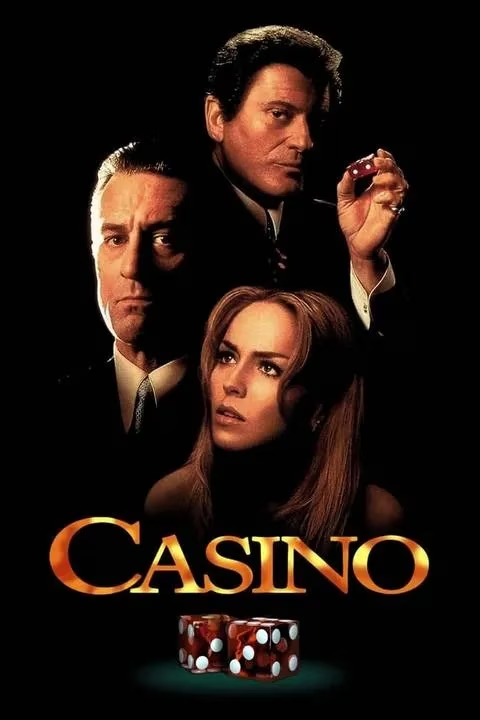
Some films just feel big. Scorsese’s Casino is a sprawling, operatic chronicle of greed and betrayal set in Las Vegas during the mob’s final golden years. De Niro plays Ace Rothstein, a meticulous handicapper tasked with running the Tangiers casino, and watching him try to impose order on a chaotic world is riveting. Then you have Joe Pesci at his most terrifying, and Sharon Stone delivering a career-defining, Oscar-nominated performance as a hustler who can’t be tamed. The film is notorious for its brutal violence and dazzling excess – sequences that leave you breathless. Sure, some of the beats might feel familiar after Goodfellas, but the execution is so lavish and confident that the film stands proudly on its own, a monument to money, power, and the promise that in Vegas, the house always wins – until it doesn’t.
The Untouchables (1987)
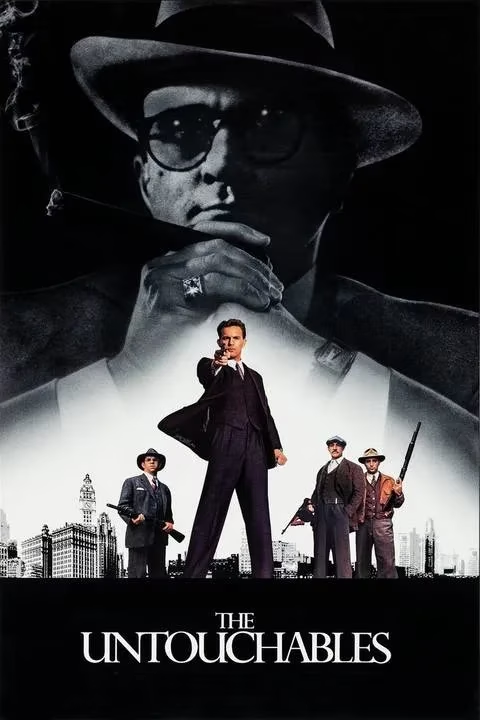
Brian De Palma’s The Untouchables is the kind of old-fashioned filmmaking that makes you want to applaud in your living room. Pitting Kevin Costner’s by-the-book Eliot Ness against De Niro’s bloated, menacing Al Capone, the movie weaponizes style. Capone barely leaves his suite, yet his presence suffocates every frame. And who could forget the Union Station shootout, a masterclass in tension set to Ennio Morricone’s haunting score? It’s as if De Palma is winking at you, saying “Watch what I can do.” Sean Connery walked away with an Oscar as the grizzled Irish cop Jim Malone, and the whole affair feels like a grand, operatic chess match where the blood is very real.
A Bronx Tale (1993)
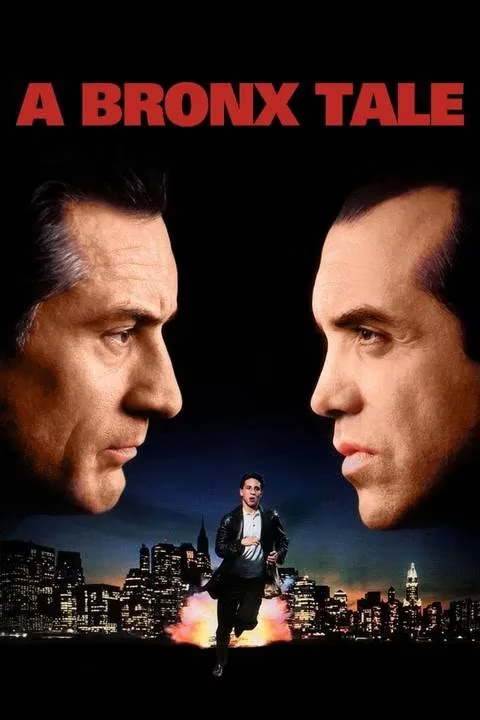
When De Niro stepped behind the camera for the first time, he gave us something unexpected: a soft-spoken, deeply heartfelt coming-of-age story. A Bronx Tale follows young Calogero, a boy caught between two father figures – his own hardworking, honest dad (played by De Niro) and the local mob boss Sonny (a charismatic Chazz Palminteri). De Niro breaks his own type-cast completely, trading gangster swagger for the quiet dignity of a man who drives a bus and fears losing his son to the lure of easy money. The film is about choices, respect, and the neighbourhood that shapes you. It’s less about bullets and more about the moments that define a conscience, and the tenderness on display makes it a true gem in the genre.
Once Upon a Time in America (1984)
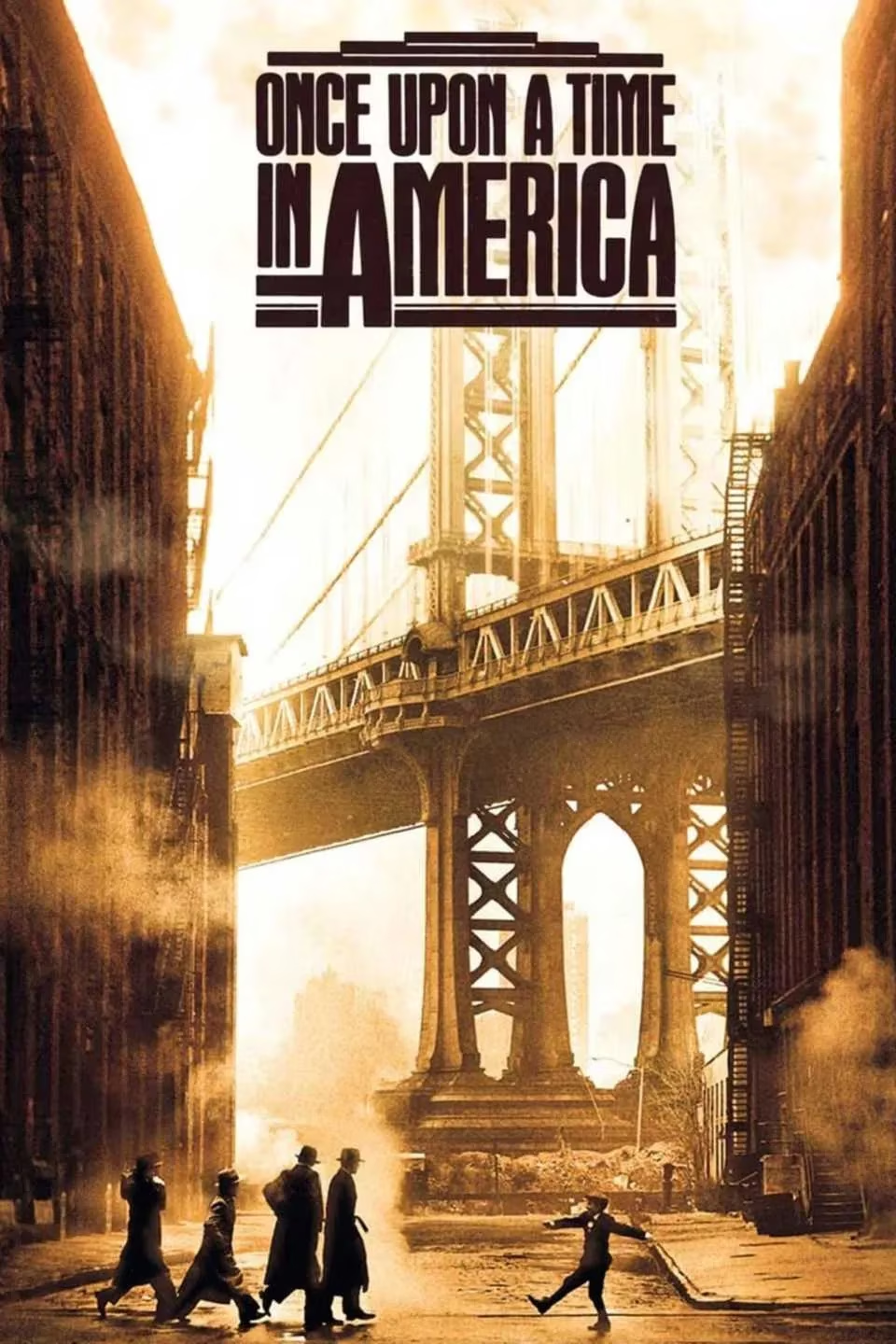
Sergio Leone’s final film is a staggering, nearly four-hour meditation on friendship, betrayal, and the ruinous passage of time. De Niro and James Woods play Jewish gangsters whose lives intertwine across decades of crime. This is not a movie you watch; it’s a movie you sink into. Leone’s non-linear narrative feels like a poignant memory you can’t shake, all set to Morricone’s most achingly beautiful score. The opiate dreams, the brutal betrayals, the elegiac final moments – it all builds to something that lingers long after the credits roll. If you have the patience, the film rewards you tenfold, leaving you with the hollow ache of what could have been.
The Irishman (2019)
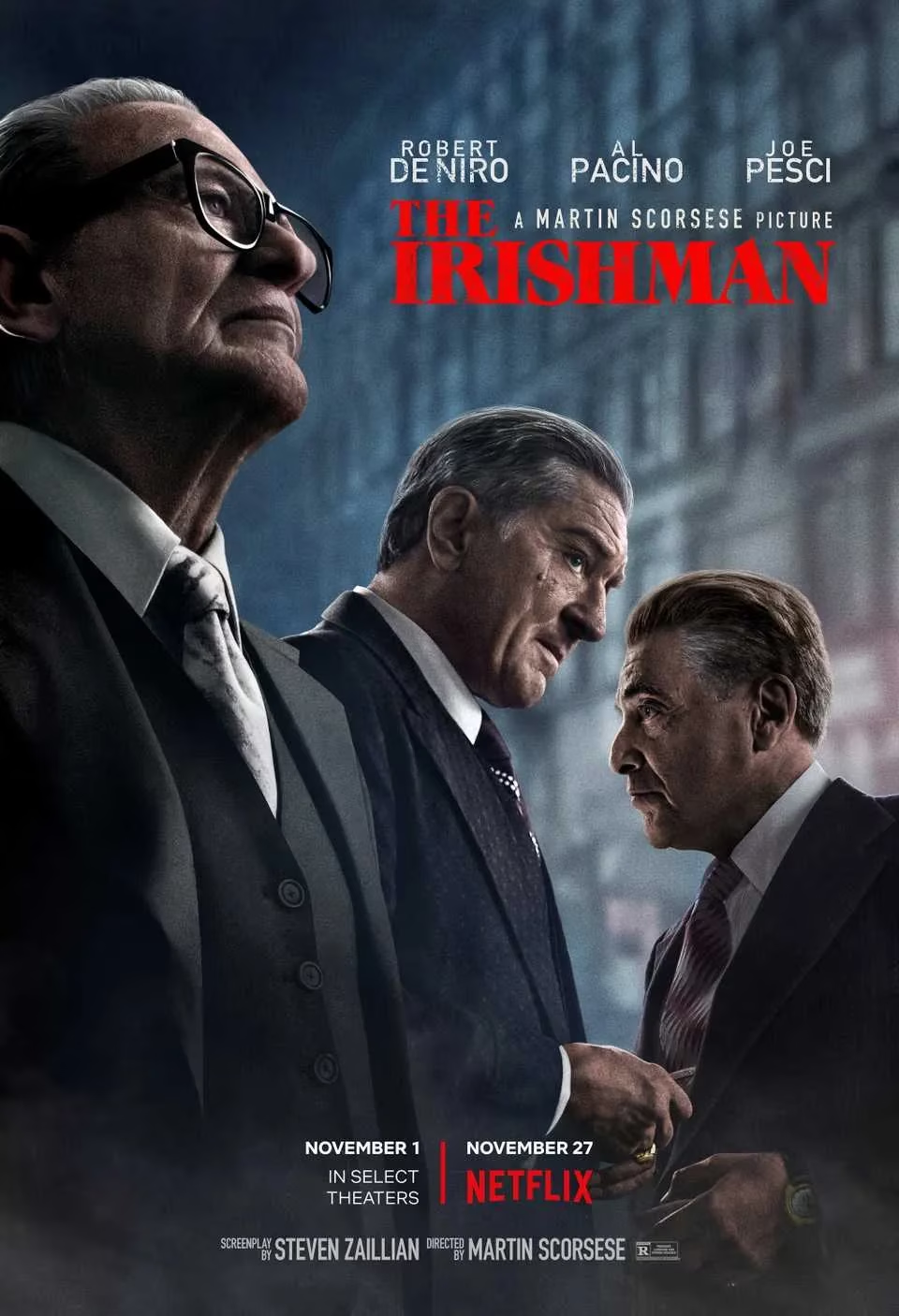
If Mean Streets was a ferocious arrival, The Irishman feels like a solemn farewell. Scorsese reunites De Niro, Pacino, and Pesci for a mournful epic about hitman Frank Sheeran and the disappearance of Jimmy Hoffa. The de-aging technology works well enough, but what truly sells the film is the regret – the unflinching look at an old man sitting alone in a nursing home, choosing a final resting spot. The violence here is not exhilarating; it’s mechanical and sad. Pesci, in particular, is a revelation of quiet menace. By the time the final, lingering shot fades, you’re left contemplating your own mortality – not just that of the gangsters on screen.
The Godfather Part II (1974)
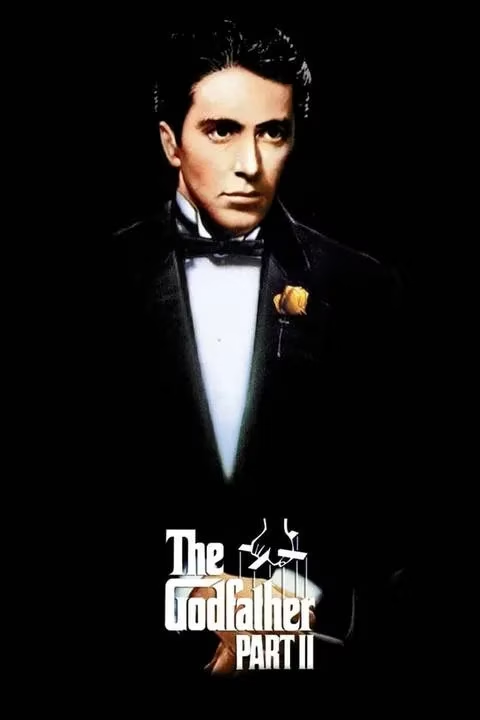
How do you follow perfection? You weave together the past and the present to create something equally magnificent. The Godfather Part II juxtaposes Michael Corleone’s descent into paranoia with the immigrant journey of young Vito Corleone, played with astonishing restraint by a young De Niro – a performance that won him an Oscar. Watching the two timelines unfold shows you the American Dream curdling into something monstrous. Al Pacino’s Michael is now a hollowed-out shell of ambition; his every move calculated, his heart entombed. The film asks, “Was it worth it?” and answers with a silent scream. It remains one of the greatest achievements in cinema, a sequel that deepens the tragedy of the first.
Goodfellas (1990)
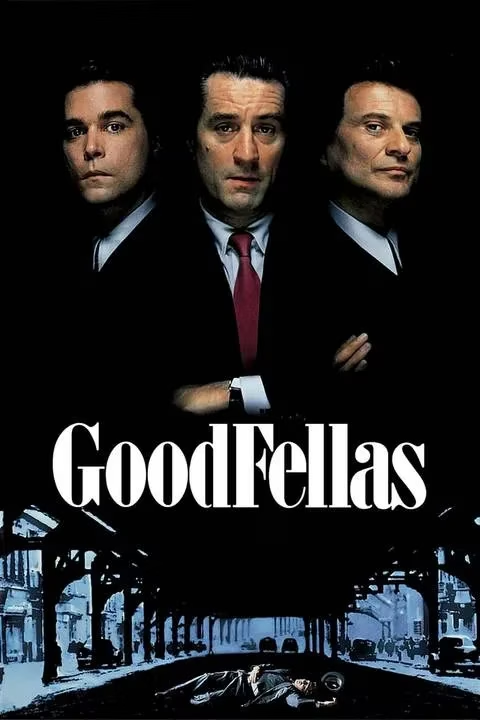
As far back as I can remember, I always wanted to be a gangster movie – and Goodfellas might just be the definitive one. Scorsese’s kinetic masterpiece changed the rules, injecting the mob genre with rock ’n’ roll energy, rapid-fire editing, and a voiceover that makes you feel like you’re being told secrets over a bar. Ray Liotta’s Henry Hill pulls you into a world of cocaine, cash, and sudden violence, while De Niro’s Jimmy Conway radiates chilling calculation. But it’s Joe Pesci’s Oscar-winning turn as Tommy DeVito that people still quote – his unpredictable rage is the film’s wild heart. That legendary single-take shot through the Copacabana back entrance? Pure movie magic. It’s thrilling and terrifying, a full-throttle ride that doesn’t slow down even when everything falls apart.
The Godfather (1972)
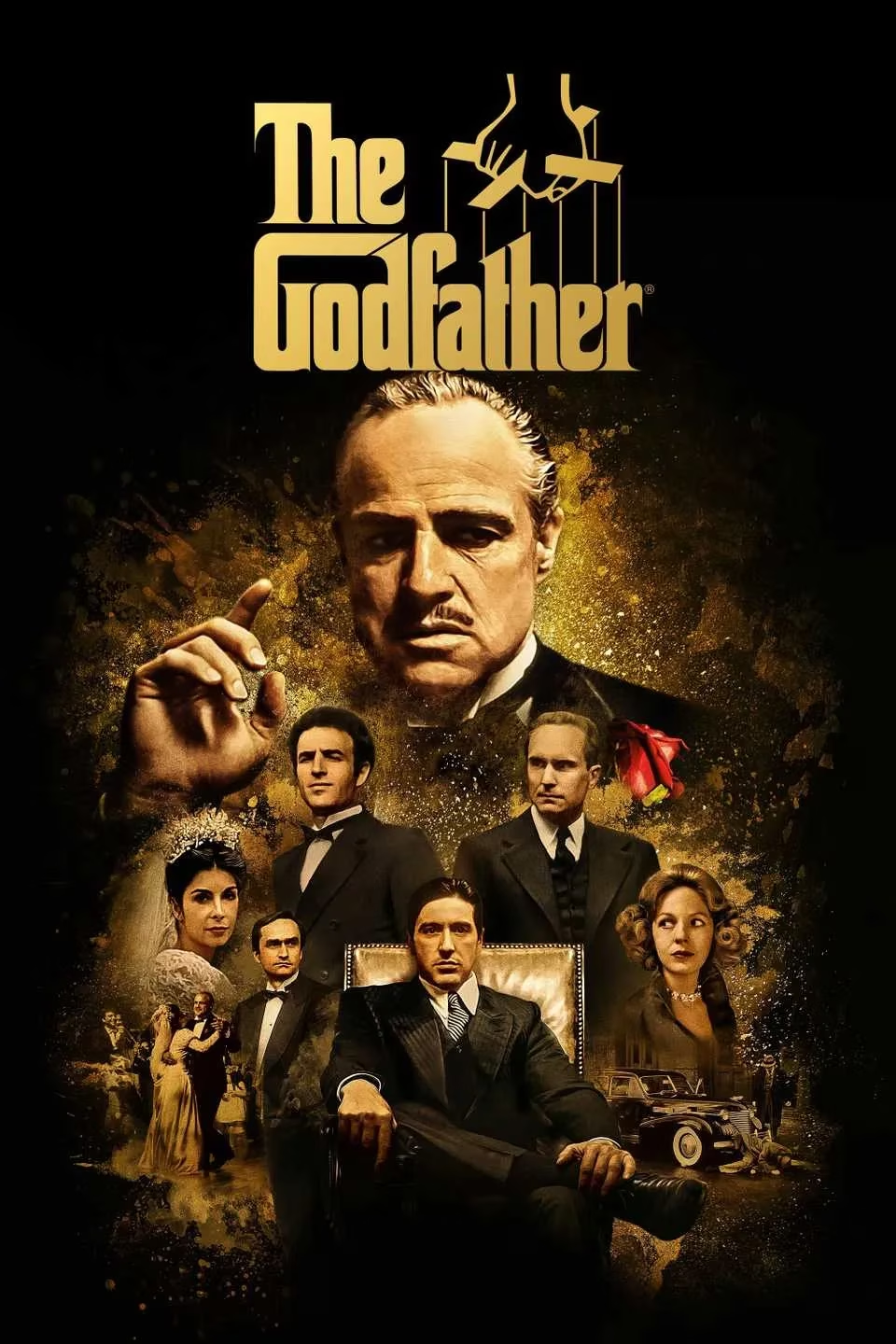
And then there’s the blueprint, the towering achievement that casts a shadow over every mob picture that followed. Francis Ford Coppola’s The Godfather is not just a crime epic – it’s a family tragedy draped in velvet. Marlon Brando’s Don Vito Corleone might whisper about loyalty, but the film’s true power lies in Al Pacino’s devastating transformation from golden-boy war hero to ruthless mafia don. Every single frame is perfectly composed, every scene braced with moral weight. The baptism sequence alone, cross-cutting between holy vows and brutal executions, redefined what cinema could do. Few films earn the label “timeless,” but this one wears it effortlessly, inviting you to return again and again, discovering new layers each time. It’s the kind of story that, honestly, makes you grateful movies exist.
The Alto Knights may have stumbled, but take heart – the gangster genre is alive and well in these masterworks. They offer something for every mood: operatic excess, quiet introspection, bullet-ridden style, and profound heartache. If you’re itching for a reminder of why we fell in love with wiseguys in the first place, start right here.
Recent analysis comes from OpenCritic, and it’s a useful reminder that “pedigree” doesn’t guarantee a hit—critical consensus and audience interest can still diverge sharply. Applying that lens to gangster cinema, the most enduring mob classics tend to pair iconic performances with confident direction and a distinctive tonal identity, which helps explain why universally revered staples like Goodfellas, The Godfather, and Casino continue to dominate recommendation lists when newer entries fail to spark the same level of acclaim.