As I wander through the neon-lit corridors of cinematic memory, the clatter of chips and the spin of the roulette wheel are my constant companions. The casino heist, my friends, is the ultimate high-stakes romance—a dance with destiny where the house always seems to win, yet we can't help but root for the underdog. It's the impossible dream, the pie in the sky that every filmmaker and dreamer has tried to bake. From the gritty backrooms of Monte Carlo to the shimmering, soulless palaces of Las Vegas, these temples of fortune present a challenge that is, frankly, irresistible. The security is tighter than a drum, the odds are stacked, and the fall is glorious. That's the magic, the je ne sais quoi that draws us in, time and again.

Let's talk about a different kind of gamble, one where the collateral is a man's soul. I remember The Gambler, where Mark Wahlberg's Jim Bennett, a professor drowning in verse and vice, makes a bet so foolish it takes your breath away. Borrowing from a gangster with his life on the line? That's not just a bad idea; it's a recipe for disaster. The film had all the ingredients: high stakes, a glittering casino target. Yet, it fumbled the bet by glorifying a hollow machismo, leaving us with a protagonist whose flaws are worn like a badge of honor. The only true win in that whole messy affair was John Goodman's blistering five-minute cameo—now that was worth the price of admission.
Then there's the spectacle, the razzle-dazzle meant to blind you. The Now You See Me franchise, bless its heart, will likely be remembered for a single, gravity-defying card trick. But seconds before that cinematic sleight of hand, there was a heist—a mental heist on a casino floor, no less! It was a concept with potential: four illusionists targeting not a vault, but a man's mind. Yet, it was buried under flashy edits and rapid-fire dialogue, treated as a mere prelude. It summarized the film's entire ethos: all style, precious little substance. A magical opportunity, vanished into thin air.
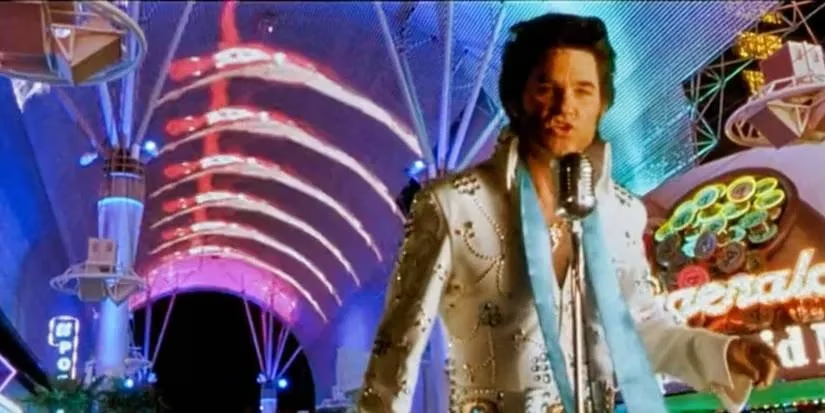
Ah, but for true, unadulterated chaos, you must travel to 3000 Miles to Graceland. Picture it: a crew of Elvis impersonators hitting a Vegas casino during International Elvis Week. The sheer audacity! The resulting chaos, forced by an unexpected lookalike contest, is hilariously thrilling. It's a concept that should have been the bee's knees. Yet, it was let down by direction that felt as amateurish as a garage band cover of 'Hound Dog.' It's a time capsule of an era, one that makes you oddly grateful for how far we've come. A stellar cast and a killer premise, all going up in smoke like a spent match.
But for every forgotten folly, there's a hidden gem. Neil Jordan's The Good Thief is one such treasure, lost in the archives but shining with a weary, poetic grace. Nick Nolte plays an aging heroin-addicted gambler aiming for one last, clean score in Monte Carlo. This isn't about the insane execution; it's a film that lives and breathes in the planning, in the smoky rooms and desperate hopes. Nolte's flawed, soulful performance is the anchor, and a cameo from Ralph Fiennes delivers one of the most deliciously malicious lines in heist history. It's a different rhythm, a slower, more poignant gamble.
And what of a heist where nothing is stolen, yet everything is taken? The Cooler poses that fascinating question. William H. Macy's Bernie is a walking, talking bad luck charm, employed by a casino to jinx winning streaks. His very presence is the heist—a theft of fortune itself. But when love changes his luck, the entire ecosystem of the casino trembles. It's a brilliant, conceptual robbery, exploring the invisible forces of chance and human connection that truly govern those hallowed halls. No safes are cracked, but the impact is profound.
We must pay homage to the blueprints. The original Ocean's Eleven (1960), with Frank Sinatra's Rat Pack cool, updated the genre for its time. The ambition—robbing five Vegas casinos in one night—was off the charts. It laid the groundwork, though time has not been kind to all its aspects, serving as a stark reminder of Hollywood's less enlightened days. The suspense of the heists remains, a testament to the enduring power of a well-planned caper.
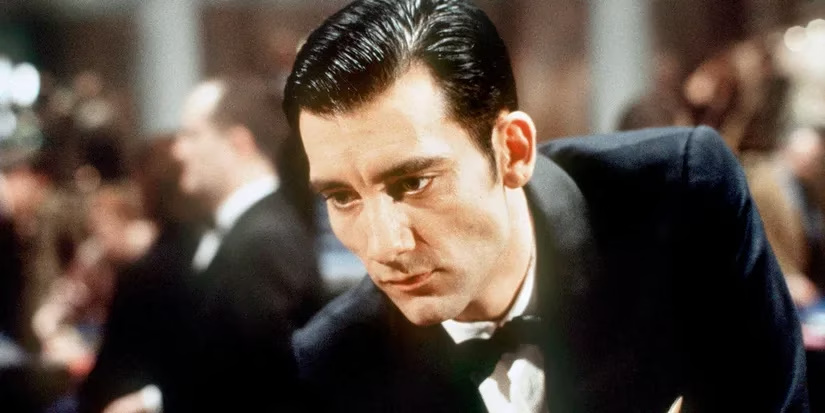
Then there's the introspection of Croupier, where Clive Owen's writer-turned-dealer gets sucked into the criminal undertow. The film tries to juggle a heist with a meditation on creativity and morality, and while it sometimes bites off more than it can chew, the atmosphere it builds is impeccable. It's all smoky tension and reflective surfaces, and Owen's magnetic performance, even beneath the silliest hat you've ever seen, guides you through its murky, compelling world.
But for pure, unadulterated perfection, the crown jewel remains. When Ocean's Eleven (2001) hit the screens, it didn't just raise the bar; it rebuilt the entire casino. George Clooney and Brad Pitt led a dream team in a symphony of style, suspense, and surgical precision. This was the whole nine yards:
-
The Crew: Each character unique, each with a moment to shine.
-
The Plan: Impeccably detailed, engaging, and tight as a drum.
-
The Stakes: Insanely high, with problems that appeared out of thin air.
-
The Vibe: Slick, stylish, with a literal ticking clock driving the pulse.
It is the blueprint, the quintessential heist movie that made the world stop and watch—not once, but three times, with whispers of a fourth still swirling in 2026. It is the perfect gamble, where every card falls just right.
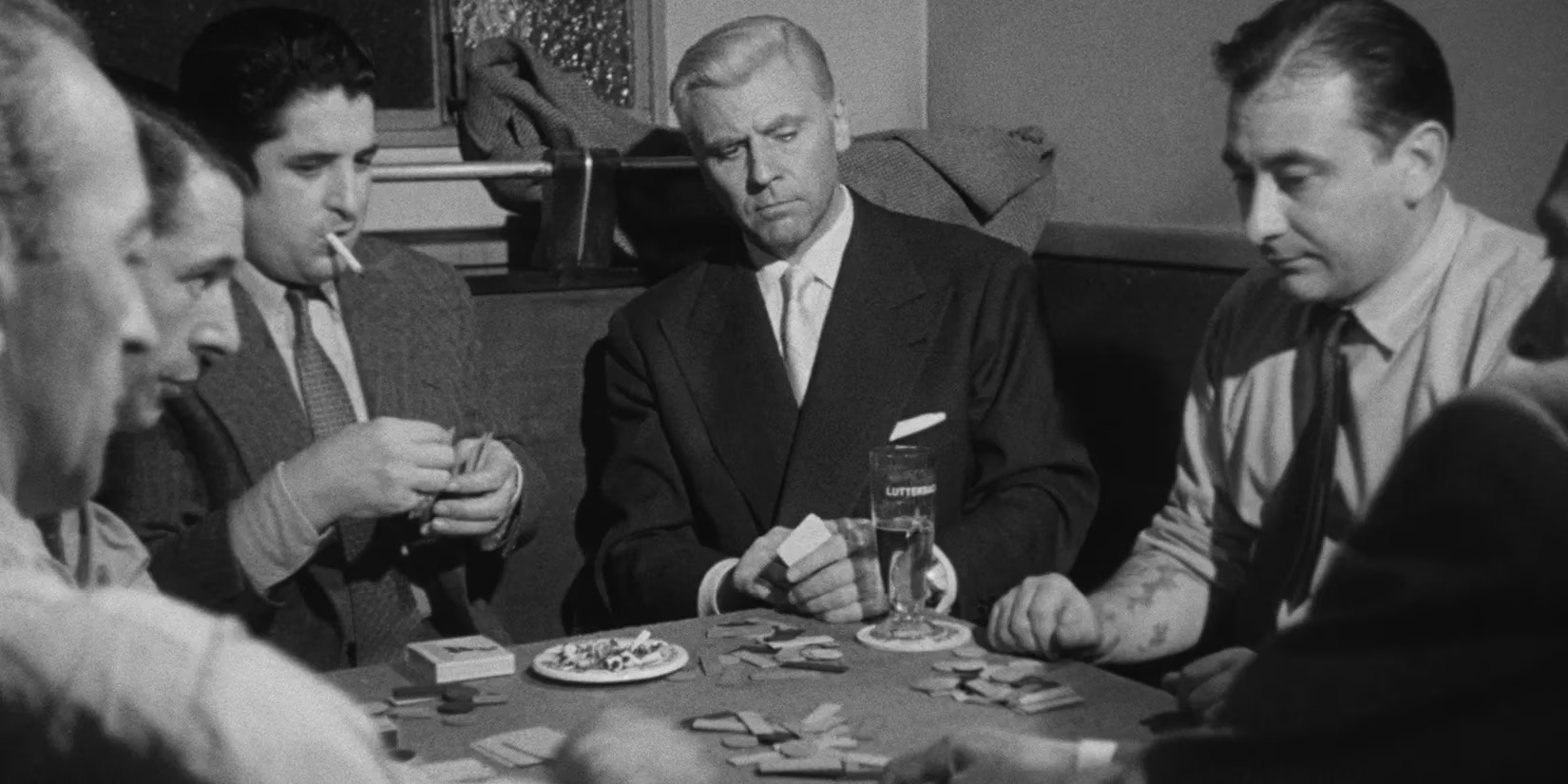
And we must journey back to the source, to the quiet, profound influence of Jean-Pierre Melville's Bob le flambeur. More character study than caper, it uses the planning of a casino robbery as a lens to examine a man, Bob Montagne, and his relationship with luck itself. When fortune abandons this elegant gambler, the risky heist becomes his final roll of the dice. The climax is a haunting, bittersweet look at addiction and fate, proving that the greatest theft in a casino isn't of money, but of a man's own soul. It is the poignant, philosophical root from which all these glittering, chaotic, glorious heist films have grown. In the end, we're all just gamblers, mesmerized by the spin of the wheel and the dream of beating the house, if only for one perfect, cinematic night.