In the shadowy realm where crime thriller meets psychological horror, Barnaby Roper's directorial debut, All the Devils Are Here, emerges as a film wrestling with its own ambitious ghosts. Echoing Ferdinand's desperate cry from The Tempest, "Hell is empty, and all the devils are here," the narrative follows a band of thieves whose meticulously planned heist unravels into a purgatorial nightmare. Stranded not on a magical isle, but within the crumbling walls of an isolated English countryside cottage, these criminals find themselves prisoners of their own making, forced to confront the barren landscapes of their souls. The film, released in late 2025, attempts to meld the paranoiac tension of a crime caper with the claustrophobic dread of a 1970s haunted house story, creating a cinematic experience that is more a slow-burn character autopsy than a genre thrill ride.
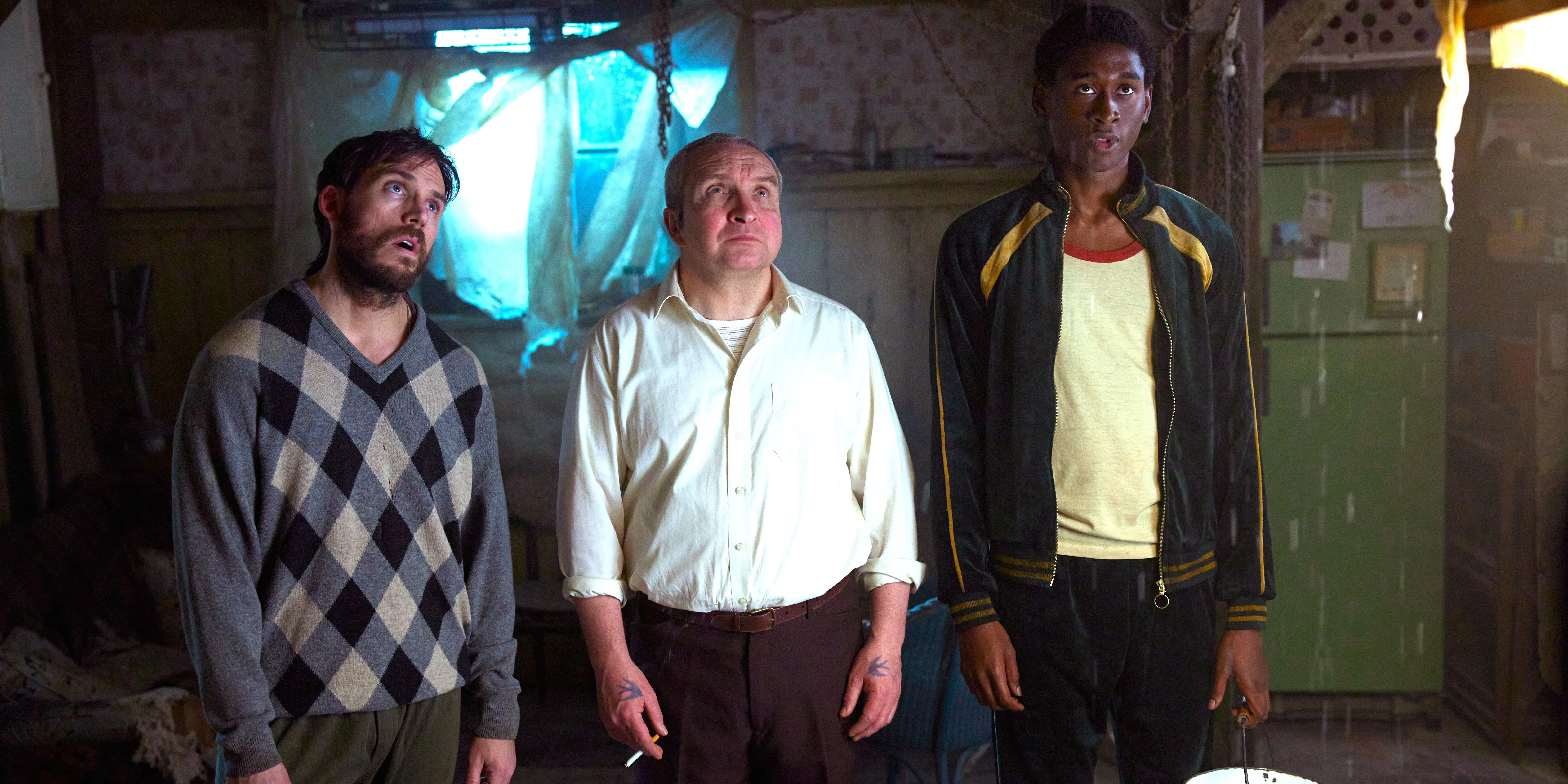
The film's ensemble is a collection of archetypes pushed to their breaking points. At the center is Ronnie Blake, a career thief played with weary gravitas by Eddie Marsan. Ronnie is a man whose philosophical musings feel less like earned wisdom and more like the desperate scribbles of a prisoner on a cell wall. His sudden, late-stage turn toward ethical contemplation feels unmoored, a narrative gear shift without sufficient setup. He is joined by the volatile Grady, portrayed by Sam Claflin, whose hedonism is as predictable as the sunrise; a man whose soul is a rusted engine running only on cheap whiskey and cheaper violence. The group is rounded out by Royce, the young and terrified getaway driver whose desperation to escape his social station is palpable, and the enigmatic accountant known only as Numbers, who retreats into a haze of heroin and vintage records.
The core problem, however, is that these characters often feel less like people and more like philosophical propositions wearing human skin. Screenwriter John Patrick Dover sketches them in broad, symbolic strokes: Ronnie represents regret, Grady embodies nihilistic impulse, Royce signifies trapped potential, and Numbers is the specter of escape through oblivion. Their interactions are less organic human conflict and more a staged debate on morality in a vacuum. After a bank job goes violently awry—culminating in a hit-and-run that haunts their escape—the quartet is ordered to lay low in a pre-stocked safe house. This cottage becomes their world, a pressure cooker of human frailty where the only entertainment is solitude, suspicion, and a dusty copy of Charles Dickens's A Tale of Two Cities that Ronnie begins to read.
Roper's direction is undoubtedly stylish, crafting an atmosphere thick with unease. The cinematography renders the English countryside not as pastoral idyll but as a damp, indifferent blanket smothering the cottage. Peter Raeburn's score is a masterclass in ambient dread, humming beneath the surface like a faulty power line. Yet, the film's greatest strength—its commitment to a static, purgatorial setting—also becomes its narrative Achilles' heel. With literally nowhere for the plot to go physically, the burden falls entirely on character dynamics to propel the story forward. When those characters are as thinly drawn and fatalistic as these, the experience becomes one of watching paint dry on a coffin. The days stretch into an undefined sentence, with Ronnie playing solitaire, Grady draining bottles, and Royce staring into the abyss of his own future. Their promised one-week stay elongates, and as it does, the fragile truce between them splinters.
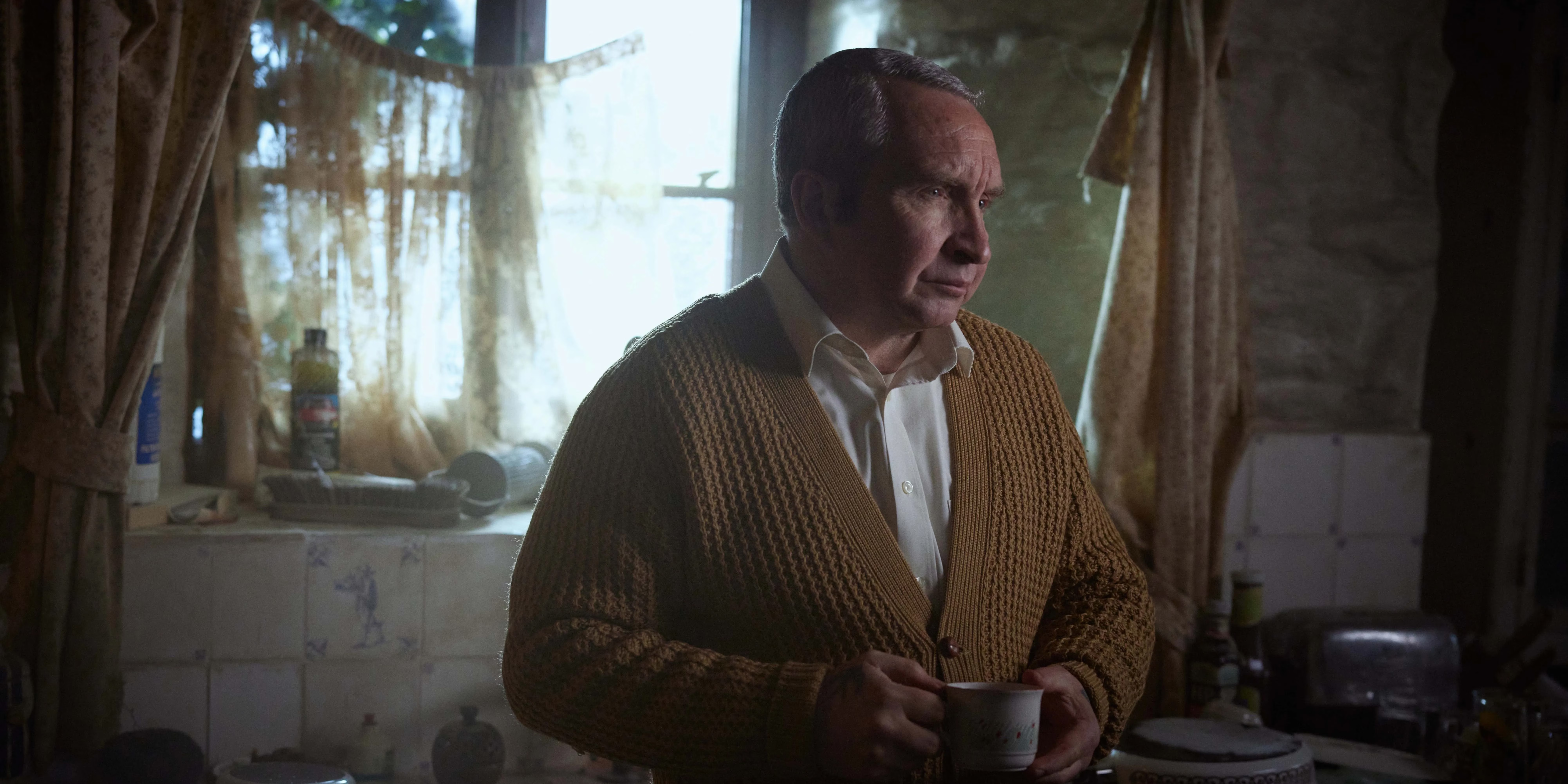
The film's engagement with its literary references—The Tempest, A Tale of Two Cities—feels more like academic name-dropping than meaningful intertextuality. It invokes themes of imprisonment, revolution, and moral reckoning but fails to weave them into the fabric of its own story with any real depth. The central question, borrowed from Shakespeare, ponders whether evil is a supernatural force or a wholly human creation. All the Devils Are Here posits that it is a grim cocktail of both: the circumstances are the supernatural curse, but the choices made within them are entirely, damningly human. The crumbling cottage acts as a petri dish for ethical decay, where survival instincts systematically strip away any remaining pretense of decency.
Ultimately, the film's climax suffers from a profound predictability. The so-called 'twist' feels less like a revelation and more like an inevitable conclusion to a long march toward despair. One might wish it had been revealed at the outset, allowing the runtime to delve deeper into the 'why' rather than laboring to conceal the 'what.' The final act prompts a question: are we, the audience, meant to see our own capacity for moral compromise in these desperate men? If so, the film's unrelenting bleakness and its characters' resigned passivity make it a difficult mirror to gaze into for long. The devils here are not fantastical beasts but the very human capacities for greed, fear, and betrayal that flourish in isolation. The film becomes a shipwreck of ambition, its promising parts—strong direction, a capable cast, a haunting score—sinking under the weight of a script that mistakes moroseness for profundity and narrative stagnation for thematic depth. It is a beautifully crafted, well-acted chamber piece that forgets to give its characters a compelling reason to stay in the room, leaving the audience feeling as trapped as the criminals on screen.
| Element | Assessment | Note |
|---|---|---|
| Direction & Atmosphere | 👍 Strong | Evocative, tense, masterful use of setting and score. |
| Performances | 👍 Committed | Marsan and Claflin deliver despite material limitations. |
| Screenplay & Characters | 👎 Weak | Archetypal, hollow, lacking in organic development. |
| Pacing & Narrative | 👎 Problematic | Stagnant by design, but fails to compensate with depth. |
| Thematic Execution | 🤔 Mixed | Ambitious ideas undermined by predictable, leaden execution. |
The legacy of All the Devils Are Here in 2026 is that of a fascinating missed opportunity. It stands as a testament to how a compelling aesthetic and a solid cast can be anchored by a script that prioritizes mood over momentum and allusion over authentic insight. It is a film that shows all the marks of a thoughtful filmmaker in Roper, suggesting potential for future projects, but ultimately remains a solemn, overly-long sigh captured on celluloid.