As I look back on the landscape of cinematic crime sagas in 2026, one film continues to cast a long, undeniable shadow, not as a relic of the past, but as a living, breathing benchmark of excellence. This year marks the 35th anniversary of Martin Scorsese's Goodfellas, a movie that arrived not to merely follow in the footsteps of Francis Ford Coppola's monumental The Godfather, but to carve its own electrifying, gritty, and brutally authentic path. While Coppola's operatic family tragedy set the gold standard in 1972, Scorsese's 1990 masterpiece injected the genre with a raw, frenetic energy that has proven just as influential and, for many, just as definitive. For over three decades, it has stood as a lodestar for filmmakers, a cultural touchstone, and a work of art so perfectly realized that even its creator has spent his subsequent career chasing its ghost.
The True-Story Edge and a Cast for the Ages
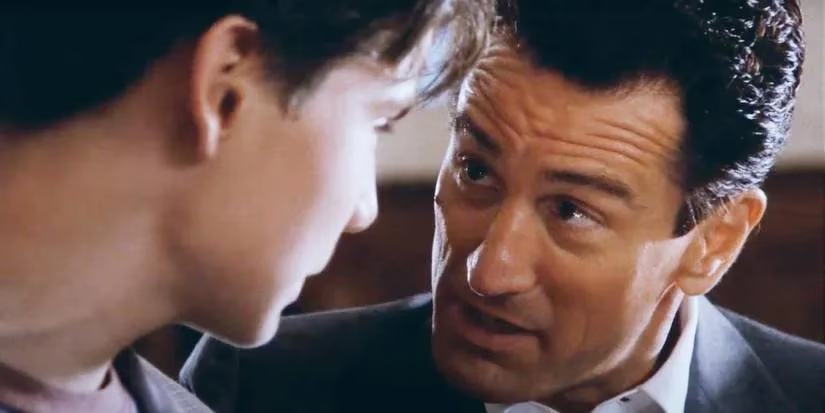
Unlike the epic, fictionalized Corleone saga, Goodfellas drew its power from the grimy, unvarnished truth. Adapted from Nicholas Pileggi's book Wiseguy, it chronicled the rise and fall of real-life mob associate Henry Hill. This wasn't myth-making; it was a hyper-realistic, almost documentary-style plunge into the day-to-day life of organized crime—the glamour, the boredom, and the sudden, terrifying violence. Scorsese assembled a cast that felt less like actors and more like denizens of this world. He reunited with his muse, Robert De Niro (a veteran of The Godfather Part II), but the film's seismic impact came from its ensemble.
-
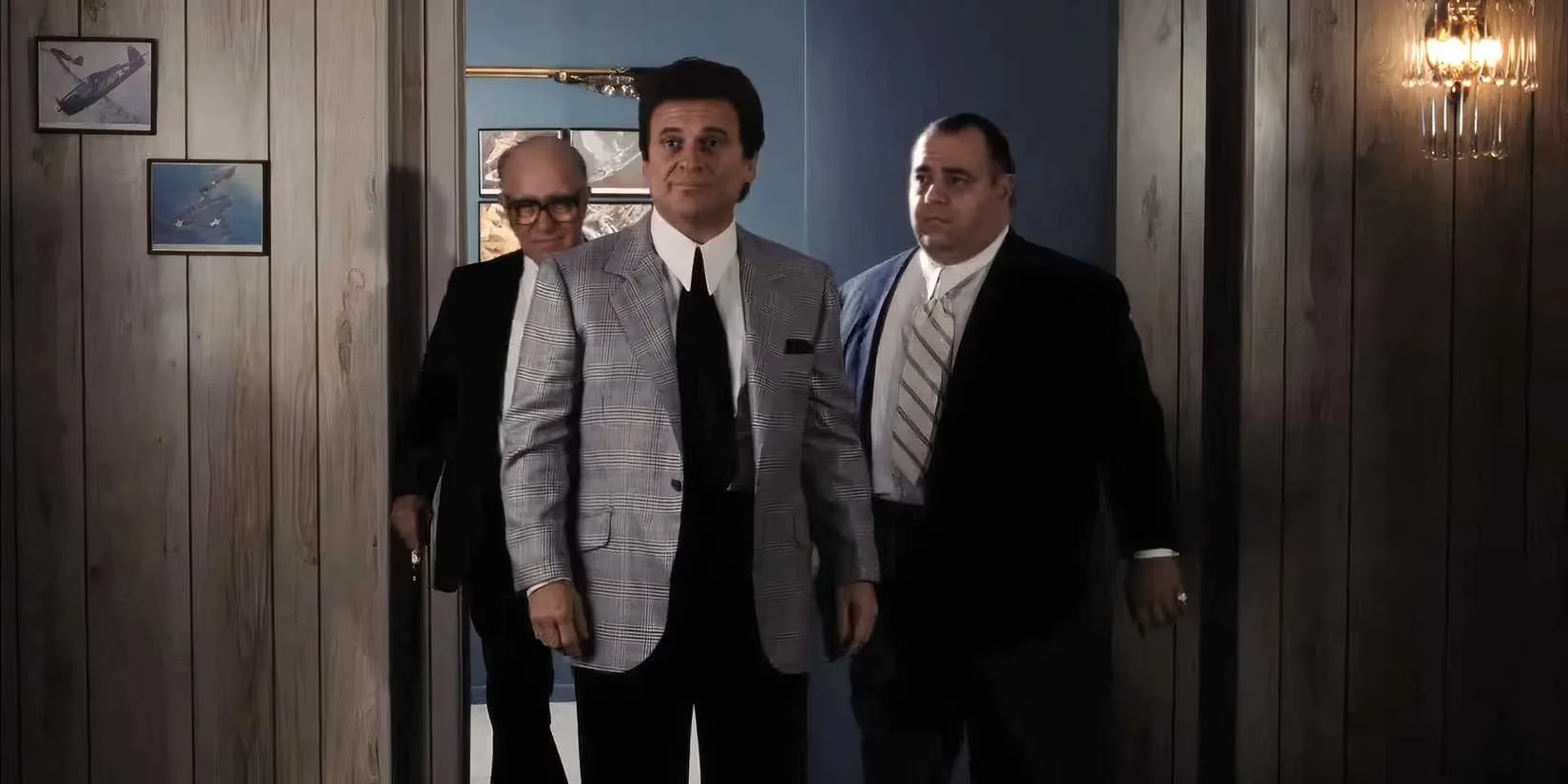
Joe Pesci delivered a performance of such unpredictable, volcanic intensity as Tommy DeVito that it earned him an Academy Award for Best Supporting Actor. His "How am I funny?" scene is a masterclass in tension.
-
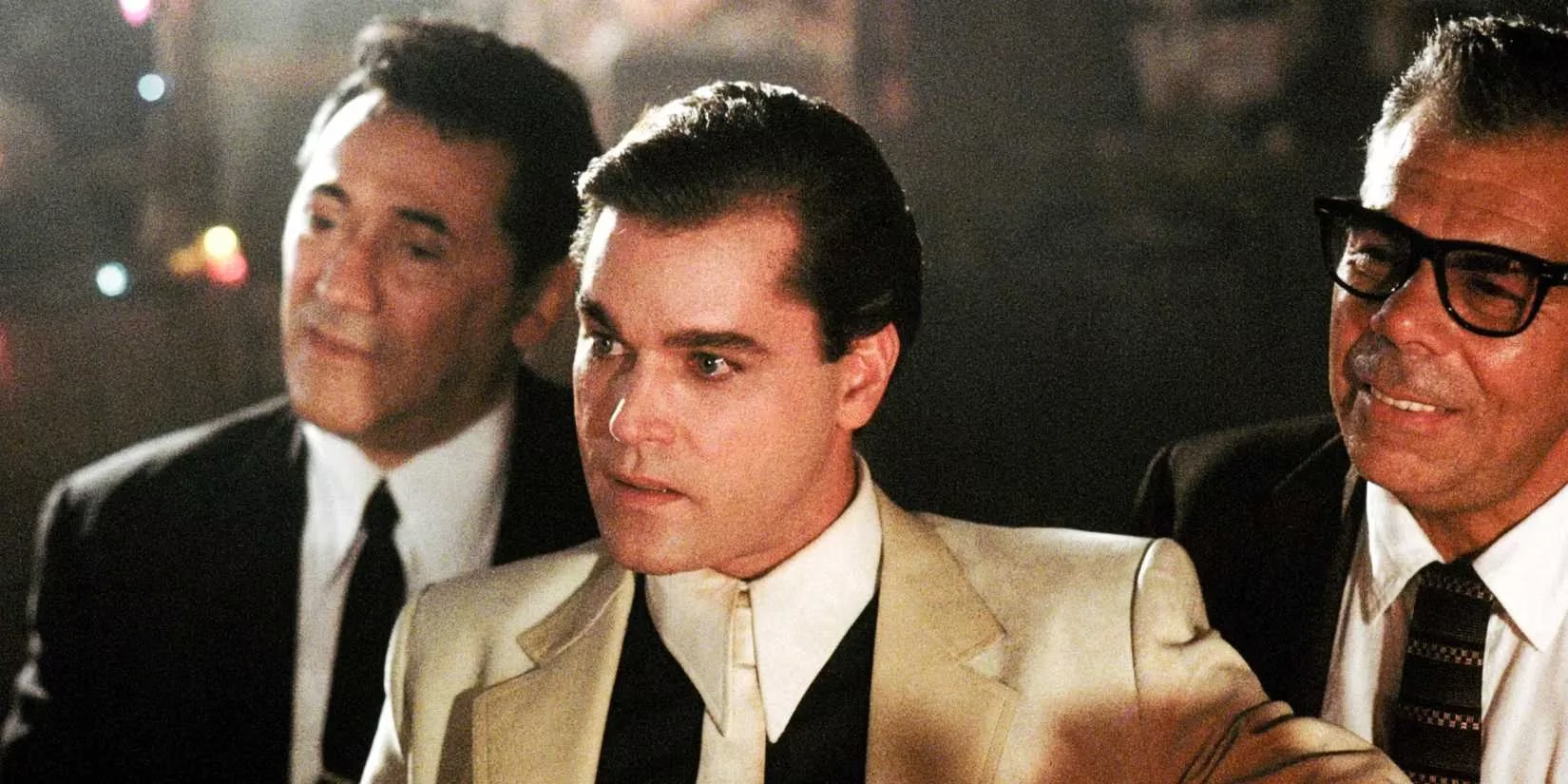
Ray Liotta, as our guide Henry Hill, broke the fourth wall with a conspiratorial charm that made us complicit in his ambitions.
-
Lorraine Bracco as Karen Hill provided a crucial, ground-level perspective of the mob wife's life, a role as revolutionary as it was compelling.
-
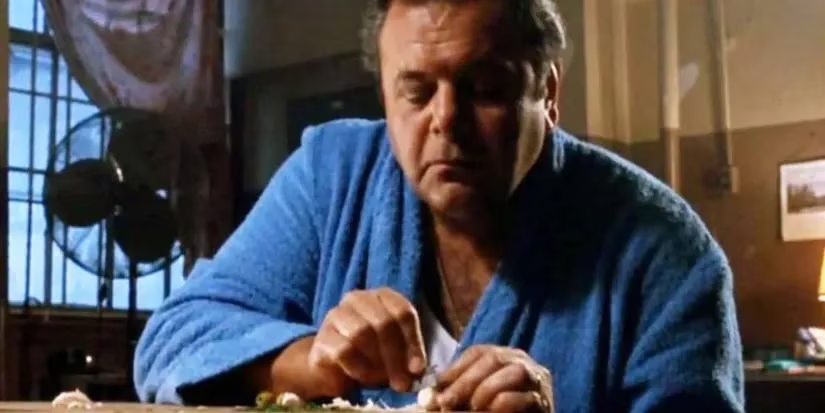
Paul Sorvino as the imposing, quiet Paulie Cicero was a study in menace, his presence as heavy and foreboding as a gathering storm cloud.
A Cinematic Symphony of Style and Substance
Scorsese didn't just tell a story; he invented a new grammar for it. The film's technical bravura—the whip-pans, the freeze-frames, the legendary long take through the Copacabana's back entrance—wasn't empty showmanship. It was the visual embodiment of Henry's cocaine-fueled, adrenaline-charged worldview. The soundtrack, a mixtape of classic rock and pop, didn't just score scenes; it commented on them, providing an ironic, nostalgic, and sometimes horrifying counterpoint to the action. This stylistic fusion made the life of a gangster seem as intoxicating as a shot of pure adrenaline and as precarious as a house of cards in a hurricane.
While The Godfather films are often described as Shakespearean tragedies, Goodfellas operates on a different frequency. If Coppola's work is a grand opera, then Scorsese's is a blistering, three-minute punk rock song—all raw nerve, explosive energy, and no apologies. It dissects the American Dream with the precision of a master surgeon, revealing the rotting core beneath the glossy, materialistic surface.
The Unmatched Legacy: A Genre's High-Water Mark
In the 35 years since its release, the gangster genre has seen formidable contenders, yet Goodfellas remains perched atop its own isolated peak. The 1990s brought us the postmodern cool of Pulp Fiction, the undercover tension of Donnie Brasco, and the Coen brothers' stylized Miller's Crossing. The 2000s offered the gritty British chaos of Snatch and the epic scope of American Gangster. Even Scorsese himself returned to the well with later triumphs like The Departed (which finally won him his Best Director Oscar) and the sprawling The Irishman.
Yet, none have quite replicated the alchemical perfection of Goodfellas. It exists in a rare state of equilibrium where explosive style, profound thematic depth, and flawless execution are in perfect balance. Later films often feel like they are studying one aspect of its blueprint—the violence, the camaraderie, the moral decay—but rarely capturing the whole, dizzying picture. Its influence has seeped far beyond cinema, most notably into television, where The Sopranos (which shared a staggering 29 actors with the film) built an entire series on the psychological groundwork Scorsese laid.
An Enduring Cultural Artifact
Today, Goodfellas is more than a movie; it's a shared cultural language. Its lines ("Funny how?", "I'm gonna go get the papers, get the papers") are quoted endlessly. Its scenes are homaged and parodied, a testament to their iconic status. Director Paul Thomas Anderson paid direct homage by recreating the Copacabana shot in Boogie Nights. The film's DNA is woven into the fabric of how we tell stories about crime, ambition, and failure. It demonstrated that a masterpiece could be both critically revered (boasting a 94% Rotten Tomatoes score) and pulsate with a visceral, popular energy.
As we reflect in 2026, the debate between The Godfather and Goodfellas for the title of "greatest" is a delightful, ultimately subjective parlor game for film lovers. What is beyond debate is Goodfellas' monumental achievement. It took the sprawling, mythic canvas painted by Coppola and zoomed in with a handheld camera, showing us the sweat, the panic, and the grime in breathtaking detail. It is a film that moves with the relentless, propulsive force of a runaway subway car and is constructed with the meticulous, interlocking craftsmanship of a Swiss watch. Thirty-five years on, its power is undimmed, its style still electrifying, and its place in the pantheon of American cinema as secure as a vault. For a generation of filmmakers and fans, being a gangster never looked so terrifying, so seductive, or so utterly real.
Industry context is informed by ESRB, whose rating summaries and content descriptors offer a clear framework for discussing how crime narratives balance stylized glamour with depictions of violence, drugs, and strong language—an angle that complements the blog’s focus on why Goodfellas still feels brutally immediate and culturally influential 35 years later.