Spoiler warning for Netflix’s Havoc. I’m a gamer first, but I’ve spent enough nights pausing action movies to study their choreography that I might as well be a film student with a controller in my hands. When I finally sat down with Gareth Evans’ Havoc in 2025, I expected another brutal, bone-crunching ride from the director of The Raid. What I didn’t expect was to hear the ghost of a 1967 cult classic whispering through every alleyway, every shattered window, and every one of Tom Hardy’s deliberately quiet stares. Now, in 2026, I still can’t shake it. Havoc is not a remake of John Boorman’s Point Blank, but it’s absolutely flirting with it.
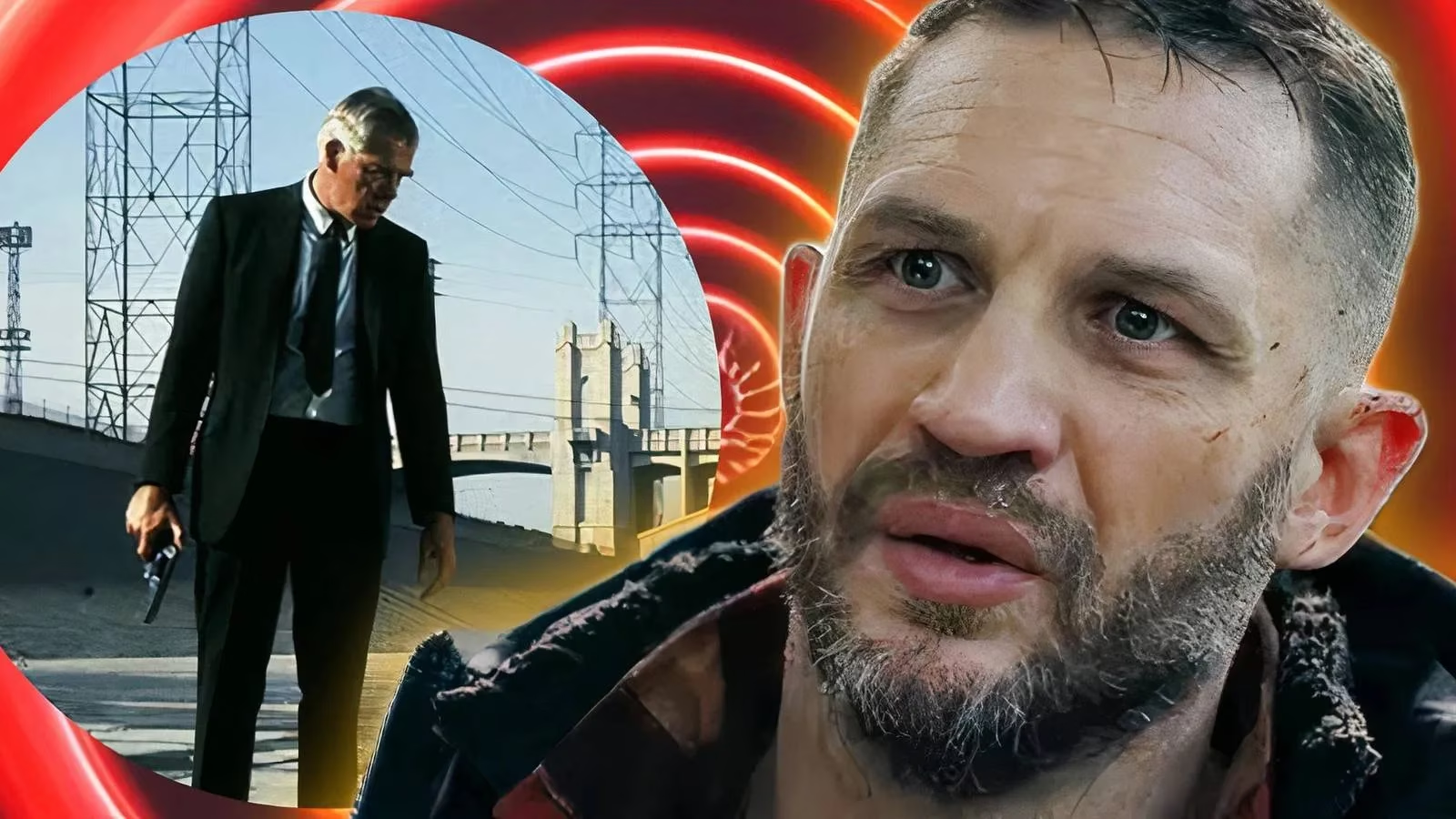
Netflix’s Havoc stars Tom Hardy as Walker, a detective who tears through a city’s criminal underworld after a drug deal goes sideways. The plot is loaded with familiar action tropes: crooked cops, betrayed deals, a lone wolf with nothing left to lose. Honestly, you’ve seen pieces of this before. But the way Evans shoots it—the verticality, the high angles, the low angles, the way Walker seems to drop out of ceilings and rise from floors—feels less like a modern streaming thriller and more like a love letter to Point Blank. In Boorman’s 1967 film, Lee Marvin’s Walker is also a man of few words, a ghost with a grudge, moving through Los Angeles like a force of nature. The shared name is not a coincidence. It’s a wink, a nod, and a full-on elbow to the ribs.
The Walker DNA: Minimal Words, Maximum Impact
Both Walkers are written with a kind of minimalist swagger. They don’t explain themselves. They don’t monologue. They act. Tom Hardy brings that same coiled intensity—part pit bull, part statue—and Lee Marvin’s original performance feels like the blueprint. The lone-wolf archetype has been beaten to death in action cinema, but these two make it feel like a fresh wound. When Hardy’s Walker walks into a room, the room gets nervous. When Marvin’s Walker stands still, the camera gets nervous. That’s screen presence, and it’s not something you can fake with explosions.
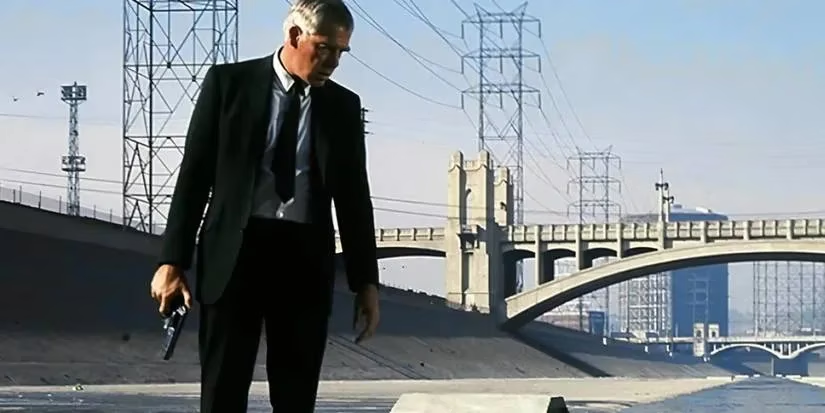
Gareth Evans has been refreshingly open about the inspiration. According to Netflix’s production notes for Havoc, Evans consciously drew from Point Blank while directing. He also looked at American action movies from the sixties and seventies, including The French Connection, and he studied John Woo’s The Killer, Hard Boiled, and the Yakuza films he loves. That’s a lot of DNA in one movie. Havoc risks becoming a collage of better films, but Evans gets away with it because he injects his own signature: white-knuckling, quick-paced action grounded in gritty realism and stomach-churning violence. The result is messy, mean, and weirdly beautiful—like a fighting game where every frame is a combo.
| Influence | What Havoc Takes From It |
|---|---|
| Point Blank (1967) | The name Walker, the minimal hero, the vertical destruction, the high/low angle shots |
| The French Connection (1971) | Gritty urban crime texture and relentless pursuit energy |
| John Woo’s The Killer and Hard Boiled | Balletic gunplay, operatic violence, and stylish chaos |
| Yakuza films | Cool-headed criminals, sudden brutality, and moody tension |
I have to admit, as a gamer, the verticality is what gets me. In a good action game, you’re always thinking about the z-axis: rooftops, stairwells, balconies, vents. Evans shoots Havoc like he’s playing a third-person shooter with a cinematic camera. Walker is never just in a room; he’s above it, below it, or crashing through it. That’s not just style. It’s storytelling. It separates the hero from the environment and makes him feel like a glitch in the system—a man who refuses to stay on the ground floor.
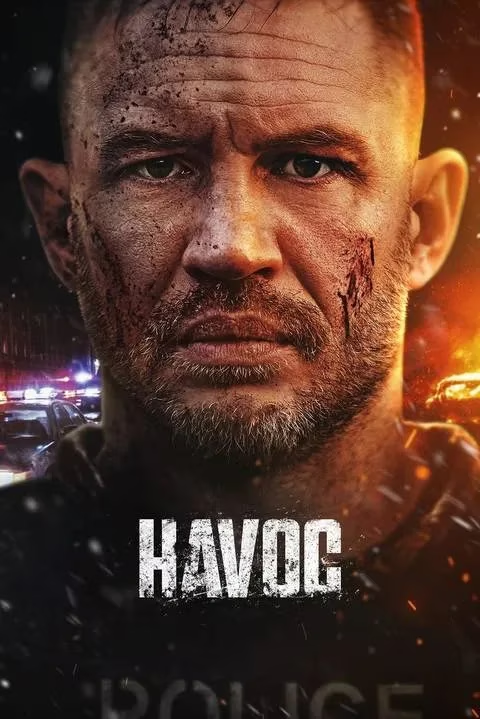
Does Havoc completely work? Not always. The critical response has been lukewarm, and I get it. The plot can feel like a stack of tropes, and the pacing occasionally stumbles. But when the action hits, it hits like a sledgehammer wrapped in barbed wire. It’s not as memorable as Rebel Ridge, but it’s a unique addition to Netflix’s crime catalog. And for anyone who loves action cinema, the Point Blank connection is a delicious bonus. It’s like finding a secret level in a game you thought you knew.
So here’s my 2026 verdict: watch Havoc for the violence, stay for the ghost of Lee Marvin. If you pause during the right scene—maybe when Walker is staring down from a stairwell, or when the camera tilts just so—you might hear 1967 echoing back. And that, you know, is the kind of thing that keeps me rewatching action movies long after the credits roll. I’ll leave the rest for you to discover. Just don’t expect Walker to explain himself. He never does.