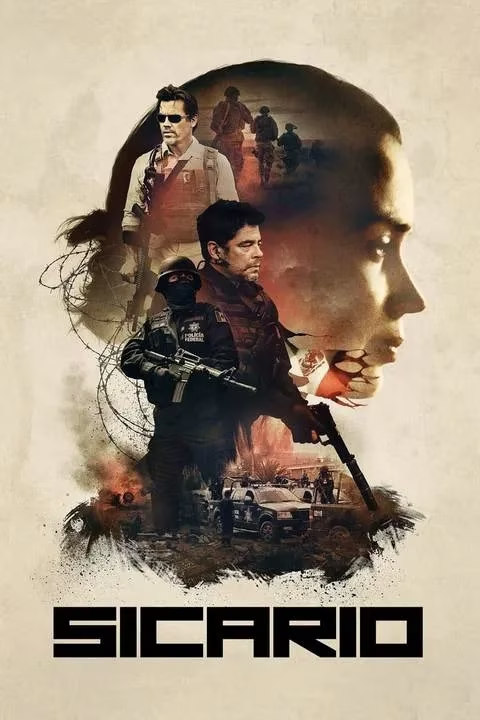
In 2015, long before Taylor Sheridan had the entire streaming world bowing to his dusty boots, he was just a screenwriter with a script so nerve-shredding it could make a tortoise sweat. That script was Sicario, a crime thriller that didn’t just walk the line between right and wrong—it set the line on fire and danced in the ashes. Yet for all its praise, the film nearly lost its secret weapon before a single frame was shot. Because some bright spark in a producer’s chair decided the lead character, FBI agent Kate Macer, should be… a man. Can you imagine? A room full of people reading a story about moral collapse seen through fresh, horrified eyes, and their first note is “Can we slap a pair of trousers on her and call it a day?” 🙄
Sheridan’s response was apparently decorated with a couple of “strong adjectives” that ensured he and that particular producer never spoke again. While the writer’s exact words remain a delicious mystery, one can safely assume they would make a Yellowstone ranch hand blush. Director Denis Villeneuve later confirmed that Sheridan had been asked multiple times to rewrite the role for a male actor. Each time, the answer was a creative, profanity-laced no. Why? Because Kate Macer wasn’t some interchangeable action figure; she was based on a real person Sheridan knew—someone physically small but fiercely intelligent, capable, and hardened by sacrifice. Swapping her out for a generic do-gooder dude would have ripped the soul right out of the movie.
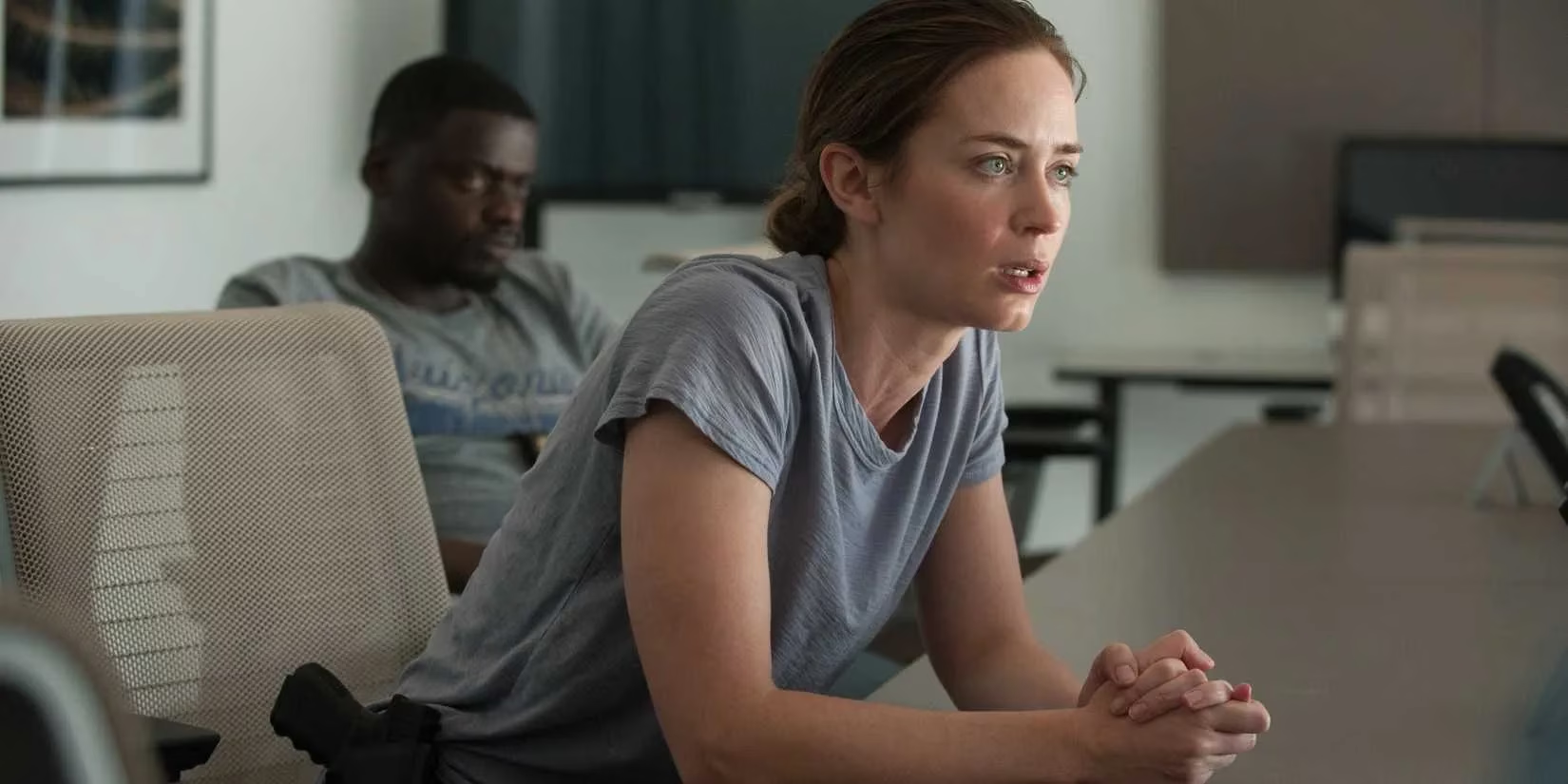
Think about it—what makes Sicario truly terrifying isn’t the gunfights or the decomposing bodies hidden in walls. It’s watching the world through Kate’s eyes as everything she believes about justice crumbles into dust. If a stocky male lead had been dropped into that role, no matter how talented the actor, the audience would have seen just another tough guy navigating a tough situation. Instead, Emily Blunt’s Kate stands as a human barometer of the nightmare. Every flinch, every betrayal, and every desperate decision registers on her face with the weight of someone who climbed a mountain of institutional resistance just to earn her badge. Sheridan put it bluntly: “I didn’t want it to be just this do-gooder guy. I wanted it to be someone that had sacrificed a tremendous amount to achieve her position of respect and authority, and I wanted to see the consequences on her face.” Mission accomplished.
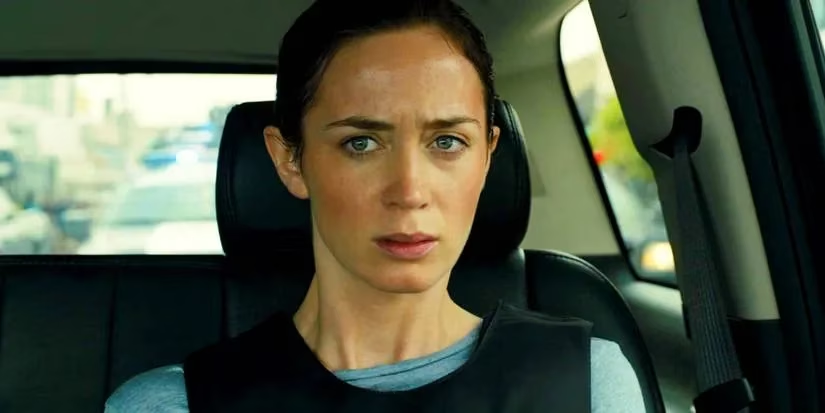
Sheridan’s stubbornness didn’t stop at casting. As the film neared its ending, another tug-of-war erupted over how the moral rot should climax. The producers wanted Alejandro, Benicio del Toro’s ghost-eyed assassin, to show a glimmer of mercy when he visited cartel boss Fausto’s family. Their version: he tortures Fausto in front of his wife and kids, then leaves the family alive with a warning to raise honest children. Sweet, right? Sheridan’s original script, however, pulled no punches—Alejandro executed the entire family before finishing Fausto. Two endings were filmed. Both were tested. And in a delicious twist that vindicated every creative choice Sheridan had made, the more brutal version tested better with audiences. It seems moviegoers prefer their moral nihilism served neat, without the sugarcoating.
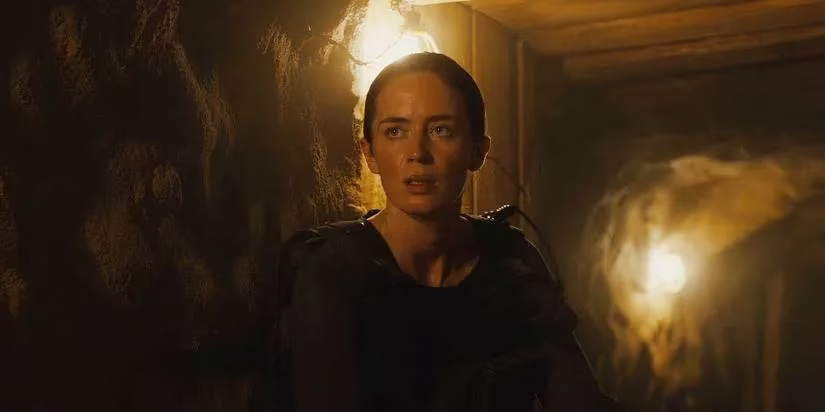
Fast-forward to 2026, and the legacy of these battles speaks volumes. The 2018 sequel Sicario: Day of the Soldado tried to soldier on without Emily Blunt’s Kate, shifting focus to Alejandro and Josh Brolin’s morally bankrupt Matt Graver. It was a solid film, sure—but it lacked the thumping heart that made the original a masterpiece. Without Kate, the audience lost its stand-in, its moral compass spinning uselessly in a world where north no longer existed. The sequel’s descent into ambiguity felt less like a choice and more like a missing limb. No amount of Del Toro gravitas could replace the raw humanity Blunt brought to the screen, proving that Sheridan’s profane phone calls had been entirely justified.
Today, Taylor Sheridan is a one-man industry whose name alone can greenlight a dozen projects. Nobody is barging into his office asking him to rewrite a protagonist’s gender because some actor wants the gig. But back in the Sicario trenches, he fought for a vision that could have been diluted by a hundred timid compromises. He refused to blink, and the result is a film that remains one of the most unflinching thrillers of the century. So next time you shudder through that border-crossing sequence or feel Kate’s helplessness in the final haunting moments, remember: it almost wasn’t a woman holding the gun. And without Taylor Sheridan’s arsenal of strong adjectives, it wouldn’t have been nearly as unforgettable. 💥