In 2026, Keanu Reeves is synonymous with blockbuster heroism. He is Neo in The Matrix, the unstoppable John Wick, and a beloved pop-culture figure whose every project draws instant attention. Yet before the leather coats, the kung fu, and the assassin dogs, Reeves was a young Canadian actor trying to make his mark in Hollywood. One of his earliest and most startling films was River's Edge, a crime drama released in the mid-1980s that deliberately courted controversy and refused to offer audiences an easy moral lesson. Directed by Tim Hunter and written by Neal Jimenez, the movie became a lightning rod for discussions about juvenile delinquency, media violence, and the moral panic surrounding American teenagers. Even decades later, it remains the most controversial entry in Reeves' extensive filmography.
A Teenage Crime Without a Moral Escape Hatch
River's Edge tells a story that many viewers in the 1980s found almost unbearable. A teenage boy murders his girlfriend, and his circle of drug-addicted friends spend days gawking at the corpse instead of reporting the crime. There is no detective hero, no sentimental redemption arc, and no reassuring adult figure to restore order. The film is callous, brash, and intentionally unpleasant. It does not give its teenage characters a moral off-ramp. Earlier juvenile delinquency movies such as Rebel Without a Cause and The Wild One offered complex, dynamic characters as vehicles for social commentary. River's Edge instead leans hard into shock value. The fact that it was loosely based on a real case that had gripped the nation only made its impact more disturbing.
Roger Ebert called the film 'an exercise in despair,' though he meant it as a compliment. He understood that the movie was not endorsing its characters' behavior. Instead, it was diagnosing a spiritual and social breakdown. River's Edge is an emblem of that breakdown. It offers no answers to the questions it poses, forcing viewers to live with the consequences of the characters' actions. That refusal to comfort the audience is exactly why the film still feels dangerous. Its violence toward women is meant to be horrific, not playful. Its casual cruelty is designed to unsettle. In 2026, that approach still carries a cold, uncomfortable power.
Why 1980s Moral Panic Made It Explosive
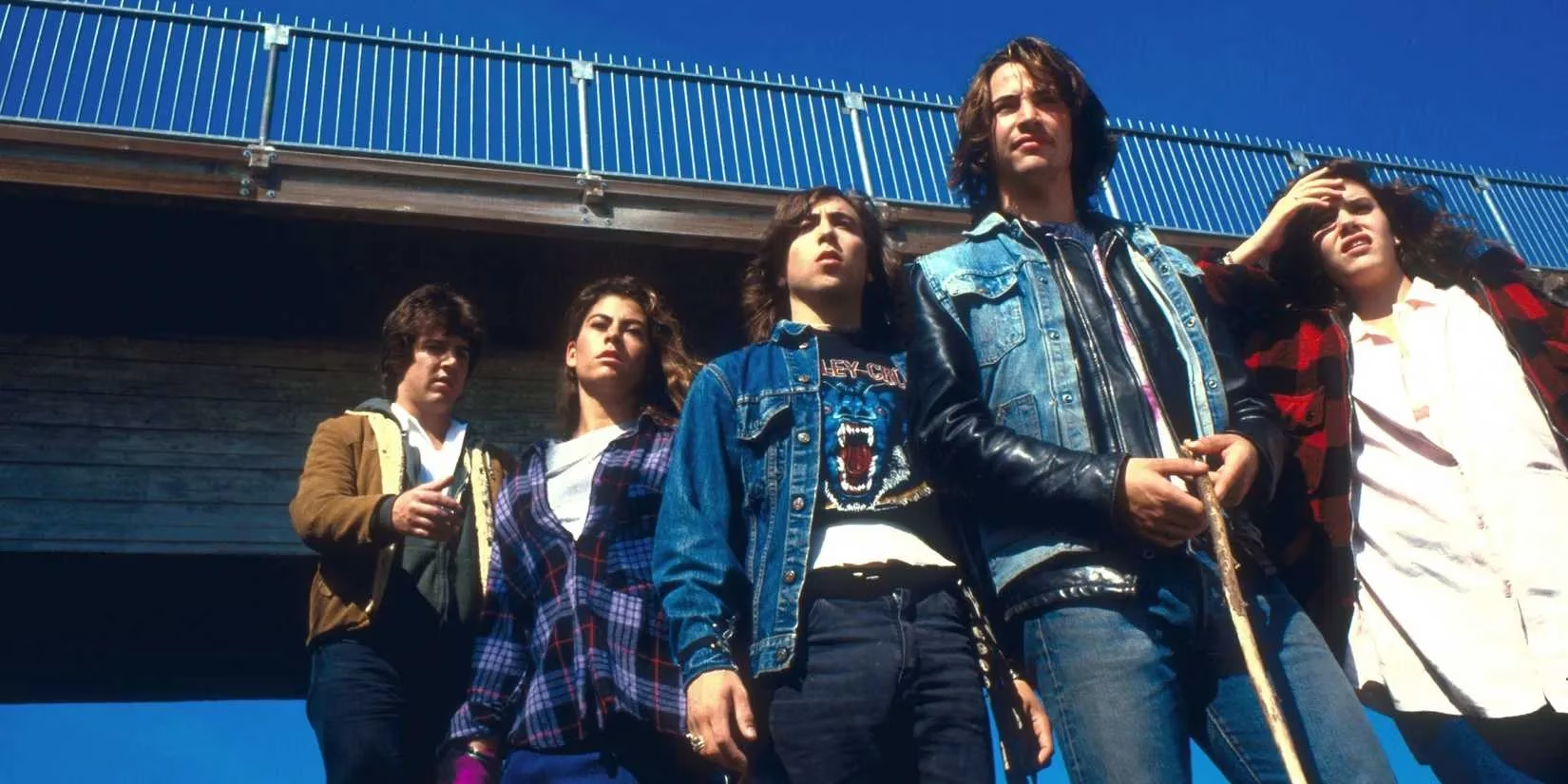
The 1980s often mirrored the 1950s in its swing toward puritanical attitudes in mainstream popular culture. After World War II, the concept of the teenager had exploded into a recognizable social category. Teens suddenly had disposable income, their own music, their own fashion, and their own cultural identity. That independence also sparked fearmongering about the dangers of youth. By the late 1980s, those anxieties had returned with a vengeance. River's Edge pushed the panic further by combining heavy metal and punk music with an unflinching portrait of teenage apathy. The advertising even leaned into the movie's bad reputation. The poster called it 'The Most Controversial Film You Will See This Year,' and in many ways, that marketing was not exaggerated.
Juvenile delinquency has always been a hot-button topic, but River's Edge did not hide its social commentary behind a typical Hollywood story. It was raw and confrontational. The film's young characters were not misunderstood rebels with hearts of gold. They were disconnected, self-destructive, and frighteningly numb. That portrait made critics and audiences uneasy. It also made the movie impossible to dismiss as mere exploitation. The film had something to say about the degradation of modern youth, even if it refused to say it politely.
Keanu Reeves Before Stardom
Before River's Edge, Reeves had begun building a career on memorable teenage roles. He would soon become famous for goofy comedy in Bill & Ted's Excellent Adventure, where he embodied a lovable stereotype of 1980s youth. Throughout the 1990s, he proved his versatility by moving away from comedy and into dramatic films that often became box office successes. By the end of that decade, The Matrix had cemented him as a bona fide action star. After a series of notable flops nearly derailed his mainstream career in the 2000s, Reeves returned in a major way with the John Wick franchise. Those movies were massive blockbusters, and they sparked a Keanu Reeves renaissance that led audiences to revisit his earlier work with fresh appreciation.
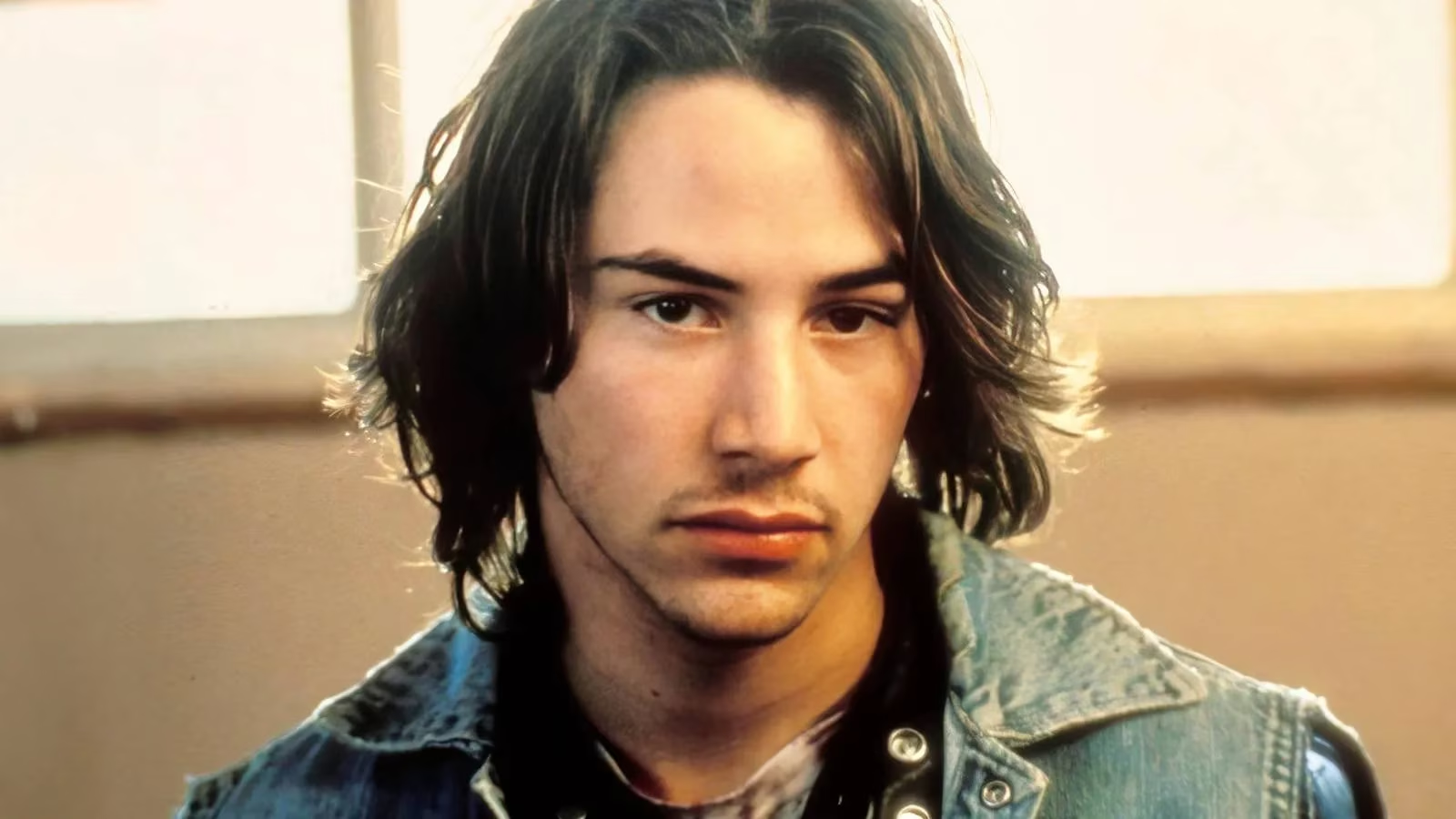
River's Edge is one of the earliest examples of Reeves' talent, though it is not often fondly remembered as part of his catalog. The film is also a masterclass in acting by its young ensemble. Daniel Roebuck and Crispin Glover deliver spirited, unsettling performances, while veteran star Dennis Hopper is his usual memorable self. Ione Skye and Roxana Zal round out a cast that feels painfully authentic. Reeves plays Matt with a quiet, reactive energy that hints at the thoughtful screen presence he would later refine. The movie's stab at modern culture is important, but it sometimes distracts from the careful work that went into crafting the story. It was very much a precursor to the 1990s angst that would soon dominate popular media. If River's Edge had been released only a few years later, it might be more fondly remembered instead of being treated as a cinematic shock to the system.
| Key Detail | Information |
|---|---|
| Release Date | August 27, 1986 |
| Runtime | 100 minutes |
| Director | Tim Hunter |
| Writer | Neal Jimenez |
| Producers | John Daly, Midge Sanford, Sarah Pillsbury |
| Main Cast | Crispin Glover as Layne, Keanu Reeves as Matt, Ione Skye as Clarissa, Roxana Zal as Maggie |
| Genres | Thriller, Drama, Crime |
Legacy in 2026
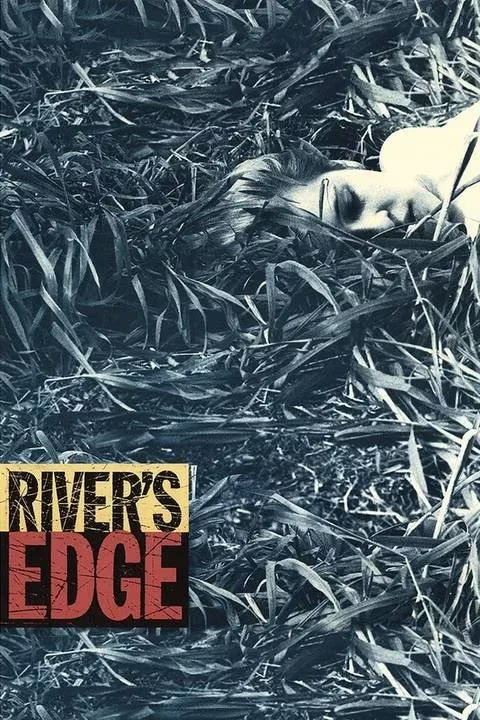
Much like the 1950s juvenile delinquency movies that preceded it, some of the shock value of River's Edge has worn off. The film is still incredibly crass, and its predictions of a total moral collapse among American youth did not really come true. It would be wrong to call the movie problematic, however, because it does not endorse the actions of its main characters. The casual nature of its violence toward women is supposed to be horrific. It is not played as a cheap gag. River's Edge holds up because it does not take the easy way out. It forces viewers to sit with discomfort, ambiguity, and the consequences of apathy.
In 2026, the film remains a fascinating artifact of 1980s anxiety and an essential chapter in Reeves' career. It shows him before the blockbusters, before the internet memes, and before the John Wick renaissance. It also shows a young actor willing to participate in a story that refused to flatter its audience. River's Edge may never be the first title that comes to mind when fans celebrate Reeves, but it is arguably the most controversial and one of the most revealing. It is a dark, uncompromising crime drama that asks difficult questions and then leaves the audience alone with them. That is not an easy viewing experience, but it is exactly the kind of risk that makes Reeves' long career so interesting to revisit. 🎬