The night is a canvas, stretched taut over the city's bones, painted in the neon bleed of desperation and the inky shadows of choices not yet made. I found myself drawn into this world, this relentless, ticking-clock reality of Night Always Comes, a film that feels less like a story watched and more like a reflection stared into. In the year 2026, its echoes feel louder than ever, a resonant hum beneath the surface of our own fractured times. It is a journey through a single, interminable darkness, guided by the fierce, flickering flame of a woman named Lynette, brilliantly embodied by Vanessa Kirby. This is not just a thriller; it is a nocturnal poem of struggle, a meditation on the price of home and the shape of agency when the walls are closing in.

The Ticking Heart of the Noir Machine
From its first breath, the film establishes a pulse that is both a countdown and a heartbeat. Lynette must secure $25,000 before the sun breaches the horizon at 9:00 AM. This simple, brutal arithmetic becomes the engine of the entire narrative. Each passing minute is a grain of sand slipping through an hourglass, each encounter a potential step toward salvation or a deeper plunge into the abyss. Director Benjamin Caron, who previously orchestrated the sleek deceptions of Sharper, masterfully wields this temporal constraint. He crafts an atmosphere thick with a neo-noir palpability—a world of seedy bars, rain-slicked streets, and rooms illuminated by the sickly glow of cheap, colored lights. The visual tapestry is intentional, beautiful in its grimness, making poverty and urgency feel not just real, but aesthetically arresting, a dangerous allure.
The Anatomy of Tension:
Crucible: A single, desperate night.
Stakes: Home, family, survival.
Visual Language: Neo-noir aesthetics; chiaroscuro lighting; claustrophobic frames.
Result: A relentless, breathless momentum that holds you captive.
A Constellation of Fractured Souls
Lynette does not walk this path alone. She is surrounded by a constellation of beautifully performed, damaged souls, each reflecting a different facet of the same desperate struggle. The cast is a revelation:
| Actor | Role | The Light They Bring to the Shadows |
|---|---|---|
| Vanessa Kirby | Lynette | A tour de force of restrained power; communicates oceans of history and resolve in a glance. |
| Jennifer Jason Leigh | Doreen (Mother) | Embodies a deep, generational sadness and bitter resignation that haunts every scene. |
| Randall Park | Scott | Charismatic yet pitiable, his small role underscores the transactional nature of Lynette's world. |
| Stephan James | Cody | Brings a complex, understated warmth and his own layer of quiet desperation. |
| Zack Gottsagen | Shane (Brother) | Provides the film's crucial, beating heart—authentic, endearing, and a reminder of what Lynette fights for. |
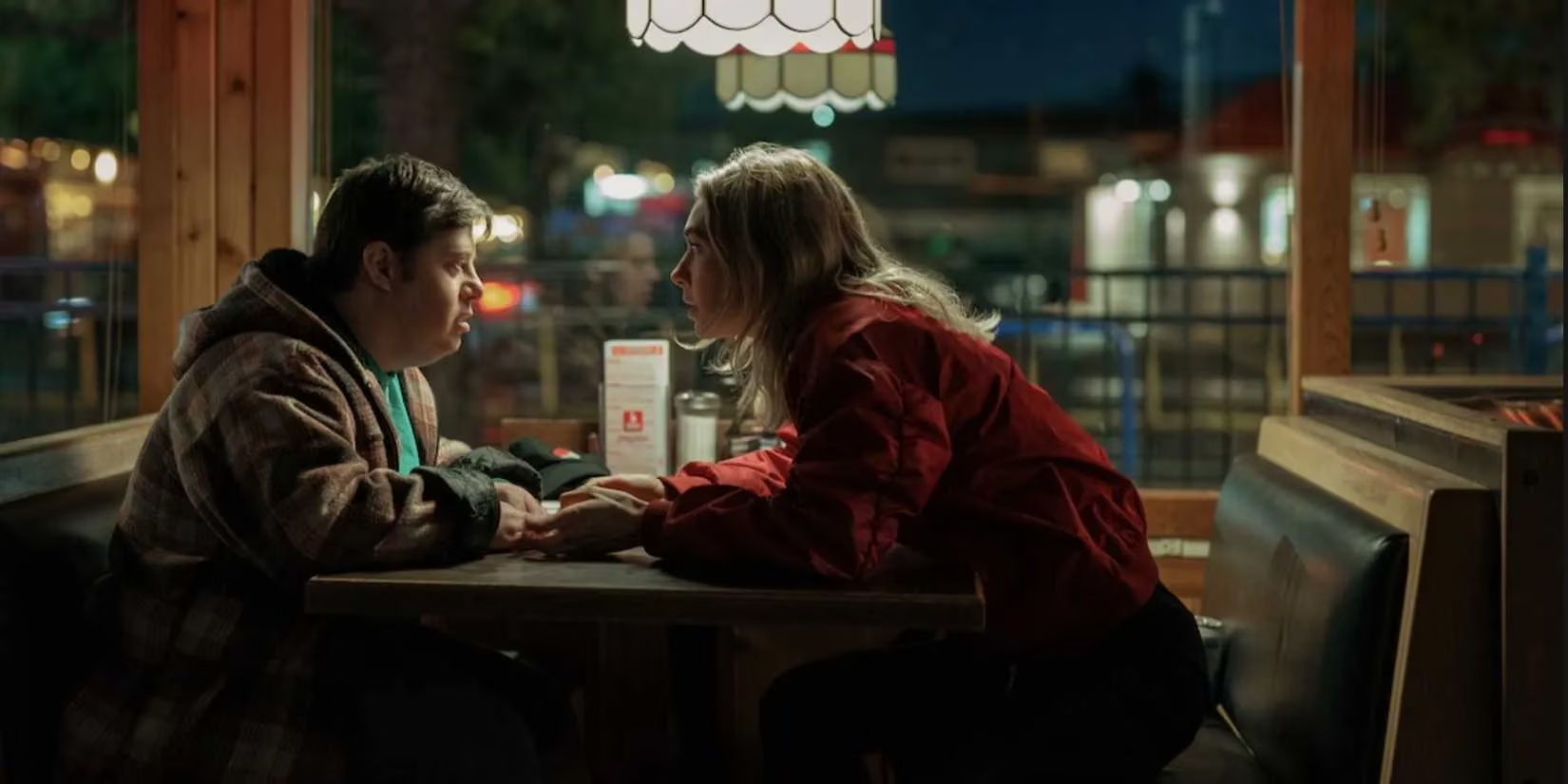
This last performance is particularly luminous. Zack Gottsagen, whose genuine spirit shone in The Peanut Butter Falcon, returns to the screen with a role of substance as Lynette's older brother. His presence is a touchstone of humanity, a pure connection that grounds the film's darker machinations in simple, powerful love. It is a testament to the film's commitment to portraying a full, flawed, and real community on the edge.
The Morality of Necessity in an Age of Disparity
Night Always Comes is a stark companion piece to other tales of economic despair, like Straw, but it distinguishes itself through its unwavering focus on agency. Lynette is not a victim of mere misunderstanding; she is a strategist in a rigged game, making calculated, morally ambiguous choices out of necessity. The film dares to ask: when the system offers no legitimate avenues, what do our ethics become? It illuminates the chasm of income inequality not with statistics, but with the sweat on Lynette's brow and the grim determination in her eyes. It explores the legacy of trauma, handling Lynette's past in sex work not as salacious detail but as a tragic consequence of circumstance, a history that has forged her resilience even as it scars her.
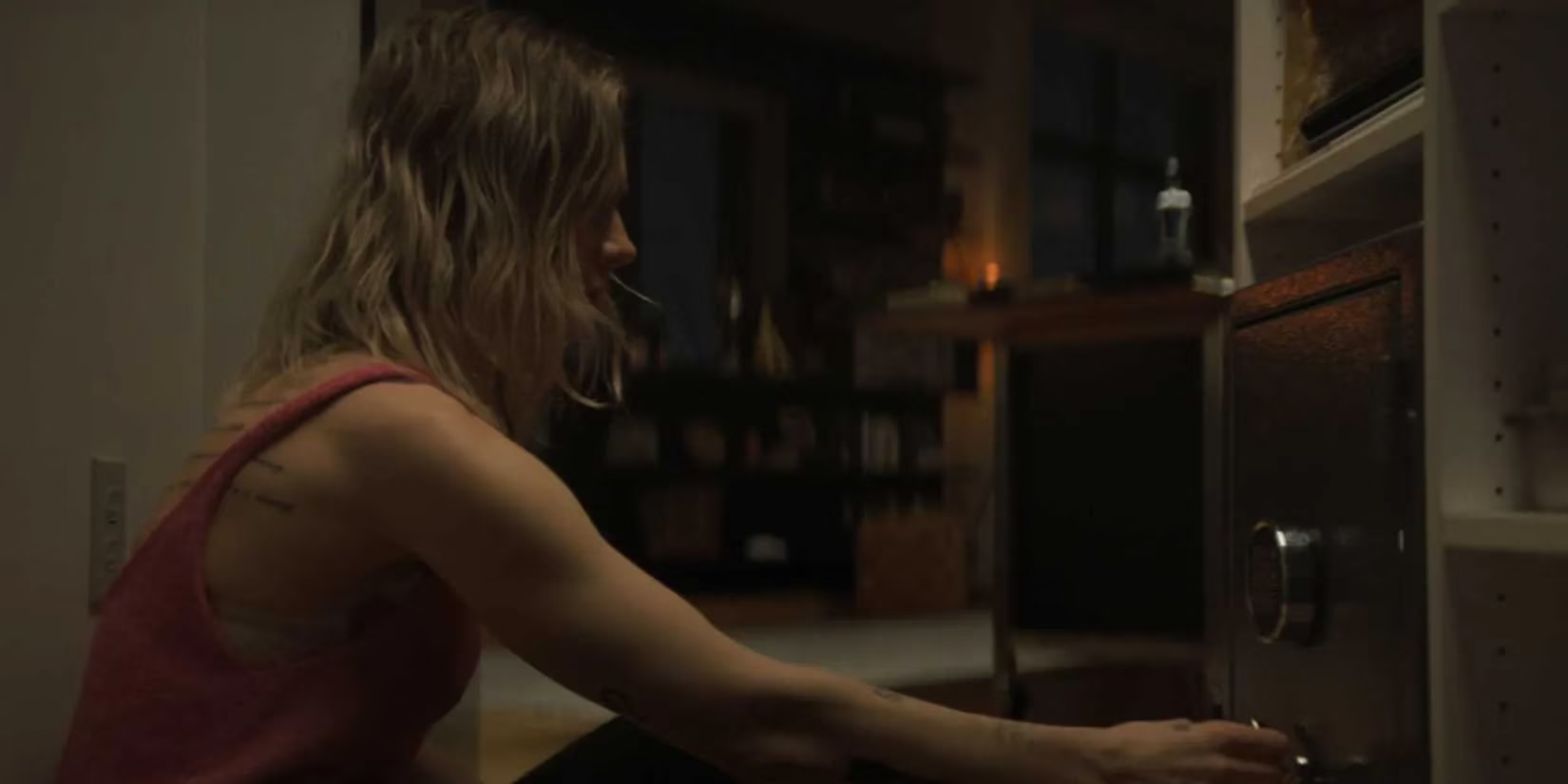
The characters are flawed, yes. Doreen makes questionable financial decisions. Lynette descends into criminality. But the film's genius is its refusal to condemn. Instead, it seeks to understand—to sit with them in the diner booth, in the dim bar, and feel the weight of their limited options. It paints a portrait of desperation that is profoundly relatable, where "bad" choices are often the only ones visible in the dark.
The Quiet Triumph of Self-Discovery
Amidst the tension and the social commentary, the film's core is a deeply personal journey of self-reclamation. Lynette's nocturnal odyssey, for all its external danger, becomes an internal excavation. Each risky encounter, each moment of confrontation, chips away at the passive victimhood her life has tried to impose. She discovers a ferocious autonomy. While her methods exist outside societal law, they operate within a personal moral code of survival and protection. The film’s stirring, ambiguous ending does not offer easy solutions or clean redemption. Instead, it offers something more valuable: a hard-won glimpse of self-knowledge and the faint, fragile hope that comes from realizing one still has the power to fight, even if the battlefield is shrouded in night.

A Testament to Artistic Alchemy
Ultimately, Night Always Comes is a testament to the alchemy of great filmmaking. 🤔 It synthesizes:
-
A Director's Vision: Caron's confident, stylish neo-noir atmosphere.
-
A Writer's Nerve: Sarah Conradt's socially acute and character-rich script.
-
An Ensemble's Heart: A cast delivering uniformly compelling, nuanced performances.
-
A Star's Soul: Vanessa Kirby, who continues to prove herself as one of our most compelling screen presences. She carries the film with a performance that is all quiet tremors and sudden, volcanic will. From the depths of Pieces of a Woman to the cosmic scale of The Fantastic Four, she consistently brings a raw, lived-in truth, and here, as Lynette, she has found one of her most potent vessels.
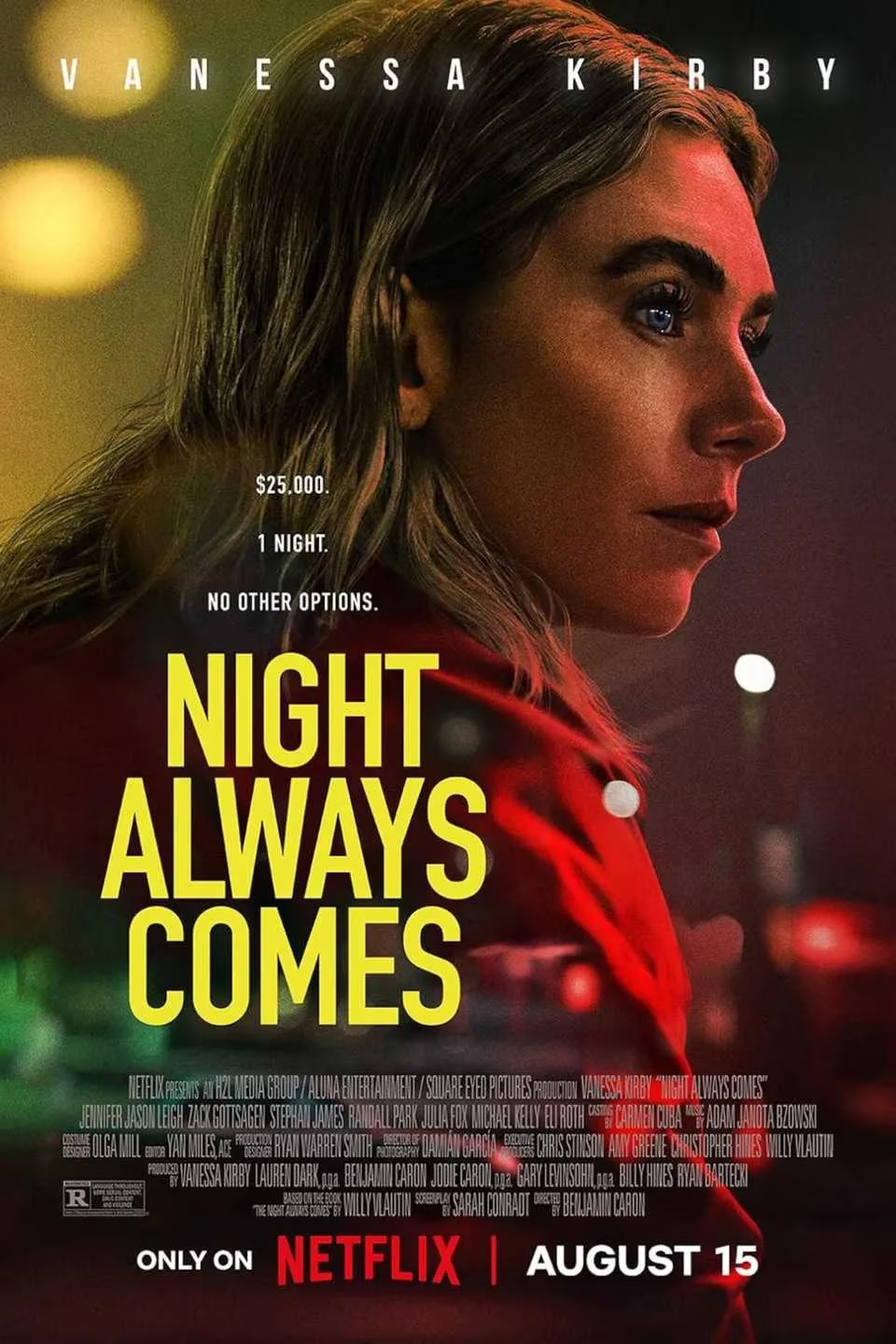
In 2026, as conversations about equity, autonomy, and the sheer cost of living continue to define our discourse, Night Always Comes stands as a vital, pulsating work. It is a film that wraps you in its tense, beautiful darkness and leaves you, as dawn finally breaks, contemplating the lengths we go to for a sliver of light, and the selves we discover in the process. It is, quite simply, a journey worth taking—a haunting, beautiful, and profoundly human nocturne.