Back in 2007, something shifted in the dusty plains of American cinema. Joel and Ethan Coen, already beloved for quirky gems like Fargo and The Big Lebowski, did the unthinkable—they took a Cormac McCarthy novel and wrung every last drop of Texas heat, moral chaos, and existential dread onto the screen. The result was No Country for Old Men, a movie so relentlessly bleak it dared to ask: what if the West wasn't about heroes at all, but just survivors shuffling through a landscape drained of hope?
The setup sounds almost simple. Llewelyn Moss, a welder played with sun-scorched grit by Josh Brolin, stumbles upon a drug deal gone violently wrong in the scrublands near the Rio Grande. He finds a case stuffed with $2 million and makes the fatal decision to take it. What follows isn't a chase so much as a slow, methodical tightening of a noose. Anton Chigurh, brought to terrifying life by Javier Bardem, is the man tightening it.

Chigurh isn't just a hitman. He's something older and stranger—a Grim Reaper with a captive bolt pistol who speaks in riddles about fate and flips coins to decide who lives. That coin toss scene, set in a crumbling gas station, remains one of the most unnerving dialogues in modern thriller history. The Coens never let you forget that evil, in their hands, isn't a choice; it's a force, as impersonal and unstoppable as the wind that whips sand across the desert roads.
But surprisingly, the film’s soul doesn’t rest with Llewelyn or Chigurh. It belongs to Sheriff Ed Tom Bell, played with bone-weary exhaustion by Tommy Lee Jones. Bell narrates the story with a voice that feels like gravel rolling downhill, mourning a world where men kill without cause and old certainties have crumbled. He’s the “old man” of the title, a man who can no longer recognize his own country. His quiet monologues frame the action not as a battle between good and evil but as a slow, sad acknowledgment that some things can’t be stopped.
What made No Country for Old Men a genuine landmark was its refusal to offer comfort. When it debuted alongside Paul Thomas Anderson’s There Will Be Blood—another dark epic dripping with nihilism—critics started whispering about a new wave of despair in American filmmaking. Both movies hit theaters in 2007 and dared to paint humanity without its mask. They showed greed, violence, and loneliness so raw that audiences left theaters stunned.
“You can’t stop what’s coming. They ain’t all waiting on you. That’s vanity.”
— Sheriff Bell’s uncle, delivering the film’s quiet punchline.
The ripple effects were immediate. Hollywood spent the next few years chasing that same grim, stylized energy. Films like Zodiac, The Dark Knight, and even Viggo Mortensen’s post-apocalyptic The Road (another McCarthy adaptation) all echoed the Coens’ commitment to darkness without easy redemption. The 2000s crime thriller had found its new north star, and it was a blood-red sunrise over a West Texas horizon.
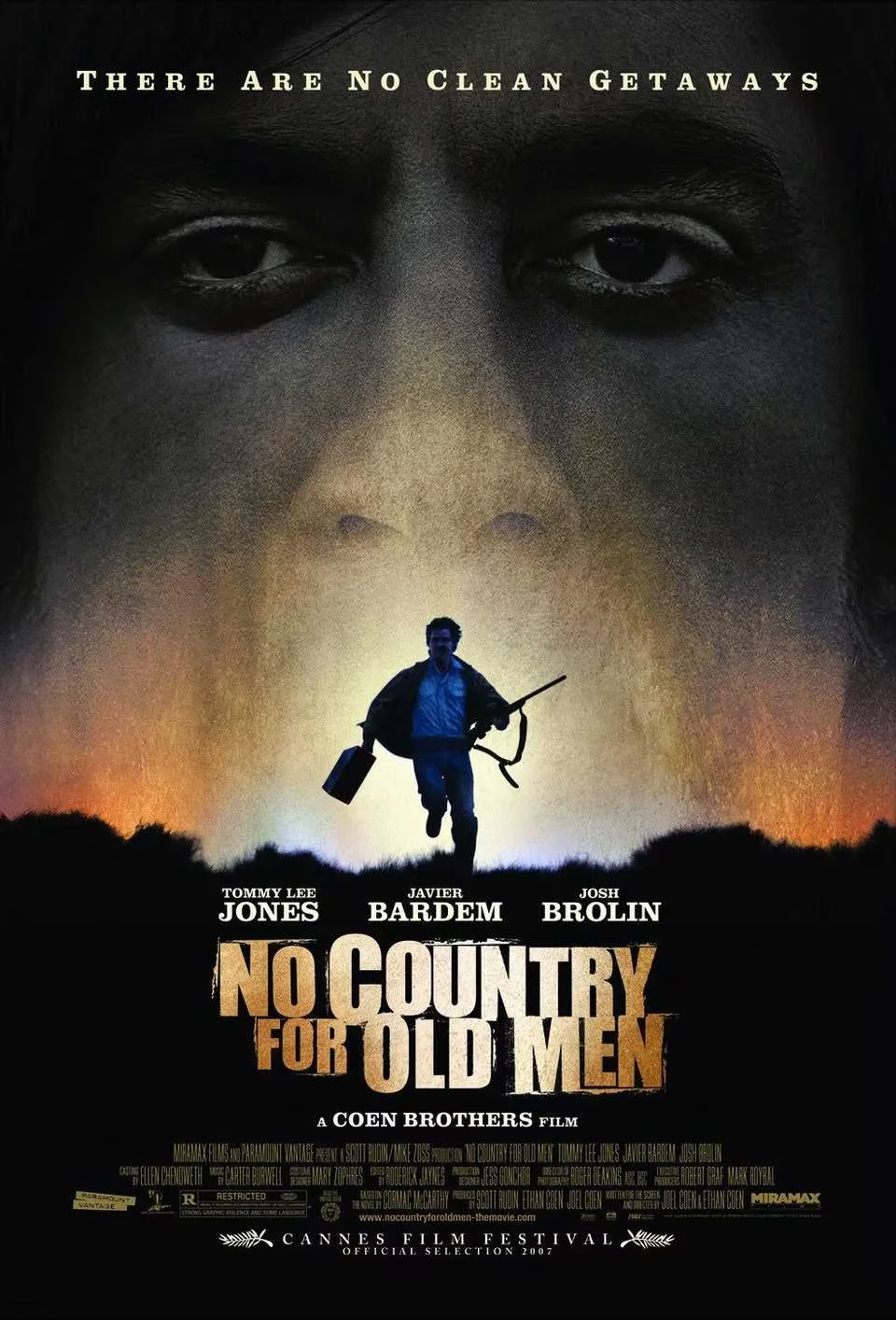
Fast-forward to 2026, and the conversations haven’t slowed. Streaming platforms keep the film alive for new generations, and critical rankings still place it at the top of Coen retrospectives. The movie holds a formidable 8.7/10 on user-driven databases, a number that hardly captures the fierce debates it inspires. Some viewers find the ending—abrupt, unresolved, echoing the sheriff’s dream of his father—to be a masterpiece of restraint. Others leave angry that justice never arrives. That tension is the point.
Let’s break down a few elements that make this neo-Western so bracingly unique:
-
🎭 The antagonist as force of nature : Chigurh doesn’t arc. He doesn’t learn. He simply moves through the story like weather, dispensing violence based on rules only he understands. He’s the embodiment of McCarthy’s philosophy: violence is random and unavoidable.
-
🤠 The anti-heroism : Llewelyn isn’t noble. He’s a man who grabbed money that didn’t belong to him and then spent every moment trying to outrun the inevitable. He’s clever—those tracking sequences in the wild are pure tension—but cleverness isn’t enough.
-
🕰️ The structure of time : Major deaths happen off-screen. The plot deliberately refuses catharsis. By ending not with a shootout but with Bell’s melancholy reverie, the Coens prioritize theme over thrill.
| Element | Traditional Western | No Country for Old Men |
|---|---|---|
| Hero | A morally upright sheriff or gunslinger | A tired, aging lawman who admits defeat |
| Villain | A bank robber or corrupt rancher | An inexorable, philosophical killing machine |
| Landscape | Open plains promising freedom | Desolate desert that swallows souls |
| Resolution | Justice prevails, order restored | Nothing is resolved; the world keeps turning |
Looking back from 2026, No Country for Old Men hasn’t aged a day. The Coen brothers’ meticulous direction—those long silences, the eerie sound design that replaces a traditional score—still feels revolutionary. Javier Bardem’s Oscar-winning performance remains the gold standard for onscreen menace. And the story’s central question—how do we face a world where evil makes no sense?—has only grown more relevant as the years accumulate.
The film carved out a path for filmmakers willing to stare into the abyss without blinking. It proved that a Western didn’t need a heroic showdown at high noon. Sometimes, the most honest stories end not with a bang but with two old men talking about a dream, the screen fading to black as we realize the country for old men is one we’re all slowly leaving behind.
If you haven’t revisited it lately, maybe 2026 is the year. Just don’t expect to feel good when the credits roll. Expect to feel haunted—in the best possible way.