I first saw Sicario on a rain‑polished night in 2015, and the film has never really left me. By 2026, I find myself returning to Denis Villeneuve’s border‑zone nightmare with the same reverence one reserves for a perfectly stitched wound—neat on the surface, but throbbing with an infection you cannot name. When its sequel, Sicario: Day of the Soldado, first dropped in 2018, I’d watched it with the hopeful appetite of a diner expecting another spoonful of that dark, complex broth. Instead, I was handed a loud, greasy burger. Revisiting both films side by side this year, I can finally articulate why the second chapter feels like a body that has had its spine quietly removed.
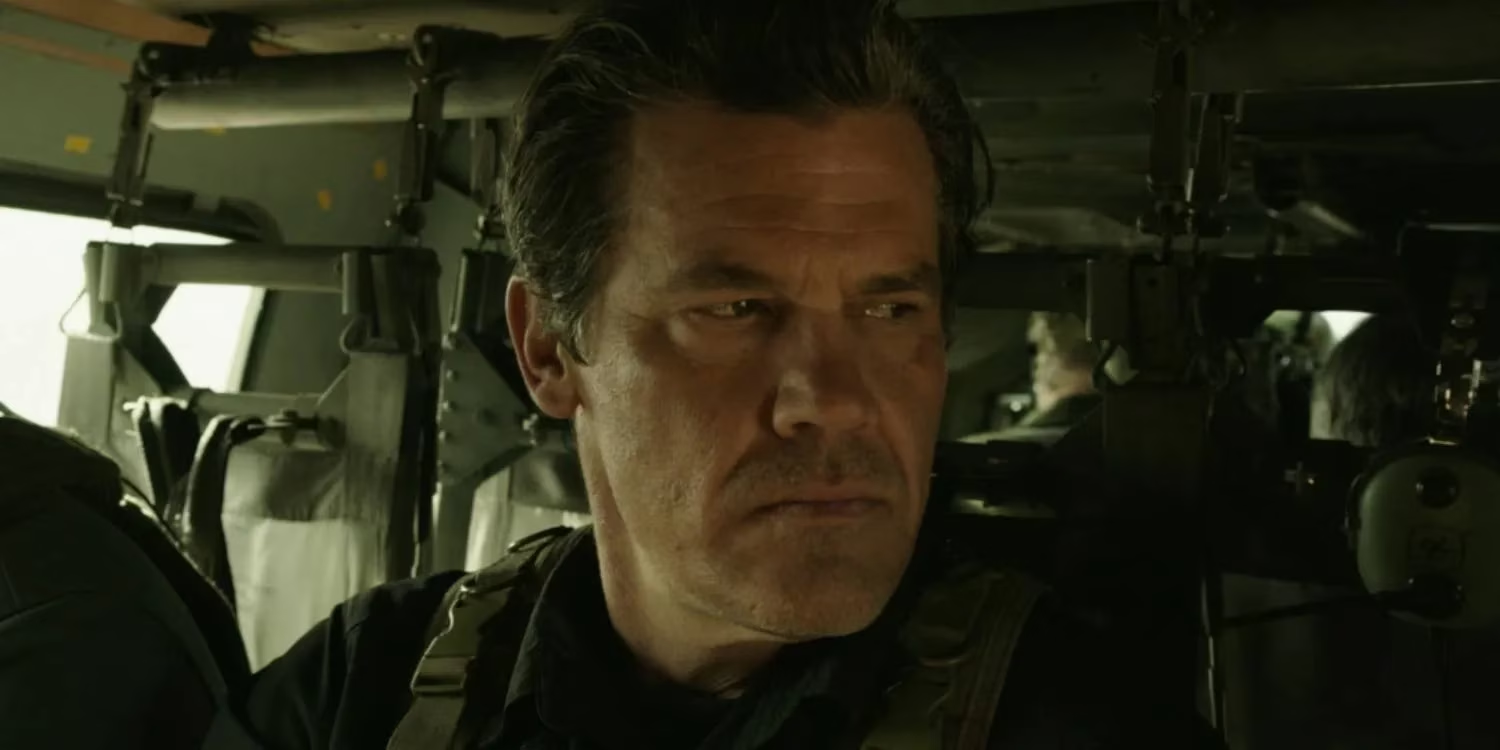
That original Sicario was a rare kind of thriller—a piano sonata played inside a collapsing building. Taylor Sheridan’s screenplay, fused with Villeneuve’s surgical direction, gave us a raid sequence so taut it felt like the film stock itself was holding its breath. The music didn’t just underscore the action; it was the action, a sub‑bass pulse that mimicked your own frightened heartbeat. The movie earned a 92% on Rotten Tomatoes and hauled in $85 million globally, but numbers never captured its real achievement: it made moral ambiguity feel not like a plot device, but like a place you could actually visit. For me, it remains one of Sheridan’s finest screenplays and the kind of film that ages like a carefully hidden vial of poison—its potency only grows.
Then came Day of the Soldado, and from its opening sequence, something essential had curdled. Where the 2015 film opened with a brutal, realistic home-invasion raid—a thunderclap of controlled chaos—the sequel began with suicide bombers slipping across the U.S.–Mexico border. Right away, the sequel traded the grounded dread of the original for a sensationalized, almost tabloid scare. That first scene felt less like Sheridan’s pen and more like a studio note made flesh, trying desperately to hook audiences with topical fever dreams. It was as if the filmmakers had decided to swap the first movie’s quiet, creeping cancer for a firework display. The result was loud, brash, and draped in a kind of predictability that the original had surgically avoided.
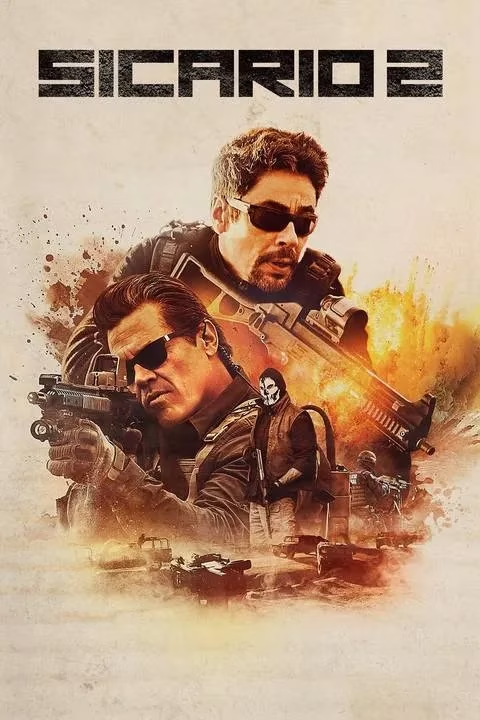
Walking out of the cinema back in 2018, I’d felt the specific emptiness of a narrative that had lost its central nervous system. Emily Blunt’s Kate Macer was exactly that: the audience’s conscience, our surrogate stumbling through a maze of ruthless operators like Alejandro Gillick (Benicio del Toro) and Matt Graver (Josh Brolin). Without her, Day of the Soldado tried to push Alejandro into the protagonist’s chair—a move as ill‑fitting as using a scalpel as a butter knife. Alejandro worked best as a shadow, a man of so few words that del Toro himself cut many of his lines from the first film, understanding that mystery was his real weapon. In the sequel, he gets dragged into the light, handed a tragic backstory that doesn’t deepen him but instead files away all his dangerous edges. The same flattening happened to Matt: his chilling ambivalence in the original—the sense that he was a man who had long ago left his soul in a locker—is replaced by a forced moral awakening that feels imported from a lesser film. It’s like watching a wolf suddenly worry about table manners.
The absence of Kate didn’t just rob me of a character I liked; it gutted the movie’s point of view. Sicario ended on a note of unbearable moral complexity, with Kate forced to sign a document that certified her compliance with everything she’d witnessed. That ending resonated because we’d traveled through the whole film perched inside her horror. Day of the Soldado, by contrast, closed its narrative with a more conventional, almost Hollywood beat. The fate of a key character was twisted not to illuminate the grayness of the drug war, but to set up an artificial emotional payoff. I remember sitting there, remembering the first film’s finale, and feeling as if someone had taken a delicate spiderweb and replaced it with a chain‑link fence.
If the franchise ever stirs back to life in 2026 or beyond—rumors of a third film still float in certain corners of the internet—it must do so with Kate Macer at its center. Continuing without her would be like trying to restart a heart with a dead battery. The story’s only remaining pulse lies in exploring how a person like Kate could possibly reintegrate into a world after seeing its rawest, most lawless core. That was the sequel we needed in 2018, and it’s the one I still hunger for now. Until then, I’ll keep Sicario close, a beautiful, bruising film, and treat its follow‑up like a ghost of a better version that never quite arrived.