Since the dawn of cinema, the gangster genre has captivated audiences with its gritty portrayal of ambition, power, and inevitable downfall. These narratives, from silent-era pioneers to modern masterpieces, have consistently delivered a sobering truth: the criminal's path is a one-way street leading to ruin. While death or imprisonment are common finales, some films transcend these expectations, delivering conclusions so profoundly disturbing they etch themselves permanently into the viewer's psyche. These aren't just endings; they are emotional gut-punches that redefine tragedy within the criminal underworld.
The Bitter Taste of Betrayal in Donnie Brasco
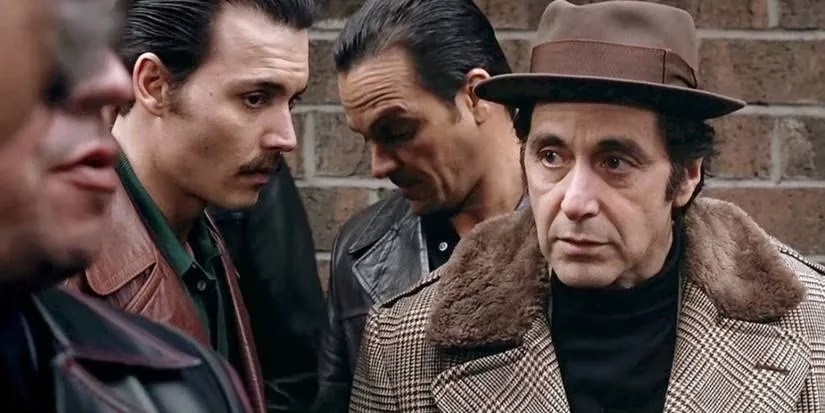
The conclusion of Donnie Brasco is a masterclass in moral ambiguity where no character emerges unscathed. FBI agent Joseph D. Pistone (Johnny Depp), operating under the alias Donnie Brasco, successfully infiltrates the Bonanno crime family. His greatest success, however, becomes his deepest personal failure. He forms a genuine bond with Lefty Ruggiero (Al Pacino), an aging, low-level enforcer who takes Donnie under his wing, vouching for him with his own life. The film's devastating twist lies not in the mob's infiltration but in the human cost. While the real-life Lefty faced prison, the cinematic version receives a far more sinister fate. The family, realizing the leak, summons him for a meeting, the subtext chillingly clear: execution. For Pistone, the victory is hollow—a mere medal, a paltry $500 check, and a $500,000 contract on his head. The true casualty is trust, sacrificed on the altar of duty.
The Descent into Absolute Corruption: The Godfather Saga
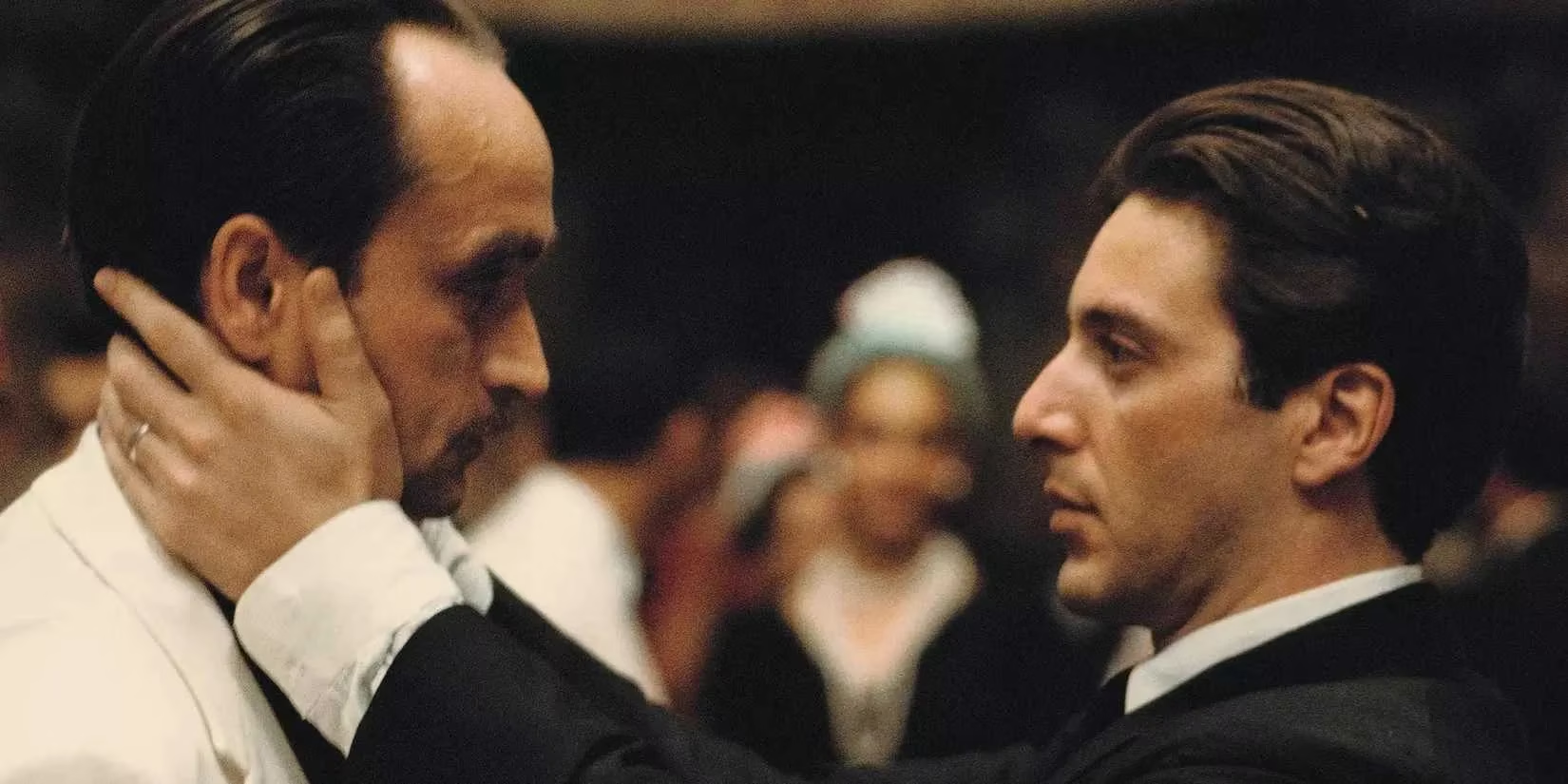
If The Godfather chronicled Michael Corleone's tragic metamorphosis from war hero to ruthless patriarch, The Godfather Part II documents his complete spiritual annihilation. The first film's ending is a quiet tragedy—his sister's hatred, his wife's horrified realization—but Part II plunges into abyssal darkness. Michael's corruption becomes absolute when he orders the murder of his own brother, Fredo, for his betrayal. The act is premeditated and cold; he spares Fredo only while their mother lives, making her death a macabre starting pistol for fratricide. The final image of Michael, utterly alone in his Lake Tahoe compound, is one of the most powerful in cinema: a king who has won his empire but lost his soul, his humanity, and every person he ever loved. There is no redemption, only the hollow echo of his own choices.
Early Brutality: The Shocking Finale of The Public Enemy
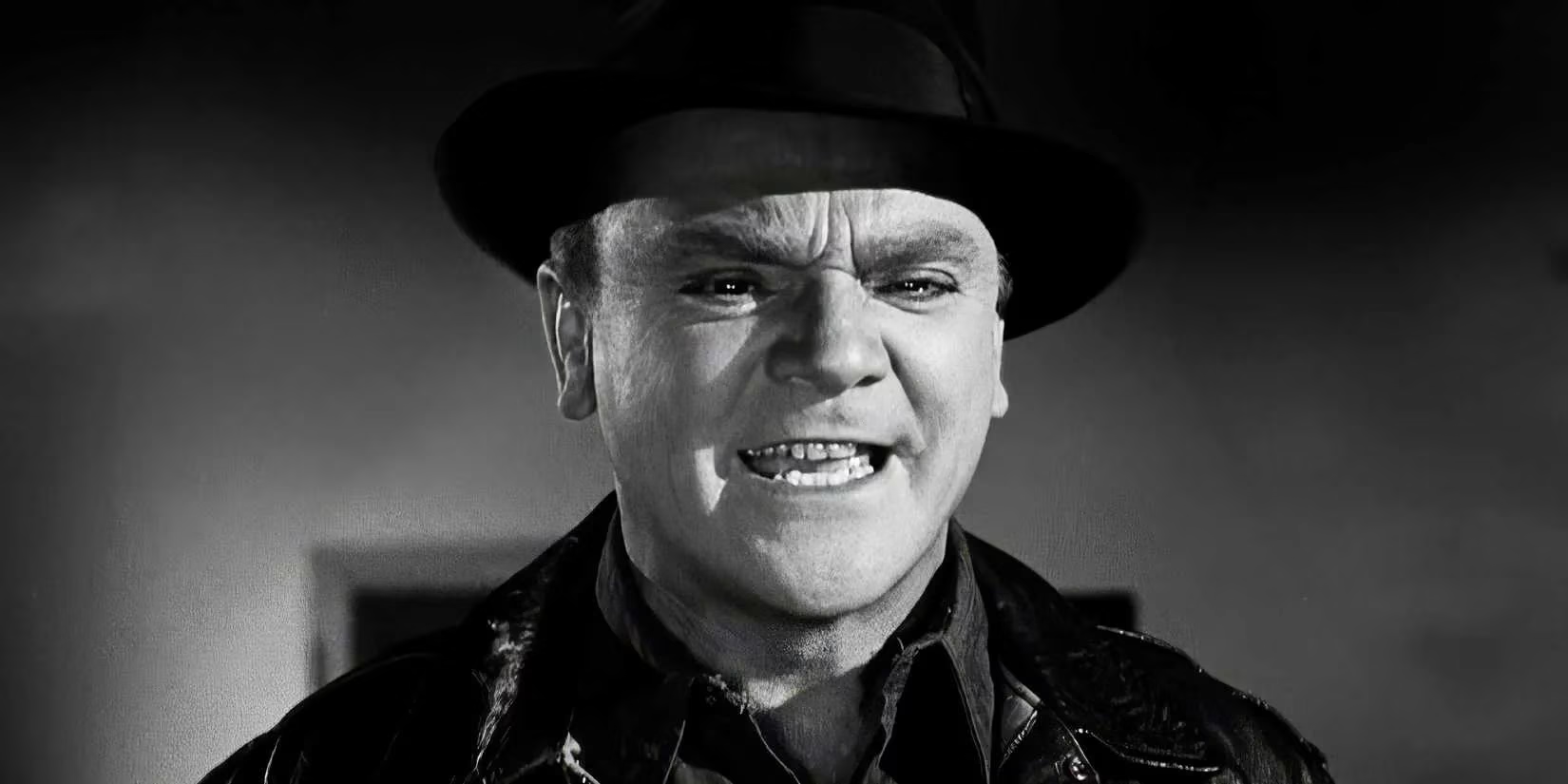
William A. Wellman's 1931 classic, The Public Enemy, established many genre tropes, including its capacity for brutal, unexpected endings. James Cagney's iconic performance as the swaggering Tom Powers charts a violent rise and an even more violent fall. What makes the conclusion so profoundly unsettling is its domestic violation. Despite his life of crime, Tom's mother clings to maternal love, preparing for his return home. The horror arrives not with a shootout but with a delivery. His corpse, bound and lifeless, is dumped unceremoniously on his family's doorstep, forcing his mother to confront the grotesque reality of her son's life. It’s a moment that swaps gangland spectacle for intimate, familial devastation.
Going Out in a Blaze: White Heat's Iconic Inferno
James Cagney returned to the genre with a vengeance in 1949's White Heat as Cody Jarrett, a psychopathic gang leader with a severe Oedipal complex. True to form, his arc ends in downfall, but the manner of his exit is legendary. Cornered by police after his beloved "Ma" is captured, Cody refuses a mundane death. Wounded and defiant, he scales a towering gas tank, screams the immortal line, "Top of the world, Ma!" and fires his pistol into the tank, triggering a cataclysmic explosion. This finale is less a defeat than a twisted, pyrotechnic assertion of self—a gangster choosing his own spectacular, nihilistic end over capture, cementing it as one of film history's most memorable conclusions.
Twisted Justice in The Departed
Martin Scorsese's The Departed is a labyrinth of dual identities, where an undercover cop (Leonardo DiCaprio) infiltrates the mob while a mob mole (Matt Damon) rises within the police. The film is a pressure cooker of paranoia that erupts in a cascade of violence. After the mole, Colin Sullivan (Damon), murders the undercover officer, the audience expects systemic justice. Instead, Scorsese delivers visceral, extrajudicial vengeance. Sean Dignam (Mark Wahlberg), a foul-mouthed but principled sergeant, bypasses the courts entirely. He confronts Sullivan in his apartment and executes him with a point-blank gunshot to the head. It's a shocking, morally ambiguous act that leaves viewers questioning the very nature of justice in a world where the institutions have been thoroughly corrupted.
Vigilante Conclusion in New Jack City
Mario Van Peebles' New Jack City (1991) explores the crack epidemic through the rise of kingpin Nino Brown (Wesley Snipes). The film builds toward a courtroom climax, but subverts expectations of legal triumph. Nino, leveraging the system, cuts a deal, testifies against an associate, and walks free on a technicality. Just as he smirks at his legal victory, an "Old Man" (Bill Nunn), a community elder whose life was destroyed by Nino's drugs, steps forward. In an act of raw, vigilante justice, he publicly assassinates Nino on the courthouse steps as the detectives watch, tacitly approving. The ending suggests that when the law fails, chaotic, personal retribution becomes the only viable option—a deeply troubling commentary on societal breakdown.
A Father's Last Stand in Road to Perdition
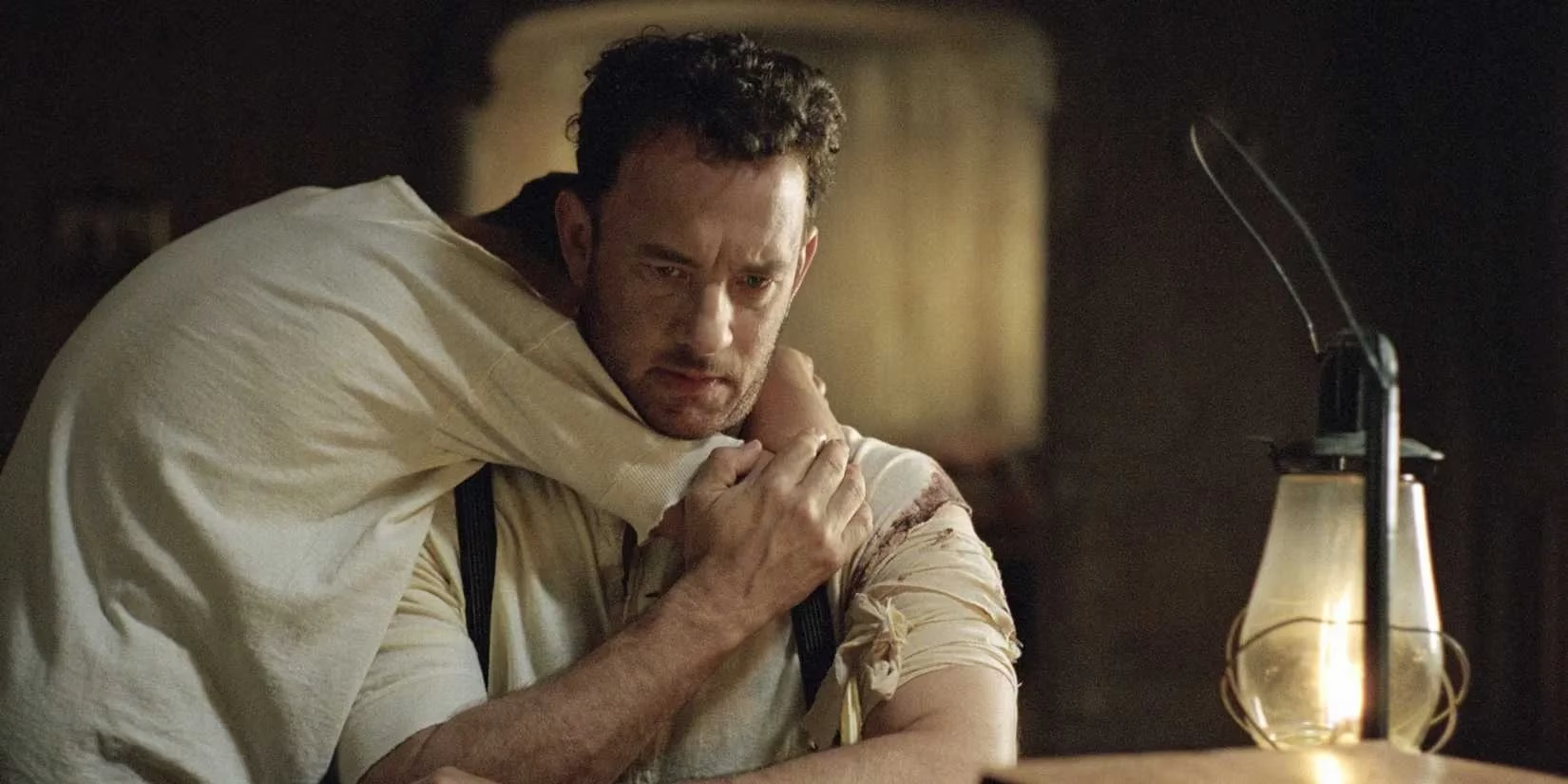
Sam Mendes' Road to Perdition is a somber, lyrical gangster film about legacy and sacrifice. Hitman Michael Sullivan (Tom Hanks) seeks revenge after his mob family murders his wife and younger son. The film builds to a poignant moment of resolution, but delivers a sucker-punch. Believing the war is over, Michael is ambushed on a rain-soaked beach. Shot in the back, his dying act is to return fire, killing the assassin to ensure his surviving son's safety. His final moments are not of violence, but of a father watching his boy run to safety, achieving a tragic redemption through his own death. It’s an ending that trades operatic violence for profound, heart-wrenching sorrow.
Dread Over Bloodshed: The Long Good Friday
The brilliance of The Long Good Friday's ending lies in its restraint. Harold Shand (Bob Hoskins), a London gangster aiming for legitimacy, spends the film battling unseen forces. He believes he has finally outmaneuvered his enemies. The horror dawns slowly as he gets into his car: his driver has been replaced by a silent IRA operative. Looking out, he sees another car containing his kidnapped girlfriend (Helen Mirren). In a single, wordless sequence, his smug triumph evaporates into utter helplessness and dread. There is no gunfight, no final speech—just the chilling realization that he has lost everything and is moments from death. It’s a psychological masterpiece of suspense.
Tarantino's Bloody Standoff: Reservoir Dogs
Quentin Tarantino's debut, Reservoir Dogs, concludes in a warehouse soaked in paranoia and blood. The botched heist has left the crew decimated, with the wounded Mr. Orange (Tim Roth) revealed as an undercover cop to his protector, Mr. White (Harvey Keitel). The final scene is a devastating confrontation between betrayed loyalty and professional duty. As police sirens wail outside, Mr. White, heartbroken and enraged, points his gun at Orange's head. The film doesn't show the outcome; it freezes on this impossible dilemma before cutting to black with a hail of gunshots. The audience is left to imagine the grim conclusion—a fittingly ambiguous and brutal end for a film built on deception and violent style.
These cinematic conclusions prove that the most powerful gangster stories are those where the final blow isn't just physical, but emotional and philosophical. They leave us contemplating the cost of ambition, the fragility of loyalty, and the haunting silence that follows the last gunshot. 😔💥 Their legacy endures precisely because they dare to offer not closure, but a scar.