Gangster movies aren't just about Tommy guns and cement shoes, are they? They're a treasure trove of dialogue so sharp it could cut through steel. From the silent era's whispers to the modern masterpieces, the genre has gifted audiences with lines that linger long after the credits roll. Think about it—what other film category can make you ponder life's big questions while someone's getting whacked? These quotes aren't just cool one-liners; they're windows into the souls of men who chose a life outside the law, filled with regret, ambition, and a twisted sense of honor. Let's dive into the underworld lexicon and unpack the brilliance behind the bravado.
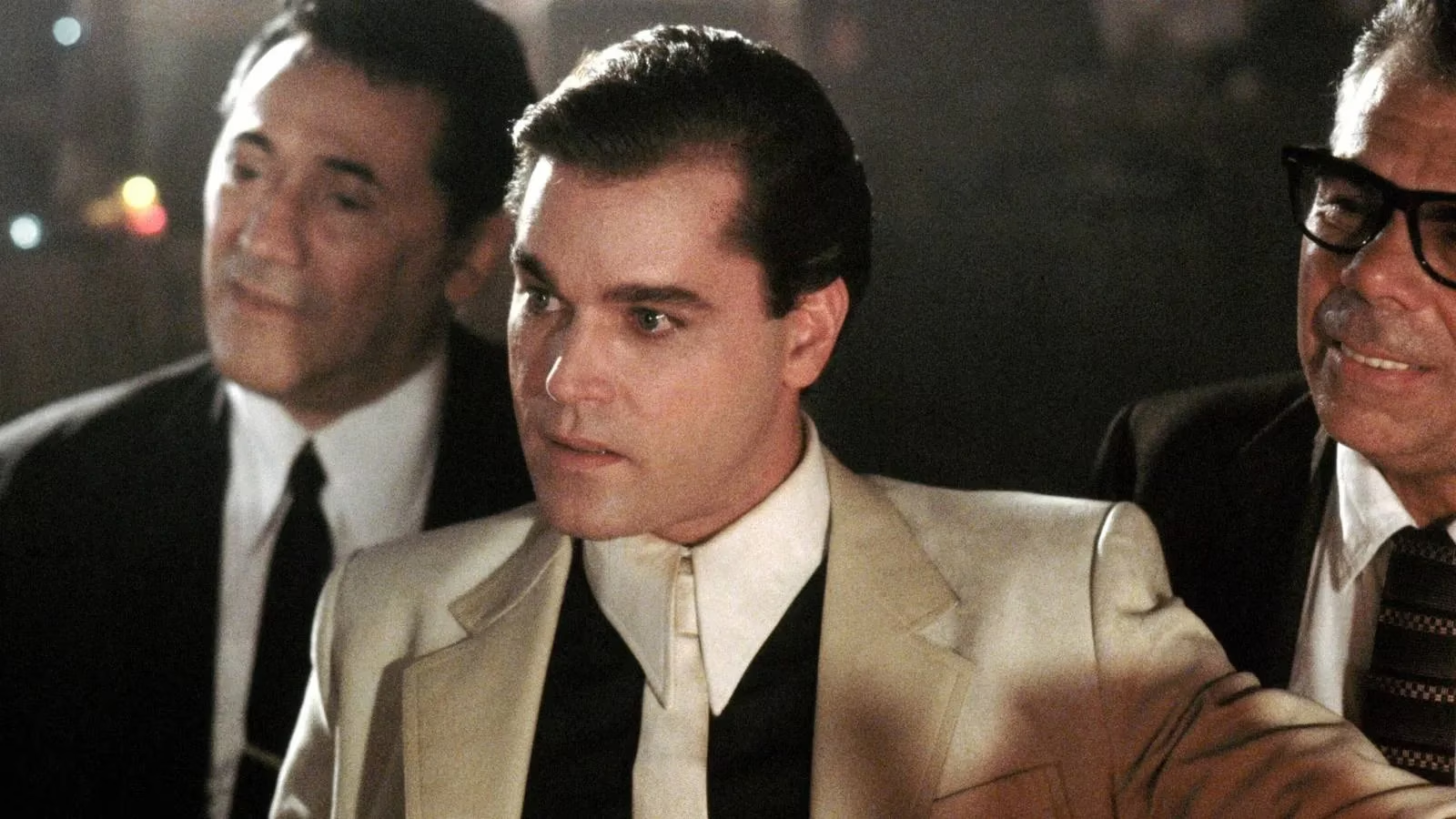
The Inescapable Fate: A Road to Perdition
Road to Perdition, that Sam Mendes-directed gem often lost in the shuffle, serves a chilling dose of reality. Paul Newman's mob boss, Rooney, delivers a line to his surrogate son, Michael Sullivan (Tom Hanks), that's colder than a Chicago winter: "There are only murderers in this room! Michael. Open your eyes! This is the life we chose, the life we lead. And there is only one guarantee: none of us will see Heaven." Rooney isn't just stating the obvious; he's tearing away the last shred of illusion. He knows the score—there's no redemption, no pearly gates, no happy ending. Their fate was sealed the moment they embraced the life. It's a profound acknowledgment that for some, the destination is always hell, and the journey is just the scenic route. 🤯
Reputation is Everything: Scarface's Crude Philosophy
Everyone remembers "Say hello to my little friend!" but the real genius in Scarface is far more subtle. Tony Montana, Al Pacino's cocaine-fueled kingpin, barks: "All I have in this world is my balls and my word, and I don't break them for nobody." Why is this so brilliant? It's a hilariously crude yet perfectly honest manifesto. Tony's entire existence is a fight for respect. His "word" is the currency of his reputation, the only thing he truly owns. But by lumping it together with his... ahem, other assets, he reveals the gangster's paradox: power is both transactional and intensely personal, built on fragile promises and the constant threat of violence. It's loyalty wrapped in a threat, a business plan spelled out in the basest terms.
Street-Level Redemption: Mean Streets' Bleak Theology
Before Goodfellas and Casino, Martin Scorsese cut his teeth on Mean Streets. Harvey Keitel's Charlie delivers this gut punch: "You don't make up for your sins in church. You do it in the streets. You do it at home. The rest is bullshit and you know it." Forget confessionals and Hail Marys! For these low-level hoods, forgiveness isn't divine; it's earned (or not) in the same gritty alleyways where they sin. The church offers empty ritual, but the streets offer consequences. This quote strips away any spiritual pretense, arguing that a gangster's morality is a closed, earthly system. Their judgment day happens every time they step outside.
| Movie | Character | Core Quote Insight |
|---|---|---|
| Road to Perdition | Rooney | Acknowledges the inescapable damnation of the criminal life. |
| Scarface | Tony Montana | Reduces the gangster code to a crude equation of reputation and personal fortitude. |
| Mean Streets | Charlie | Replaces divine forgiveness with street-level accountability. |
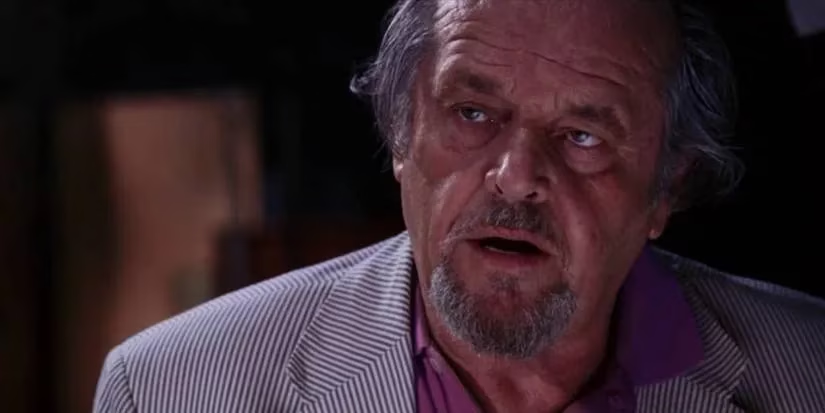
Shaping Your World: The Departed's Power Play
In Scorsese's The Departed, Jack Nicholson's unhinged mob boss Frank Costello schools his protégé with this gem: "I don't want to be a product of my environment. I want my environment to be a product of me." Is this just the rambling of a psychopath? Hardly. This is the ultimate gangster ambition distilled into one sentence. Society tries to mold people, but the true power move is to reverse the process. A mafia don doesn't adapt to the world; he bends it to his will, corrupting institutions, buying politicians, and defining the rules himself. It's a terrifyingly proactive philosophy of control.
The Ghost in the Room: The Usual Suspects' Greatest Trick
The Usual Suspects may have its controversies, but the writing remains devilishly clever. The film's power hinges on this line from the elusive Keyser Söze: "The greatest trick the devil ever pulled was convincing the world he didn't exist." Why does this quote transcend the movie? It's the perfect metaphor for the gangster who operates from the shadows. The most powerful criminal isn't the one with the biggest gun, but the one whose influence is so pervasive he becomes a myth. It’s about controlling perception to the point of invisibility, making every move while everyone looks the other way.
A Pyrotechnic Farewell: White Heat's Oedipal Climax
James Cagney's Cody Jarrett in White Heat goes out not with a whimper, but with a literal bang. His final scream, "Top of the world, Ma!" as he blows himself up, is layered with meaning. On one level, it's the ultimate act of defiance—choosing his own spectacular demise over capture. On a deeper, Freudian level, it's the twisted victory cry of a man with a severe Oedipal complex. His entire identity and criminal drive are tied to his mother's approval. In his final moment, he's not a failed gangster; he's finally on top, giving his mom the grand finale she (in his mind) always wanted for her boy. Talk about a complex villain!
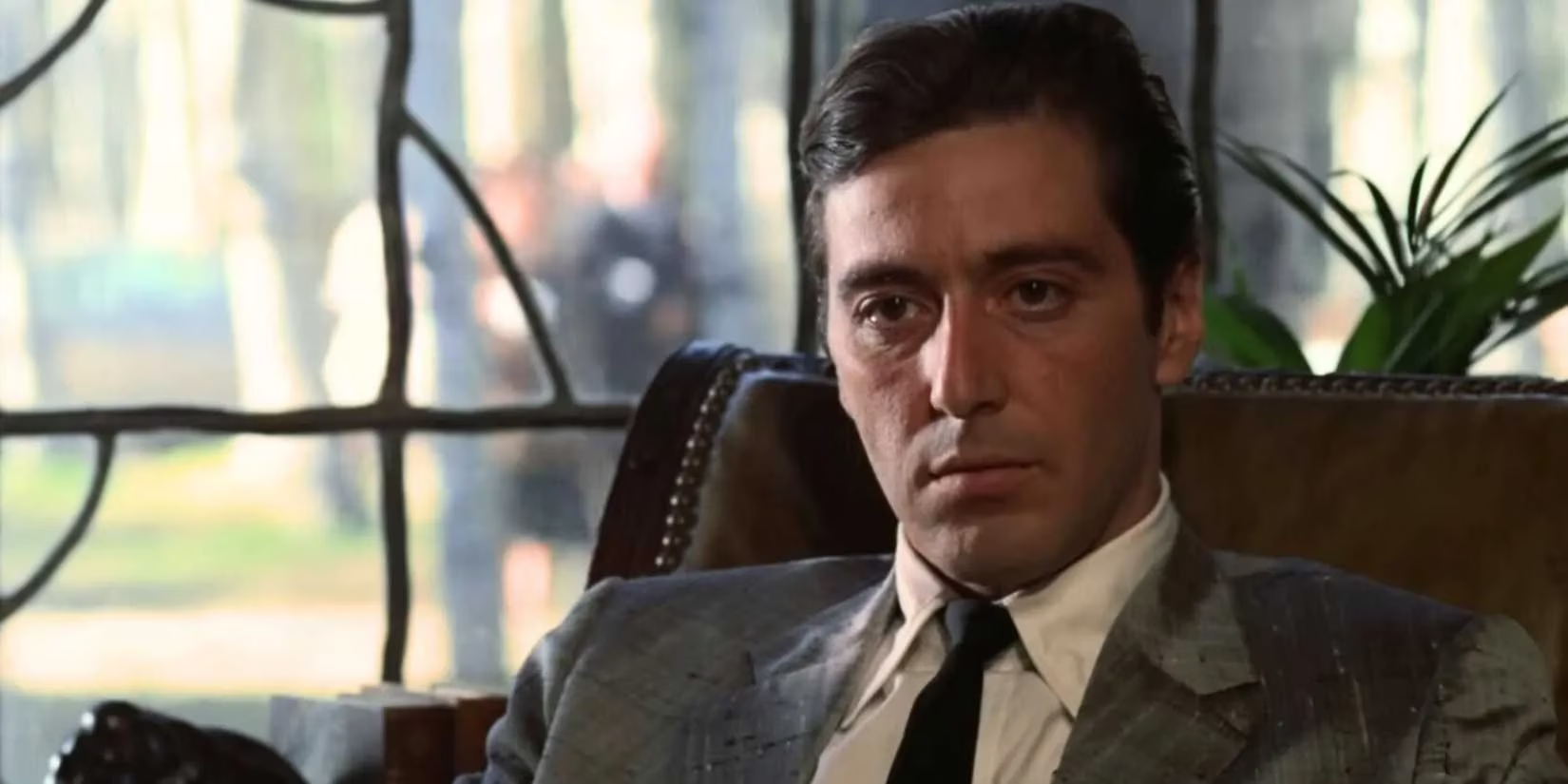
Keep Your Friends Close...: The Godfather's Strategic Paranoia
Michael Corleone's cold, calculating advice—"Keep your friends close, but your enemies closer"—has seeped into the global consciousness. Why? Because it's Sun Tzu's The Art of War repackaged for the boardroom and the back alley. Michael understands that proximity to a threat isn't a weakness; it's a tactical advantage. By keeping enemies nearby, you monitor their moves, anticipate their strikes, and control the narrative. It's the philosophy that kept the Corleones alive: transform paranoia into a management strategy. This quote's genius is its universal application, proving that gangster wisdom often mirrors the brutal truths of power dynamics everywhere.
The Lament of Lost Potential: On the Waterfront
Marlon Brando's Terry Malloy delivers one of cinema's most heartbreaking lines: "You don't understand! I coulda had class. I coulda been a contender. I coulda been somebody, instead of a bum, which is what I am." This isn't just a boxer's regret; it's the universal gangster lament. It speaks to the moment of clarity—or too-late realization—that a life of crime is a dead end. The path not taken, the potential squandered for short-term gain or misguided loyalty. It’s the haunting voice of every person who traded their future for a fast score, only to find the price was their soul.
The Allure of the Life: Goodfellas' Seductive Pull
Ray Liotta's Henry Hill explains the irresistible draw in Goodfellas: "As far back as I can remember, I always wanted to be a gangster." This simple statement is deceptively profound. It wasn't about money or power initially; it was about identity, glamour, and escaping the mundane. For Henry, growing up in that neighborhood, gangsters were the local celebrities, the kings of the concrete jungle. The quote captures the myth-making of the mafia, the seductive fantasy that pulls young men in long before they understand the brutal reality. It's the 'why' before the 'what'—the dream that makes the nightmare seem worth it.
The Offer You Can't Refuse: The Godfather's Defining Moment
And we arrive at the pinnacle. Marlon Brando's Vito Corleone, in a moment of quiet, terrifying power, says: "I'm gonna make him an offer he can't refuse." This line didn't just define a character; it defined an entire genre's approach to power. Vito's genius is his preference for deal-making over bloodshed, but the implicit violence gives the deal its weight. The quote is brilliant because it operates on two levels: the surface-level business proposition and the subterranean threat of annihilation. It's the ultimate expression of controlled power—why wage war when you can simply dictate the peace? It remains the gold standard, the quote against which all other gangster lines are measured.
So, what have we learned? The genius of these gangster movie quotes lies in their brutal honesty about:
-
Fate and Damnation: The grim acceptance of a chosen path with no happy ending.
-
Power and Control: The desire to shape the world, not be shaped by it.
-
Regret and Lost Potential: The haunting echo of the person one could have been.
-
Identity and Allure: The seductive, often childish, dream that starts the journey.
-
Strategic Savagery: The cold, calculated logic that replaces conventional morality.
These lines stick with us because they're not just about crime; they're about the human condition—ambition, fear, regret, and the quest for respect—viewed through the distorted lens of the underworld. They remind us that the most memorable gangsters are often the ones who understood the rules of their game better than anyone, even as they broke every rule in society's book. Now, go rewatch your favorites—just maybe don't take the business advice too literally. 😉