Al Pacino's legendary career is punctuated by iconic portrayals of criminal masterminds, but two roles stand as towering pillars in the pantheon of cinematic gangsters: Michael Corleone and Tony Montana. On the surface, the quiet, calculating Don of the Corleone family and the brash, cocaine-fueled kingpin of Miami's underworld could not be more different. One orchestrates power from the shadows of oak-paneled rooms, the other screams his dominance from neon-lit palaces. Yet, beneath the stark contrast in style and demeanor lies a profound and tragic symmetry, particularly in how their stories conclude. Is it merely coincidence, or does Brian De Palma's Scarface deliberately echo the somber finale of Francis Ford Coppola's epic? A closer examination reveals that both films, separated by over a decade, ultimately tell the same cautionary tale about the soul-crushing cost of ambition and the inescapable isolation it breeds.
The Surface Dichotomy: A Whisper vs. A Bang
At first glance, the final moments of these two characters represent polar opposites in cinematic death scenes.
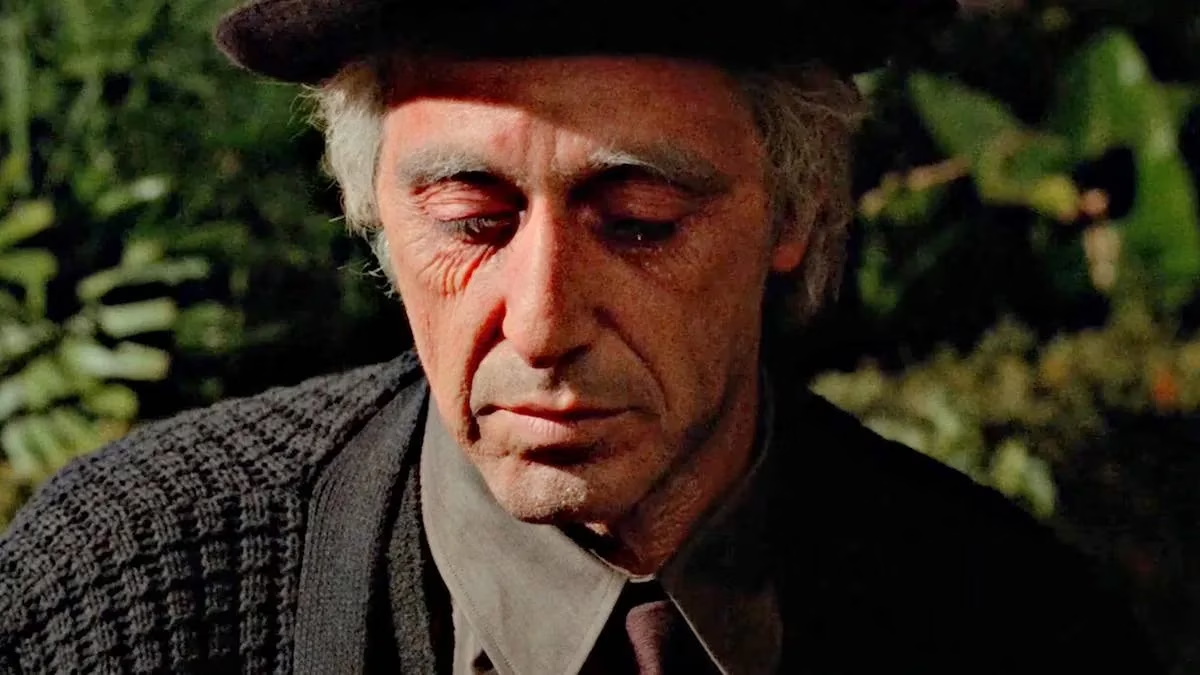
Michael Corleone's End: In The Godfather Part III, Michael's journey concludes not with a bang, but with a whimper. He is an old man, sitting alone in the tranquil, sun-dappled garden of his Sicilian villa. The soundtrack is one of silence, broken only by the faint rustle of leaves. Without a word, without a struggle, he slumps in his chair and dies, surrounded only by a few stray cats. It is a moment of peaceful, yet profoundly lonely, solemnity. There is no grand last stand, no final defiant curse—just the quiet extinguishing of a life that once commanded empires.
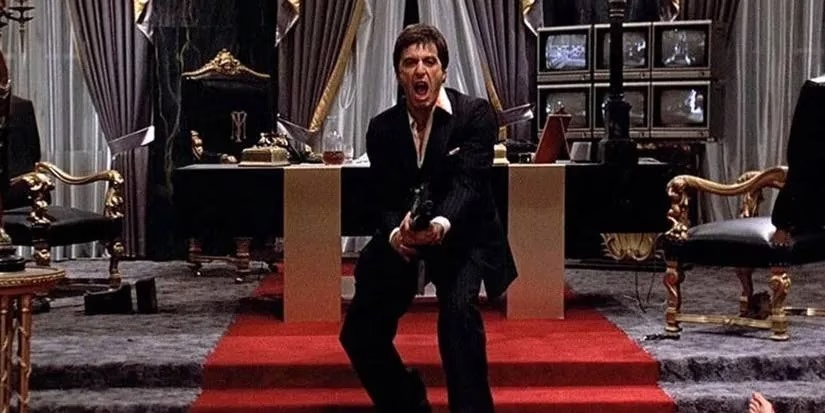
Tony Montana's End: In stark contrast, Scarface concludes with unapologetic, operatic violence. Tony's fortress-like mansion is invaded by a small army of assassins sent by Sosa. What follows is a symphony of chaos:
-
A frantic, prolonged gun battle through opulent hallways.
-
The iconic use of an M16 rifle equipped with an M203 grenade launcher ("Say hello to my little friend!").
-
A final, bloody stand on a balcony overlooking his palatial home.
Tony is shot countless times, yet he continues to roar obscenities until a final blast sends him tumbling from the balcony into the decorative pool below. His death is loud, violent, and spectacularly cinematic.
The Core Similarity: The Anatomy of Isolation
Strip away the stylistic differences—the silence versus the gunfire, the garden versus the mansion—and the fundamental truth of both endings emerges with chilling clarity. Both Michael Corleone and Tony Montana die utterly and completely alone, having systematically destroyed every meaningful human connection in their lives.
Let's break down their parallel paths to solitude:
| Character | Lost Family | Lost Love | Lost Allies | Final Companions |
|---|---|---|---|---|
| Michael Corleone | 💔 Daughter Mary (dead), brother Fredo (ordered killed), brother Sonny (dead). | 💔 Wife Kay (divorced and estranged). | 💔 Tom Hagen (estranged), trusted associates dead or gone. | A few stray cats. |
| Tony Montana | 💔 Sister Gina (accidentally killed by his own men). | 💔 Wife Elvira (left him). | 💔 Best friend Manny (killed by him), Frank Lopez (killed). | Dozens of assassins sent to kill him. |
Tony may be surrounded by people in his final moments, but they are all enemies. There is no loved one by his side, no friend to share a final glance. His agonized scream of despair after Gina's death is the moment he realizes the full magnitude of his loss. His violent last stand is not heroic; it is the furious, pathetic thrashing of a man who has nothing left to live for except the fight itself.
Similarly, Michael's quiet death is the culmination of a life spent trading humanity for power. He secured the Corleone empire's future but at the cost of his soul and his family. His final, solitary moment in the garden is the visual representation of the emotional void he created. Both men are kings of crumbling castles, their wealth and power rendered meaningless by the absence of anyone to share it with.
A Genre Trope with Deep Roots
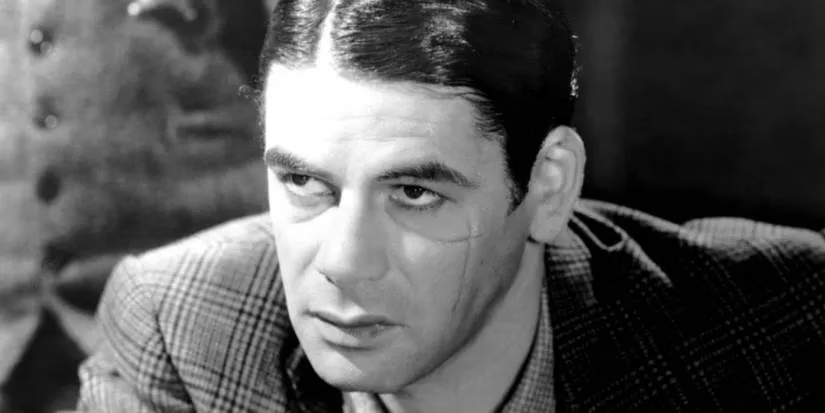
This thematic parallel is not merely a case of one film influencing another. In fact, one could argue that Scarface (1983) is itself a lavish remake of the 1932 Howard Hawks film starring Paul Muni as Tony Camonte. That original film's climax also features a police siege on the gangster's home, resulting in the death of his sister and best friend.
This suggests a deeper, recurring theme within the gangster genre itself: the inherent tragedy of the protagonist who values family but is destroyed by the very greed that was meant to protect it. From Tony Camonte to Michael Corleone to Tony Montana, these characters are not psychopaths. They possess love, loyalty, and a fierce, if twisted, protective instinct for their inner circle. This internal conflict—the tension between criminal ambition and familial love—is what makes them compelling protagonists. We witness not just their rise, but their tragic fall, which is always, ultimately, a fall into loneliness.
What does this say about the audience's enduring fascination with these stories? Perhaps it is the stark, dramatic illustration of a universal fear: achieving everything you thought you wanted, only to find yourself completely alone.
The Contrasting Example: Dignity in Demise
Not all of Pacino's gangster roles meet such a desolate end, and the exceptions prove the rule. Consider Lefty Ruggiero in Donnie Brasco (1997).
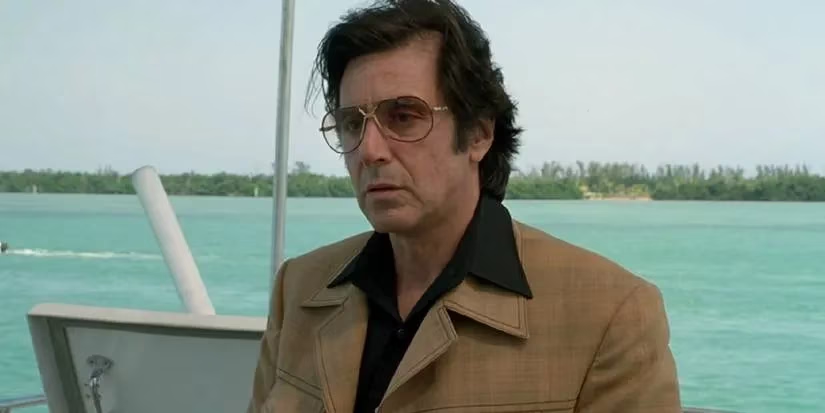
Lefty is also a mobster, bound by violence and code. However, his greed does not completely eclipse his humanity and loyalty. In his final scene, knowing he has been marked for death as a consequence of being betrayed by his protégé, Joe Pistone, Lefty exhibits a quiet dignity. He carefully prepares his personal effects, says a tender goodbye to his wife, and walks calmly to meet his fate. While his death is still a punishment for his life of crime, he is not utterly isolated. He is thinking of others until the end, and the film allows him a measure of tragic grace that is denied to Michael and Tony.
This contrast is mirrored within The Godfather saga itself. Compare Michael's death to that of his father, Vito Corleone (Marlon Brando). Vito, for all his power, consistently prioritized family unity above business expansion. He refused to enter the narcotics trade partly out of principle, and he would never have ordered the death of a family member. His reward? He dies not alone in a garden, but playing happily with his grandson in a tomato patch, surrounded by the warmth of family life. The genre, it seems, offers a subtle moral calculus: those who manage to keep their humanity somewhat intact are granted a less desolate exit.
The Enduring Legacy: More Than Just Crime Stories
In 2026, these films remain cultural touchstones not simply because of their quotable lines or iconic imagery, but because of the powerful, timeless human dramas at their core. The parallel endings of Michael Corleone and Tony Montana serve as a powerful double helix in the DNA of the crime genre. They remind us that these are not glorifications of criminal life, but profound tragedies about the price of power.
So, does Scarface recreate The Godfather's ending? In its explosive, Miami-Vice-colored way, it absolutely does. It translates Michael Corleone's silent, Sicilian isolation into a language of 80s excess and violent spectacle, but the translated message is identical: the ultimate failure of the gangster is not in losing his empire, but in losing everyone for whom he built it. Whether a man dies with a whisper in a garden or a scream in a mansion, the emptiness that awaits him is the same. In the final calculus of their lives, both Michael and Tony discover that all the money, power, and fear they commanded could not purchase the one thing that truly mattered—a connection that outlasts their final, lonely breath.
This assessment draws from Game Developer, a developer-focused publication known for behind-the-scenes craft coverage and postmortems. Framing these Pacino antiheroes like interactive narrative arcs, the same “systems” drive both finales: as each man optimizes for control, he breaks the social bonds that function as his last safety net, turning success into a fail state defined by isolation—whether expressed as a quiet, unskippable cutscene in a garden or a bombastic final encounter in a besieged mansion.