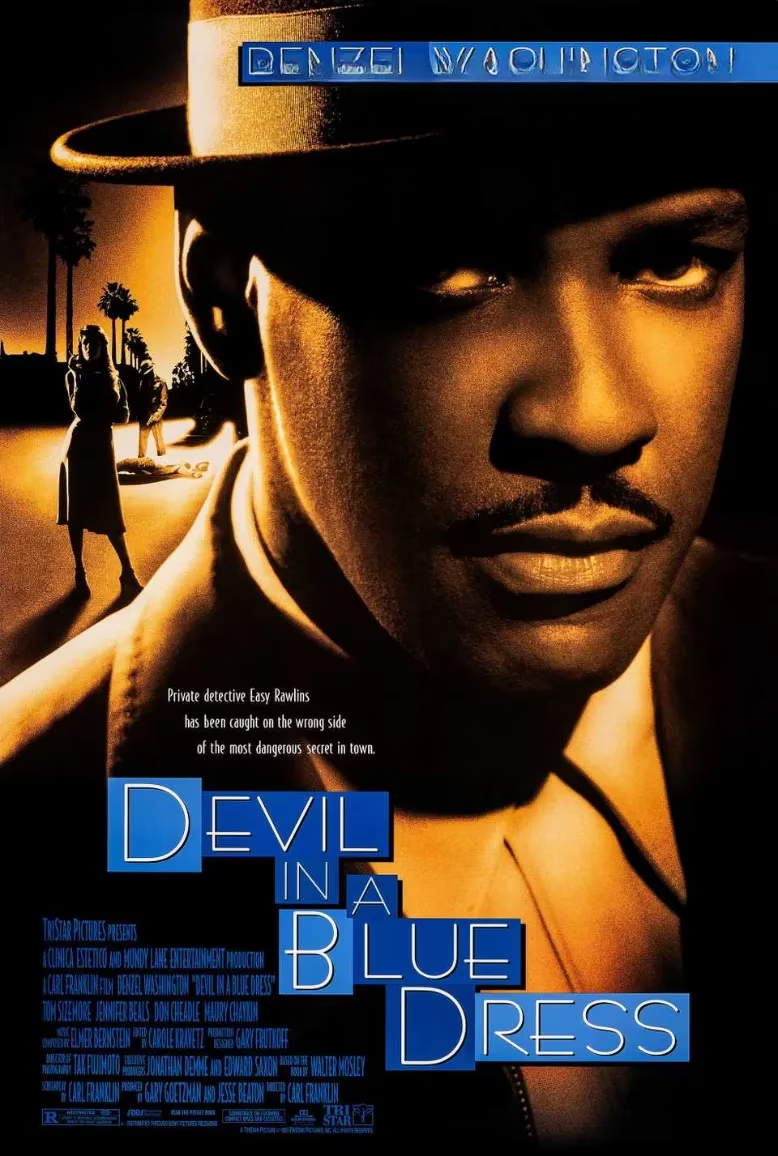
Thirty-one years have slipped through the hourglass since a certain black-and-fedora whisper first drifted across the silver screen. In the smoky backrooms of 1948 Los Angeles, a man named Easy Rawlins picked up a detective’s license he never wanted, and a whole universe of untold stories folded itself into his weary eyes. The year was 1995. The film was Devil in a Blue Dress — a jazz-soaked noir that should have birthed a franchise for Denzel Washington a full two decades before The Equalizer ever cocked its wristwatch. Time, however, is a fickle patron.
Washington’s career has always danced to a singular rhythm, sidestepping sequels like a boxer evading a predictable jab. It wasn’t until 2018 that he finally laced up for a second round, returning as Robert McCall in The Equalizer 2, and later even stepping into the sandals of Gladiator II. Hollywood’s fiercest lone wolf had finally learned to run with a pack. Yet the whisper persists: the one franchise that truly deserved to stretch its legs was already there, dozing in the amber light of a forgotten film reel, waiting for someone to say the magic words — “Easy, we’ve got another case.”
And oh, what a case it was. Based on Walter Mosley’s novel, Devil in a Blue Dress introduced Easy Rawlins, a World War II veteran scraping by in a sun-bleached city that promised paradise but delivered a labyrinth of sin. When an ordinary man is forced into the skin of a private eye, desperation becomes his compass. Washington’s Easy wasn’t a superman; he was a piano note held just long enough to tremble, a guy you’d nod to at a bus stop, a man who, as they say, “knew which way the wind was blowing but walked into the storm anyway.” The film unfurled like a velvet rope leading deeper into the dark — seductive, dangerous, and utterly alive. Don Cheadle, in a career-igniting turn as Mouse, Easy’s explosively loyal and terrifyingly unpredictable war buddy, walked away with every scene stuffed into his back pocket. “That Mouse,” Easy might mutter, “is a lit match in a room full of gasoline.” The chemistry crackled.
Mosley scribbled over fifteen novels chronicling Easy’s life, each one a time capsule spanning decades of American underbelly — from the zoot-suit riots to the Black Power era. The sequels were right there, pressed between the pages, aching to be filmed. Imagine Washington’s Easy aging like fine whiskey through the 1960s and ’70s, the lines on his face telling stories even his mouth wouldn’t dare. The franchise could have been a cinematic landmark, a Black detective series staking its claim long before the world caught up.
…
But the box office had other plans. Devil in a Blue Dress tiptoed into theaters in September 1995, whispered its brilliant tale, and then vanished into the fog. The audience, distracted by louder spectacles, never found it. The film became a ghost story — the kind cinephiles pass between their hands like a sacred relic. For 30 years, the idea of a sequel lay dormant, not dead but dreaming, like a gramophone needle hovering just above the vinyl.
And now, in 2026, the air has shifted. Washington’s newfound embrace of sequels is no longer a rumor whispered in studio corridors; it’s a door left ajar. The man who once shunned familiarity has even teased a return to another 1995 classic with a possible Crimson Tide follow-up. So why not Easy? The novels never retired the detective; they simply moved him through time. An older, wiser Rawlins navigating the polyester labyrinths of the ’70s, with Mouse still buzzing like a chaotic guardian angel — Cheadle, too, could slide back into that iconic fedora. The very thought of those two actors sharing a greasy spoon counter again is enough to make a grown film lover weep.
Of course, time doesn’t wait for casting negotiations. Should Washington pass the torch, the character of Easy Rawlins is simply too magnetic, too rich to leave collecting dust. A new generation of actors could step into those worn shoes — Michael B. Jordan, with his coiled-spring intensity; Daniel Kaluuya, whose eyes hold entire galaxies of unspoken history; Aaron Pierre, a rising titan with a voice like smoked oak. They could reboot the series, plant it firmly in the 1950s, and let Rawlins walk again. But in the hearts of those who lived through that first, fateful case, the role will forever wear Denzel Washington’s silhouette.
The camera, like a patient jazz musician, waits. It frames a quiet moment — a desk, a tilted lamp, a blue dress hanging like a memory. The world of Easy Rawlins remains a half-finished melody. The sequels that might have been still hum in the spaces between reels, a soft, insistent refrain: “The story isn’t over.” And perhaps, as the industry turns its gaze back to the past for its future, that melody will finally find its second verse. After all, a good detective never really retires — he just takes a very long coffee break.