I used to believe I had Guy Ritchie all figured out. Behold the man who baptized me in the fast-talking, bullet-riddled chaos of London’s underworld—Lock, Stock, Snatch, the madcap glory of cockney criminals, and sequences so stylish they felt like playing a perfect combo in a brawler game. Ritchie’s world was a darkly comic video game cutscene brought to ferocious life. Then came The Covenant, a film that pulled me away from the concrete jungle and dropped me into the scorching Afghan desert. And there, in the shimmering heat, I found not just a great movie, but the director's most intimate masterpiece.☄️
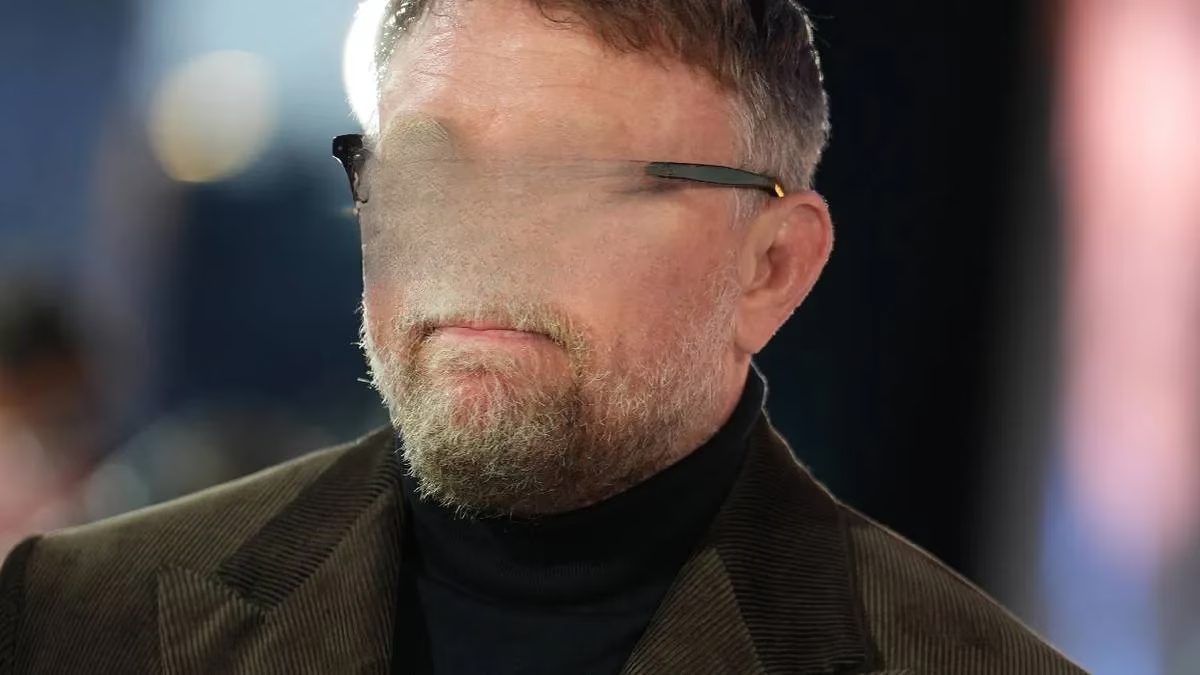
How could the same hand that painted Snatch’s absurdity craft a war story so hushed that silence itself becomes the loudest scream? That question haunted me through every frame of The Covenant. It’s not a rhetorical trick—Ritchie genuinely surprised the world. His earlier genre detours into Sherlock Holmes, King Arthur, or the glittering sands of Aladdin were elaborate, crowd-pleasing side quests. But The Covenant, a 2023 modern war drama starring Jake Gyllenhaal, was a deliberate leap into territory few associated with him. And yet, the numbers whisper an undeniable truth: with an 82% Rotten Tomatoes score, it comfortably eclipses Lock, Stock and Two Smoking Barrels (75%) and Snatch (74%), becoming his most critically acclaimed film. A masterpiece born not from his familiar style, but from his startling restraint.
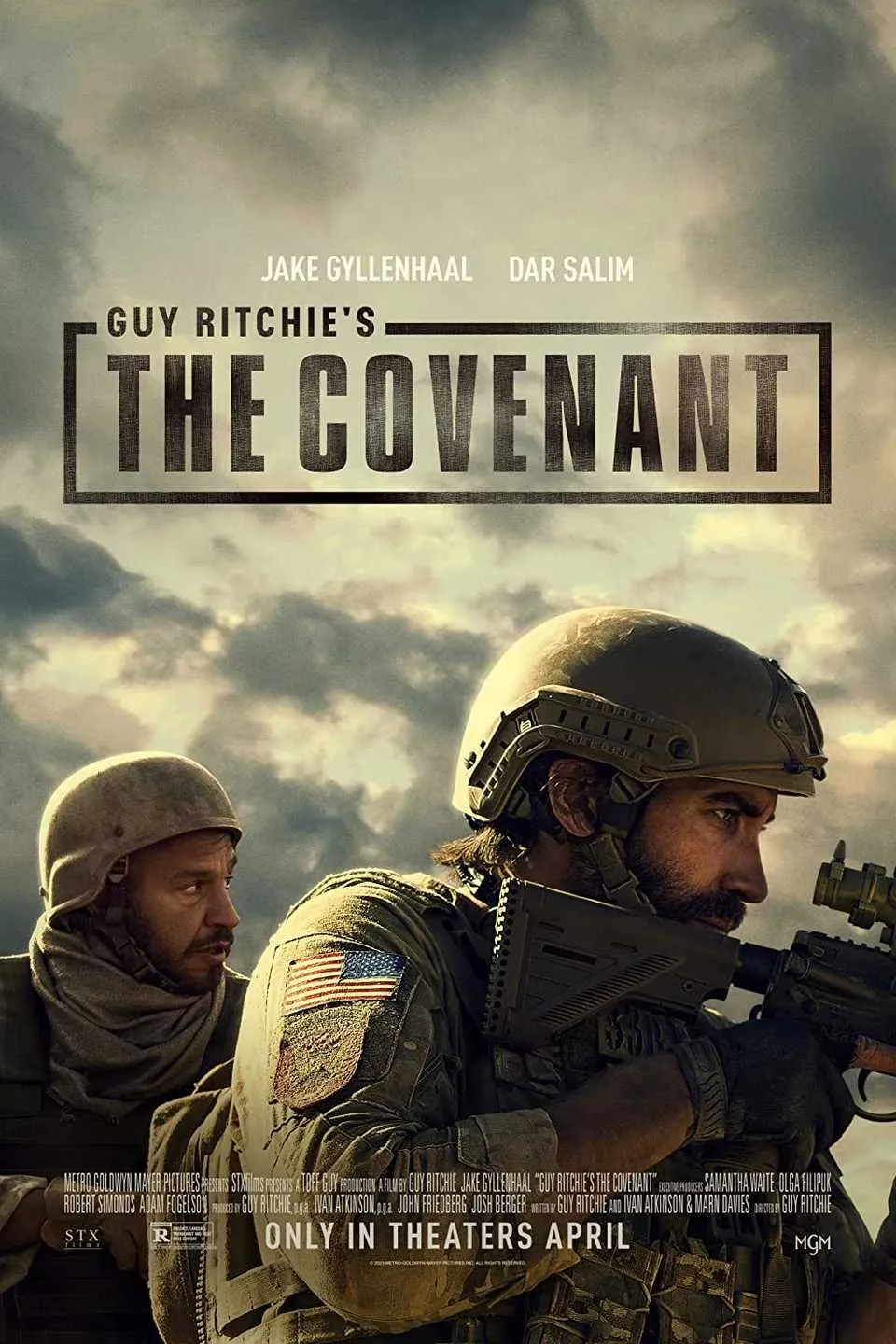
Let me trace the narrative, simple yet monumental. In 2018 Afghanistan, Master Sergeant John Kinley (Gyllenhaal) leads a unit that is ambushed and slaughtered. The lone survivor, Kinley owes his life to his Afghan interpreter, Ahmed, played with profound stillness by Dar Salim. But salvation isn’t the end. When Kinley returns stateside and learns Ahmed and his family have been abandoned—left to navigate a landscape of vengeful hunters—he embarks on a desperate, unauthorized solo mission back into the war zone. This is no heroic power fantasy. It’s a debt of honor paid in blood and dogged silence.
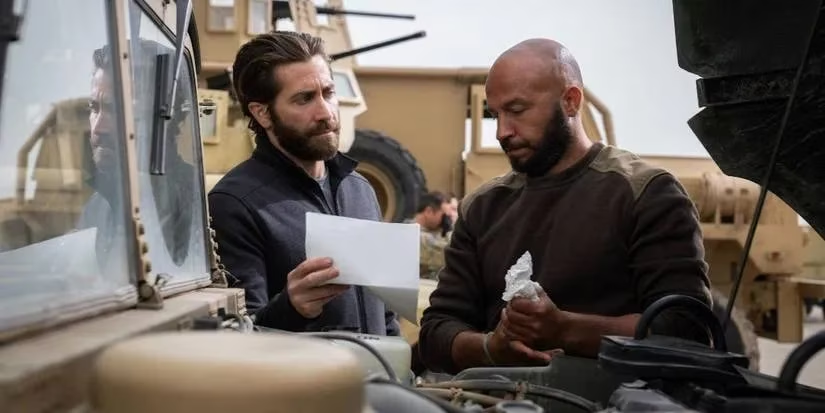
Why did this film move me in ways Call of Duty campaigns never could? Because the true battle isn’t tactical—it’s existential. Ritchie strips away his signature macho banter, his rapid cuts, his freeze-frames, and instead relies on something terrifyingly raw: the weight of survival. There’s a scene in which Kinley mourns his fallen team. Ahmed sits beside him, not speaking. No music swells, no close-up wavers. The two men exist in a shared chasm of grief, and in that moment, The Covenant reveals its soul. I, a seasoned gamer accustomed to cutscenes that explain emotion, suddenly realized I was watching a language beyond words—the language of cinema poetry.
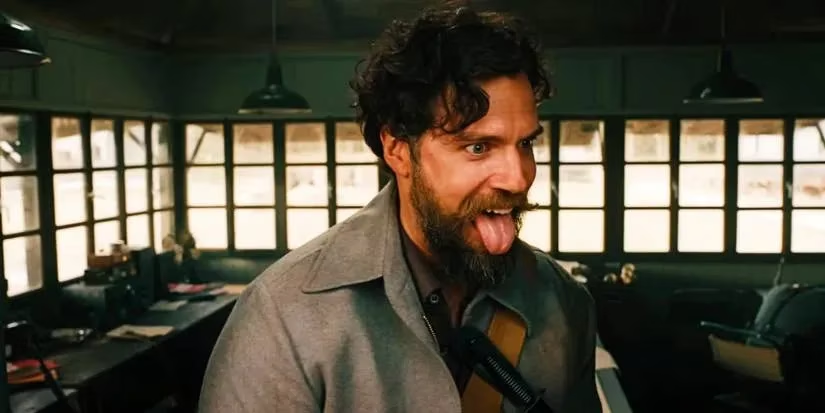
Contrast this with Ritchie’s other war film, The Ministry of Ungentlemanly Warfare (2024), a raucous, Inglourious Basterds–esque romp starring Henry Cavill and Alan Ritchson. Don’t get me wrong—it’s a blast, a chaotic, humorous raid behind Nazi lines, evoking the thrill of a cooperative stealth-shooter. The Rotten Tomatoes score (68%) reflects solid fun but not transcendence. What makes the juxtaposition so striking? One is a carnival ride, the other a pilgrimage. Attending The Ministry felt like replaying my favorite action mission with unlimited ammo; watching The Covenant felt like finding a hidden dialogue-driven indie game that refuses to let me respawn without consequence.
I used to think of Ritchie as the master of orchestrated chaos, the director who turned every shootout into a domino chain of grins. But The Covenant revealed a filmmaker who understands that the most gripping tension comes from the quietest choices. It’s a war film with no bravado, only texture. Dust clinging to torn uniforms. The hollow clank of a single vehicle approaching. The unspoken pact between two men from clashing worlds who become brothers in duty. Where Snatch feels like bustling through London streets during a showdown, The Covenant feels like wandering alone after the battle, picking up the pieces of humanity.🎮
Critics who had long pigeonholed Ritchie were forced to reassess. Screen Rant’s own review declared it “the kind of film that the director’s fans have been waiting to see from him… a beautiful story about survival, humanity, and doing the right thing even when there are countless obstacles in the way.” Indeed, despite its box office underperformance—a bewildering fact—the film’s legacy already gleams brighter. It stands as a reminder that the most powerful game engines aren’t always those with the flashiest graphics; sometimes they’re the ones with the deepest, most sorrowful scripts.
And what of us, the audience? I left The Covenant in 2023, but its afterimage still haunts me in 2026. I’ve replayed countless war games since then, yet none have replicated that feeling of being pinned beneath the Afghan sun, caught between despair and improbable hope. Guy Ritchie, the cockney wizard, found his truest voice in a language of dust and devotion—and I, a lifelong gamer trained to expect thrilling spectacle, was gifted a lesson in the sublime power of restraint. Is this the same director? Yes. But it’s also the artist I never knew I needed.
So, if you’ve yet to witness The Covenant, ask yourself: are you brave enough to let a film disarm you with silence rather than bullets? I wasn’t ready. But those 123 minutes reshaped my understanding of both war cinema and the director I thought I knew. In a medium so often dominated by loud explosions, the greatest detonation may just be a soft-spoken promise kept across continents. And that, dear fellow traveler, is a victory screen worth earning.