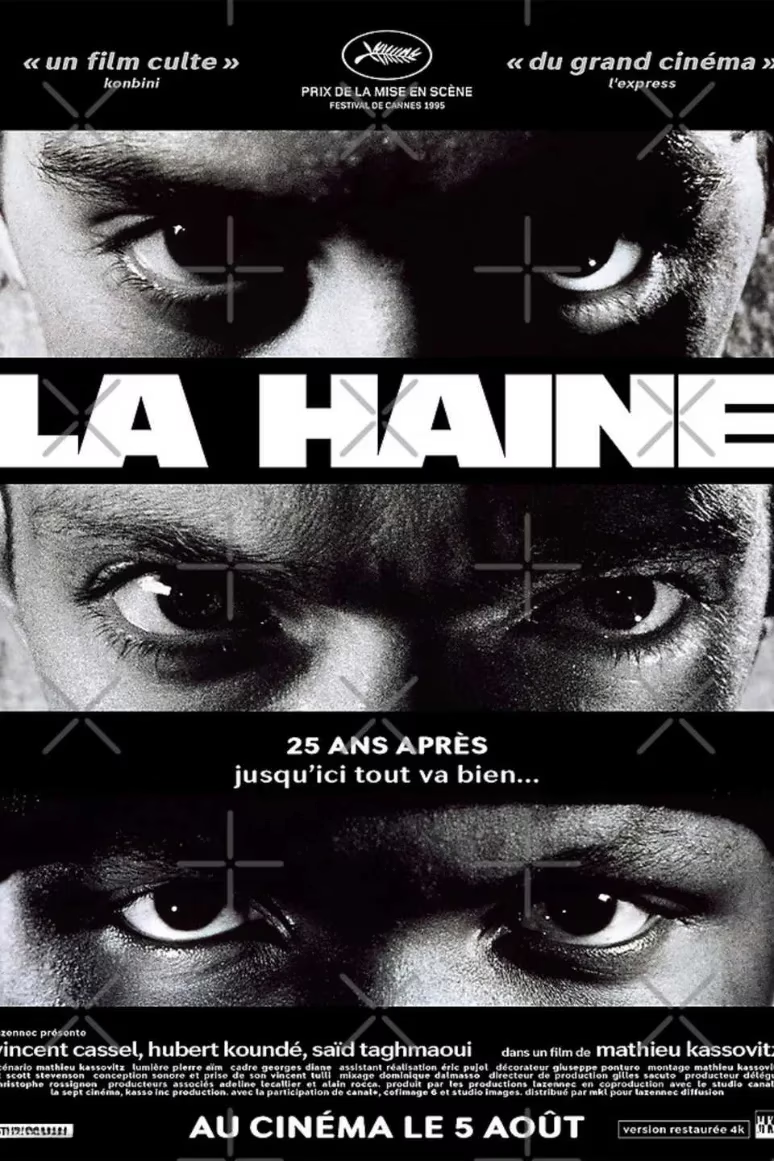
Let me tell you something, folks – it's not every day you get a peek into the cinematic soul of a guy like Cillian Murphy. We're talking about the man who stared down the atomic age in Oppenheimer, led the Shelby family in Peaky Blinders, and outran zombies in 28 Days Later. For an actor who famously shies away from the Hollywood spotlight, when he speaks, you listen. And recently, he sat down and pointed a spotlight directly at a film that, in his own words, is a "masterpiece" that "just hasn't aged." That film? The raw, pulsating, and brutally relevant 1995 French classic, La Haine. And after diving back into it myself, I gotta say, I'm right there with him. This movie doesn't just speak; it screams across the decades, and its echo is louder now than ever.
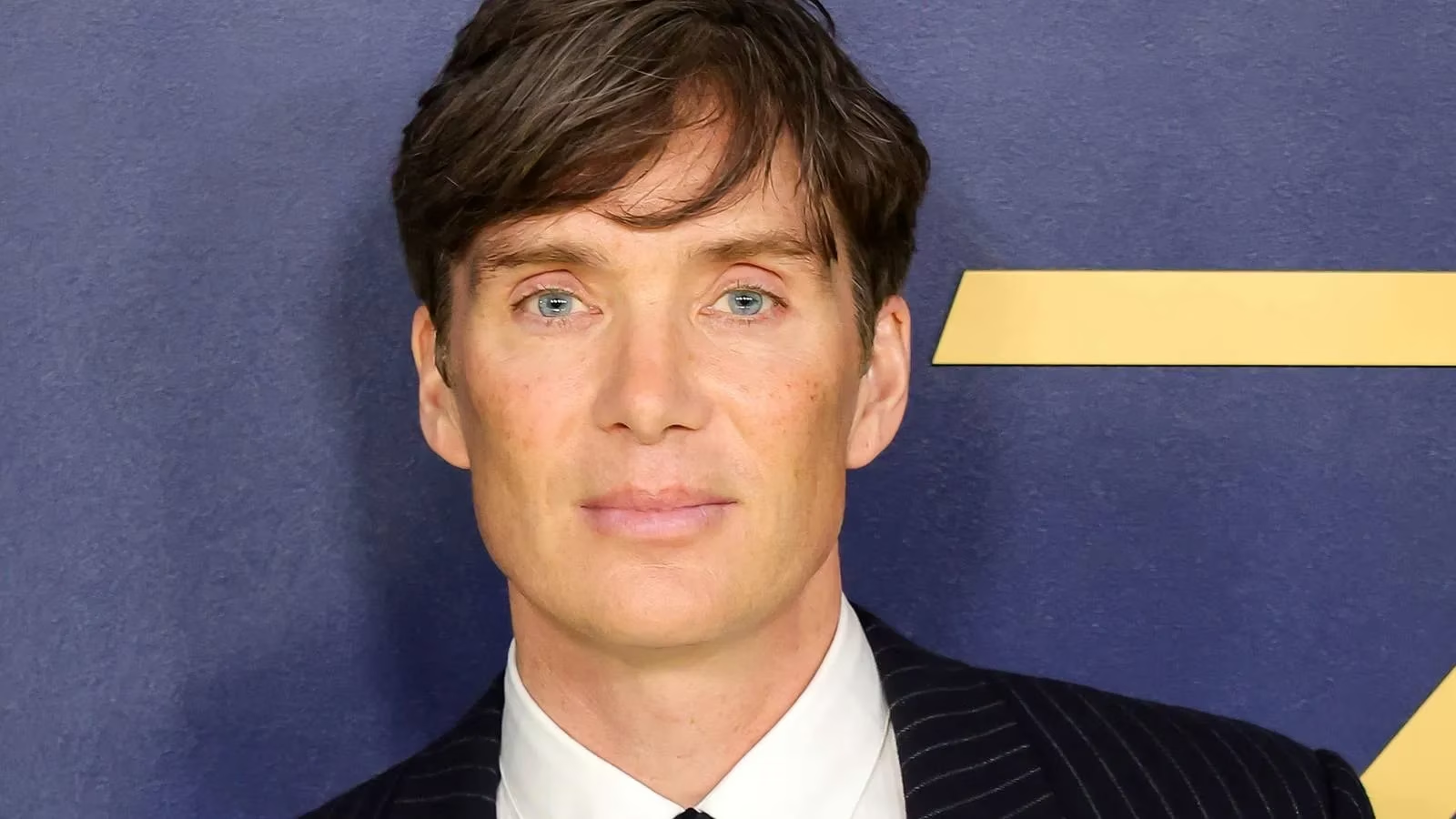
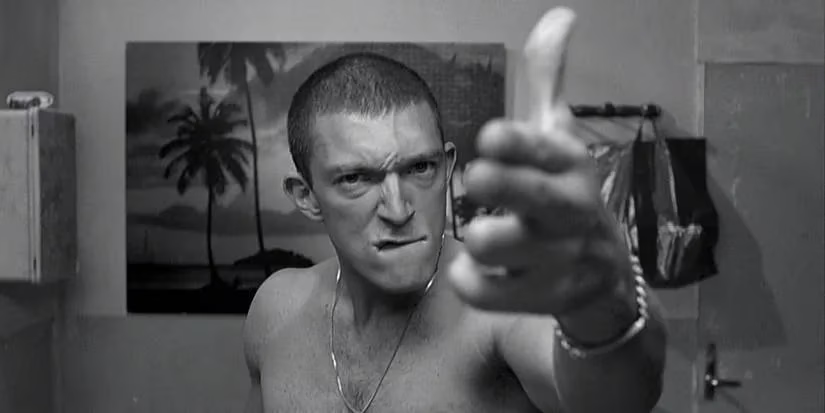
Murphy revealed this gem while sharing a movie night with his family, wanting to pass on his love of real cinema. And man, did he pick a doozy. La Haine, directed by Mathieu Kassovitz, is a cinematic gut-punch that chronicles a single, tense day and night in the lives of three friends – Vinz, Hubert, and Saïd – in the impoverished Parisian suburbs, or banlieues. It's a film that marries fast-paced, gritty action with searing social commentary, all filmed in a stark, beautiful black and white that makes every frame feel like a photograph of a wound.
Why This 1995 Film Feels Like It Was Filmed Yesterday
Here's the wild thing – Murphy is spot on. Watching La Haine in 2026 feels less like a history lesson and more like reading today's headlines with a French accent. The film's central themes are a checklist of our modern global anxieties:
-
Social Unrest & Inequality: The simmering tension between the marginalized youth and the established system.
-
Police Brutality: A central catalyst for the plot, depicted with unnerving realism.
-
The Cycle of Violence: Captured perfectly in the line that gives the film its title: "La haine attire la haine!" ("Hatred breeds hatred!").
Murphy believes it "still speaks to what's happening in France today," and buddy, it speaks to what's happening everywhere. The political instabilities, the economic divisions, the feeling of a system rigged against you – La Haine bottled that lightning 30 years ago, and the bottle has never been sealed.
The Cillian Murphy Connection: A Mirror to His Own Art
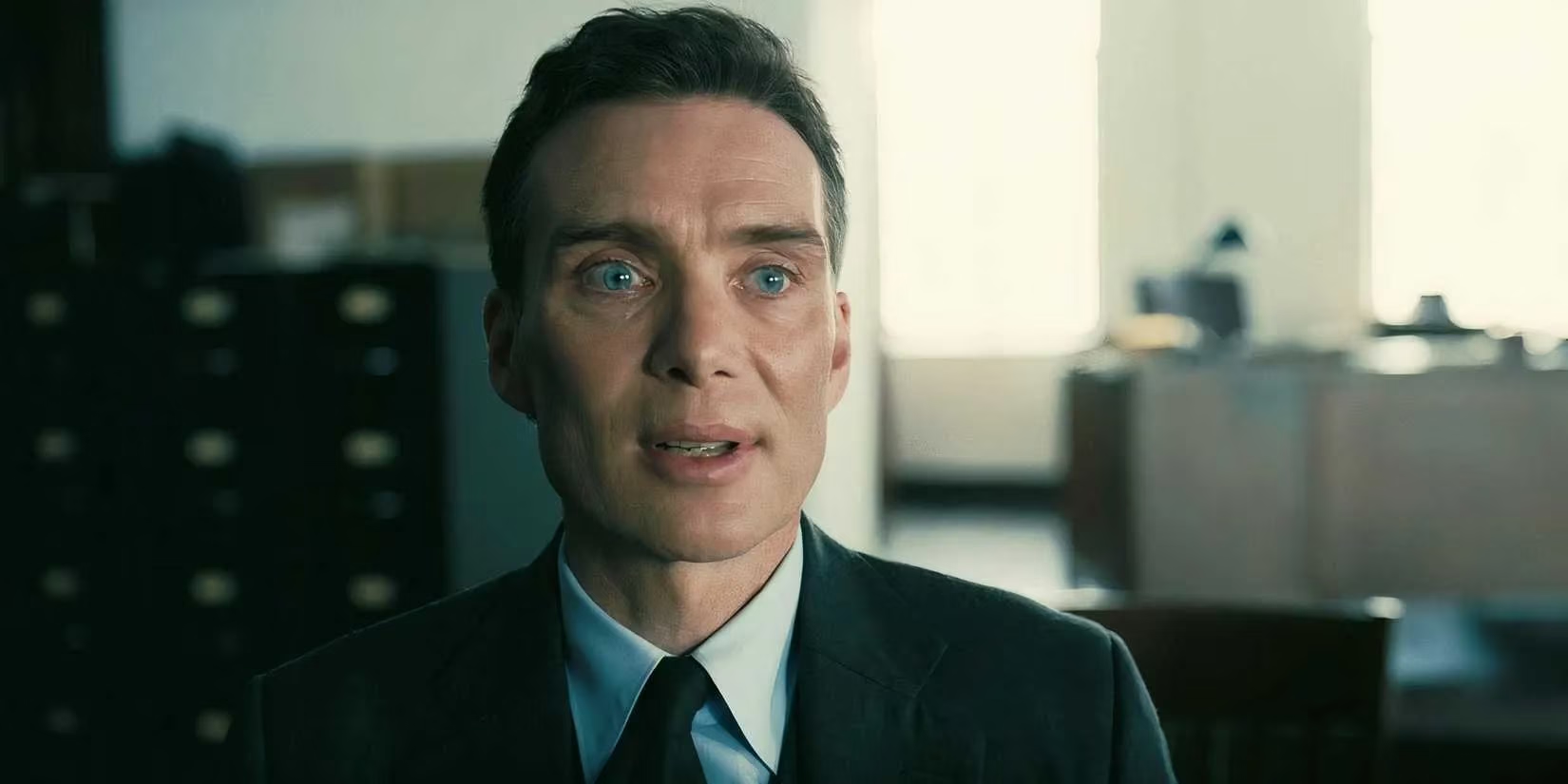
This isn't just some casual recommendation. Murphy's love for La Haine is a key to understanding his own incredible career. Seriously, take a look at the man's filmography – it's a tour through characters shaped by harsh, often politically charged realities.
| Murphy's Role | The Film | The Social/Political Struggle |
|---|---|---|
| Kitten | Breakfast on Pluto | Gender identity, societal rejection, The Troubles in Ireland |
| Bill Furlong | Small Things Like These | The scandal of the Irish Magdalene Laundries, systemic abuse |
| J. Robert Oppenheimer | Oppenheimer | The moral catastrophe of nuclear warfare, the scientist's dilemma |
| Jim | 28 Days Later | Societal collapse, the primal struggle for survival |
See a pattern? Murphy is magnetically drawn to stories that dissect the human condition under pressure. He doesn't just play characters; he embodies crises. So when he calls La Haine a masterpiece, he's recognizing a kindred spirit in filmmaking. It's the same uncompromising gaze he brings to his own work. You can absolutely picture a young Cillian Murphy killing it in a role like Vincent Cassel's volatile, posturing Vinz – that simmering rage, that desperate need to be seen, it's all right in his wheelhouse.
My Take: Why It's a Must-Watch (Especially Now)
Let's get personal for a sec. Rewatching La Haine on Murphy's tip was... an experience. It's not a "comfort watch." It's a confrontational watch. The film's energy is chaotic, urgent, and painfully cool. It uses its runtime – a tight, relentless 98 minutes – like a ticking bomb. You follow these three guys, just trying to kill time, but the weight of their world presses in from every side. The famous scene of them messing around in an art gallery, or the long, tense standoffs in the concrete jungle of their neighborhood... it's all just so... alive.
And that ending. Oh man, that ending. I won't spoil it for the three people who haven't seen it, but it's a cinematic sucker-punch that leaves you breathless. It's the kind of ending that doesn't give you answers; it just holds up a mirror and asks, "Well? What now?"
In an era where algorithm-friendly content is king, La Haine is a defiant reminder of what film can do. It can provoke, disturb, and ignite conversation. It's a piece of art that refuses to be polite. And in a world that often feels like it's holding its breath, waiting for the next spark, its message is terrifyingly simple and complex all at once: the clock is always ticking, and the choices we make in the heat of the moment... well, they ripple forever.
So, thank you, Cillian Murphy. Thank you for not just being an astonishing actor, but for being a true cinephile who points us toward the tough, the real, and the timeless. La Haine isn't just a classic; it's a warning, a portrait, and a masterpiece that, frankly, we all need to reckon with. It's more than a movie; it's a feeling. And that feeling is hanging in the air, thick as ever.