So there I was, browsing through Max on a lazy Sunday afternoon, trying to find something that could actually grab my attention. You know how it is – endless scrolling, nothing seems worthy. Then I stumbled upon a title that made me sit up straight: The Public Enemy. Not just any old black-and-white movie, but a 100% fresh Rotten Tomatoes pick that essentially invented the modern criminal anti-hero. It hit the platform back in July 2024 and has been residing there quietly ever since, almost like a century-old secret waiting to be rediscovered. In 2026, it feels more relevant and shockingly raw than most of the gritty dramas being churned out today.

Now, if you’re used to the smooth, morally ambiguous gangsters played by the likes of Robert De Niro, Al Pacino, or even the late James Gandolfini, you might think you’ve seen it all. But here’s the thing: The Public Enemy (1931) laid the groundwork for every charismatic lawbreaker who has ever graced the screen. This was pre-Code Hollywood, a wild period before the Hays Office imposed strict moral guidelines. Filmmakers could show the ugly, honest side of the streets without pulling punches. And director William A. Wellman did exactly that.
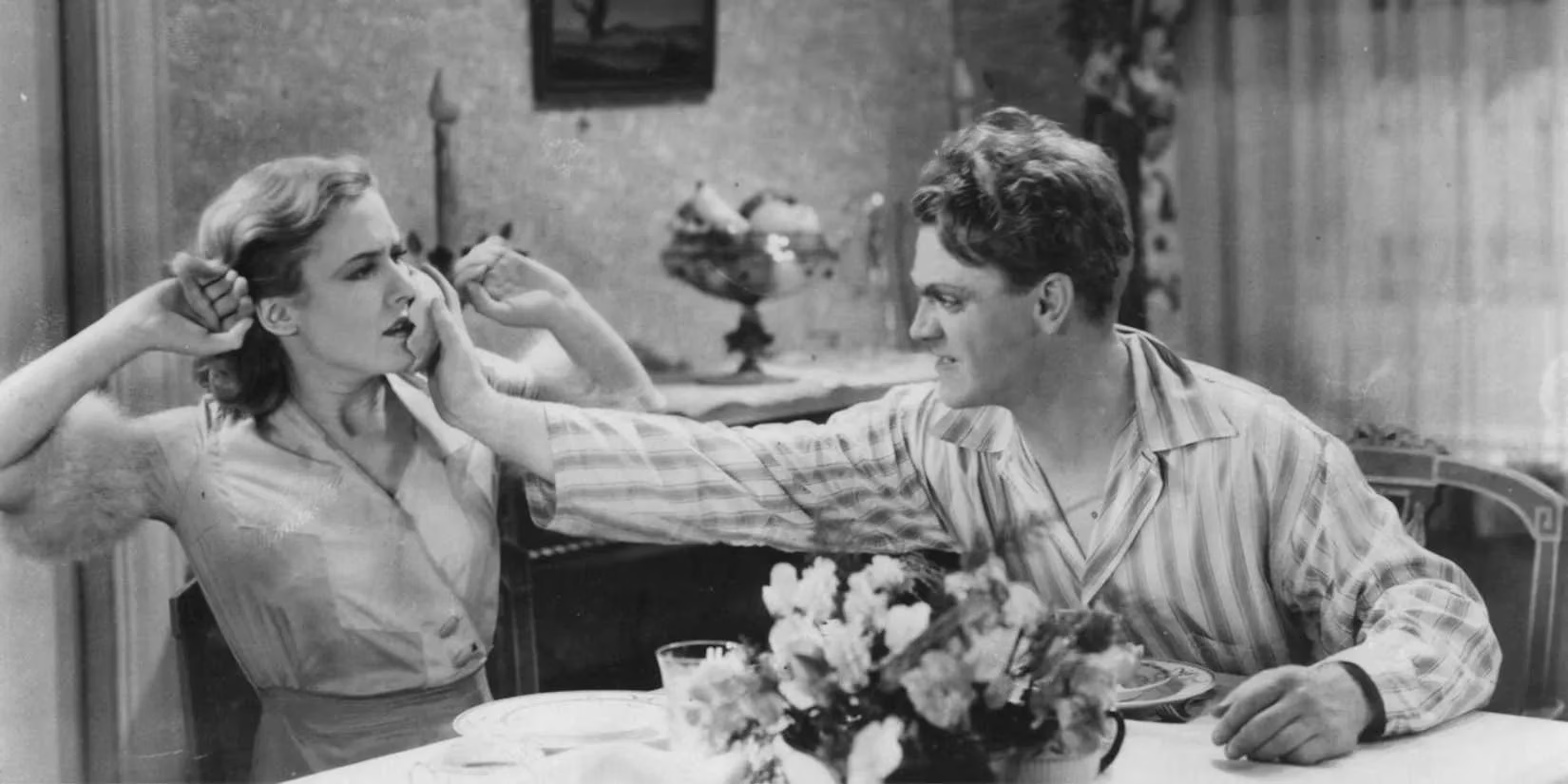
At the heart of it all is James Cagney, a relative unknown at the time, who plays Tom Powers with such electric menace that you can’t look away. He’s not a brooding, philosophical criminal. Tom is a pint-sized force of nature – cocky, violent, and dripping with a swagger that somehow makes you root for him even as he does monstrous things. The scene everyone talks about, where Cagney smashes a grapefruit into Mae Clarke’s face, is still a jolt of pure psychopathy. In about two seconds, Tom transforms from a cheeky young hood into someone genuinely terrifying. That’s the magic of Cagney’s performance: it’s a tightrope walk between charm and horror, and he makes it look effortless. Nearly a hundred years later, that grapefruit moment feels as visceral as any modern jump scare.
The film’s influence runs deep. Martin Scorsese, the master of the modern gangster epic, has often cited The Public Enemy as a formative experience. He saw it as a kid and was forever marked by what he called its "street honesty." He said the brutal realism stayed with him and became a mark he always aimed for. You can draw a direct line from Tom Powers to Johnny Boy in Mean Streets, or to the uncontrollable rage of Joe Pesci’s Tommy DeVito in Goodfellas. Without Cagney’s seminal anti-hero, the lonely, violent men of Scorsese’s universe might never have existed.
Cultural weight aside, the numbers don’t lie. The American Film Institute ranked Tom Powers as the 42nd greatest villain/hero on their 100 Years…100 Heroes & Villains list. In 2008, AFI placed The Public Enemy at number 8 on its list of the top 10 gangster films of all time. That’s a spot right alongside The Godfather and Goodfellas, yet this one came four decades earlier. And then there’s the pristine 100% critics’ score on Rotten Tomatoes – a perfect approval rating that has stood the test of time. It’s not just nostalgia; modern critics and audiences who discover it are consistently blown away by its raw energy.
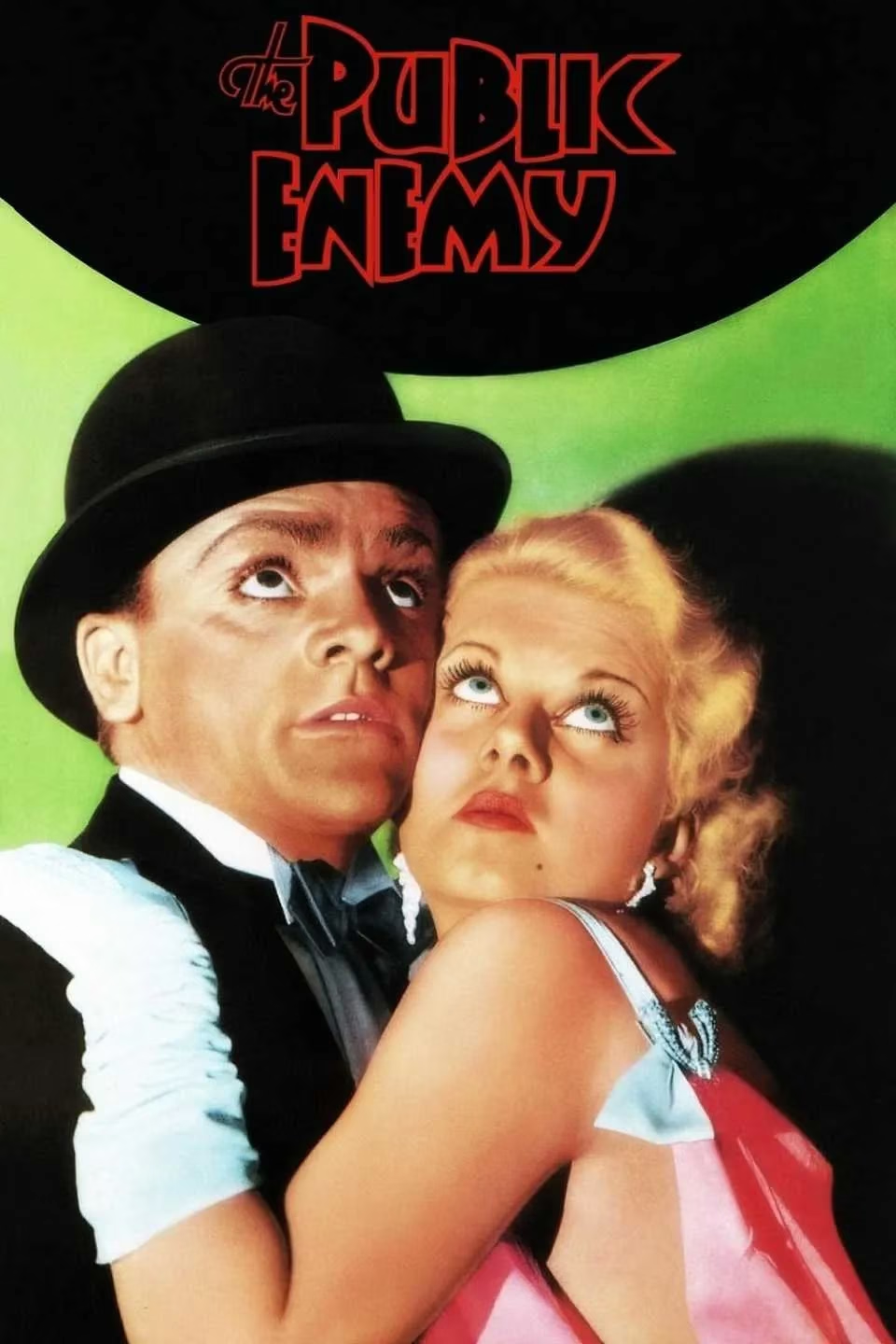
Here’s a quick look at the basics if you’re already reaching for your remote:
| Detail | Info |
|---|---|
| Director | William A. Wellman |
| Lead Actor | James Cagney |
| Co-Stars | Jean Harlow, Mae Clarke |
| Release Year | 1931 |
| Runtime | 83 minutes |
| Rotten Tomatoes | 🍅 100% |
| Available On | Max (since July 1, 2024) |
Watching it again in 2026, I’m struck by how little the recipe for a great crime drama has actually changed. You still need a compelling, dangerous lead; you need a script that doesn’t flinch; you need a director willing to push boundaries. The Public Enemy delivers all of that in a tight 83 minutes. The fashions and slang have dated, sure, but the psychology of the criminal anti-hero is timeless. Tom Powers wants respect, power, and a good time – and he’ll destroy anyone who gets in his way. We’ve seen echoes of that story in everything from Scarface to Breaking Bad.
For me, the real treat is experiencing a film that was once considered so controversial it sparked public outrage, all from the comfort of my couch via a streaming service. It’s a direct line to a rowdy, unpolished era of Hollywood that feels almost punk rock in its rebellious spirit. So if you’re in the mood for a history lesson wrapped in a bullet-ridden, whiskey-soaked package, fire up Max and give The Public Enemy a watch. No fancy de-aging, no big CGI set pieces – just a young Cagney, a grapefruit, and one of the purest injections of cinematic adrenaline ever captured on film.