The shocking finale of David Fincher's 1995 masterpiece Se7en remains one of cinema's most unforgettable conclusions, but the path to that iconic ending involved numerous creative detours that could have fundamentally altered the film's legacy. As the crime thriller approaches its 30th anniversary in 2025, revelations about the production process continue to fascinate audiences and filmmakers alike. The film's exploration of human depravity through the lens of the Seven Deadly Sins established a new benchmark for psychological thrillers, largely due to its carefully crafted conclusion that underwent significant evolution during development.
The Rejected Somerset Ending
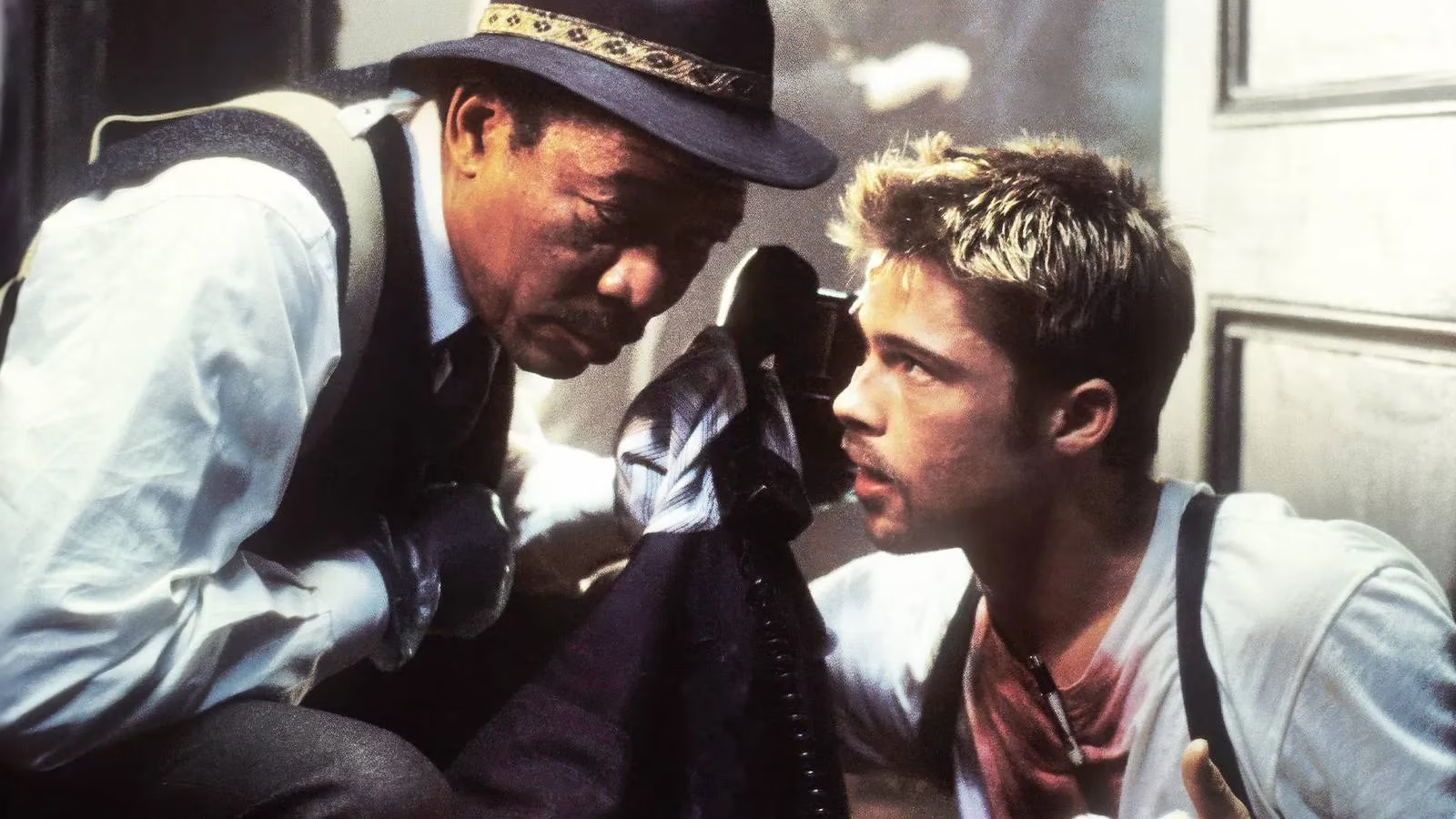
One of the most radical alternative conclusions considered during production would have seen Detective Somerset, portrayed by Morgan Freeman, shooting the serial killer John Doe instead of attempting to restrain his partner Mills. This conceptual reversal would have transformed Somerset's character arc from the voice of reason to someone ultimately corrupted by Doe's manipulative scheme. The philosophical implications of this ending would have suggested that nobody remains immune to sin's corruption, regardless of their moral fortitude or intellectual discipline.
This alternative narrative would have represented a complete character transformation for Somerset, who throughout the film serves as the analytical counterbalance to Mills' emotional impulsivity. The notion that even the most rational individual could succumb to base impulses under extreme circumstances would have delivered a far more nihilistic message about human nature. However, this approach risked undermining the film's central dynamic and Mills' character development.
Multiple Ending Possibilities
During the creative process, the production team explored various concluding scenarios:
-
Hollywood Happy Ending: A conventional resolution where Somerset and Mills successfully rescue Tracy Mills
-
Anti-climactic Conclusion: The revelation that the box contained Mills' dog rather than his wife
-
Mills' Revenge: The ultimately selected ending where Mills executes John Doe
-
Somerset's Intervention: The rejected concept of Somerset killing Doe
The spectrum of potential conclusions ranged from sanitized studio-friendly resolutions to even darker variations than what ultimately reached audiences. Each alternative carried distinct thematic implications that would have reshaped the film's philosophical underpinnings and emotional impact.
Brad Pitt's Crucial Influence
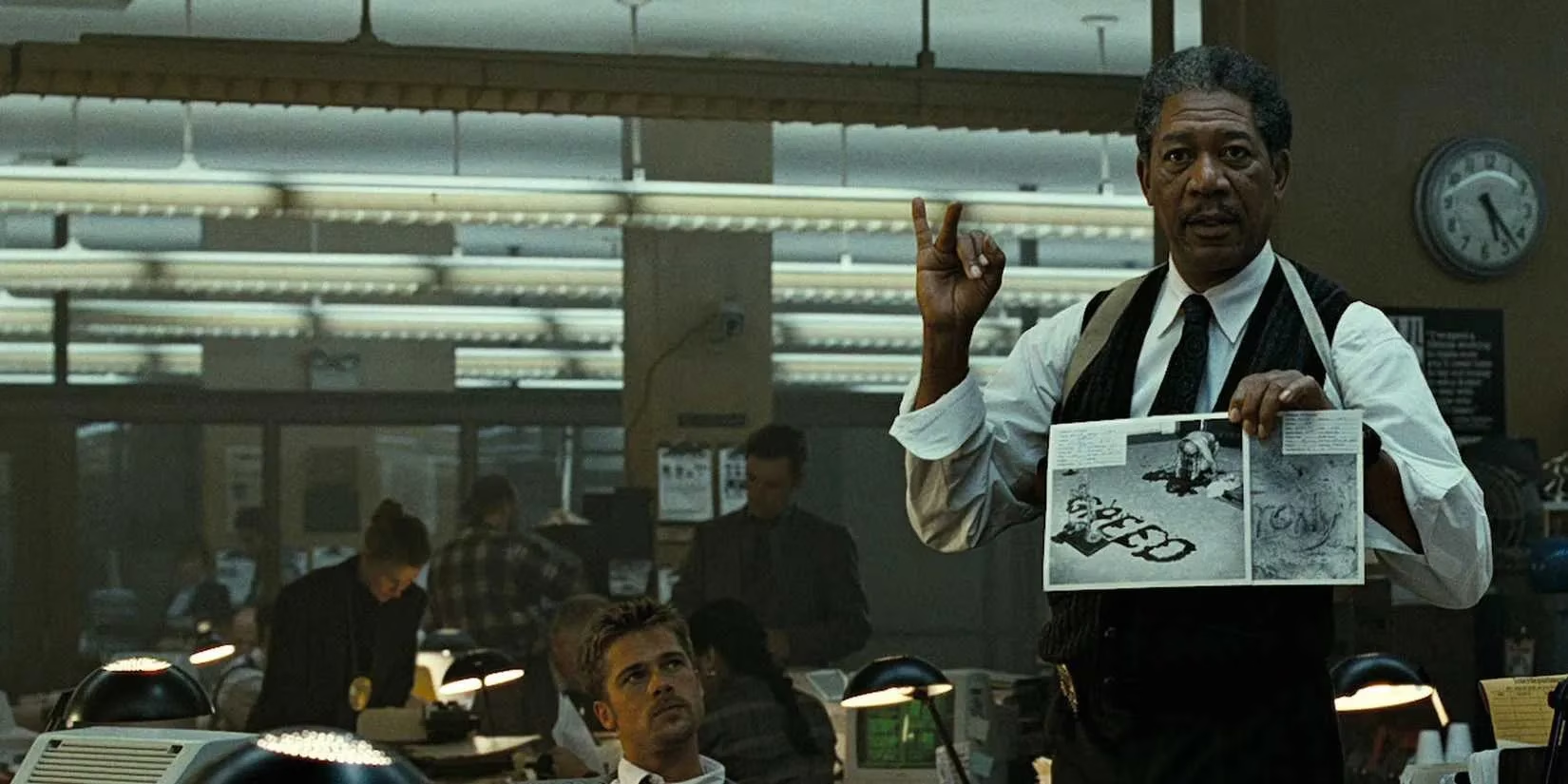
Brad Pitt, who portrayed the hot-headed Detective Mills, played a pivotal role in advocating for the film's ultimately selected conclusion. His insistence on maintaining the narrative integrity of Mills' emotional journey proved instrumental in preserving what became one of cinema's most powerful character arcs. Pitt recognized that denying Mills his catastrophic moment of revenge would have left the character's development feeling incomplete and unsatisfying.
This collaborative decision-making process highlights how actor input can significantly shape a film's final form. Pitt's understanding of his character's psychological trajectory ensured that Mills' transformation from optimistic newcomer to broken avenger remained emotionally resonant and thematically consistent.
Thematic Perfection of the Selected Ending
The chosen conclusion achieves remarkable poetic symmetry by completing John Doe's meticulously orchestrated plan. Doe's thesis about human predictability finds its ultimate validation in Mills' inability to resist his wrathful impulses. This narrative resolution serves multiple crucial functions:
| Narrative Element | Impact |
|---|---|
| Character Arc Completion | Mills' emotional journey reaches its logical conclusion |
| Thematic Reinforcement | Doe's philosophy about inherent sinfulness proves correct |
| Moral Complexity | Challenges simplistic notions of good versus evil |
| Emotional Resonance | Creates lasting psychological impact on audiences |
The ending's brilliance lies in its demonstration that true evil doesn't merely involve committing atrocities but corrupting goodness into becoming an instrument of wickedness. Doe's ultimate victory isn't merely the completion of his seven murders but the successful transformation of a law enforcer into a murderer.
Comparative Darkness Analysis
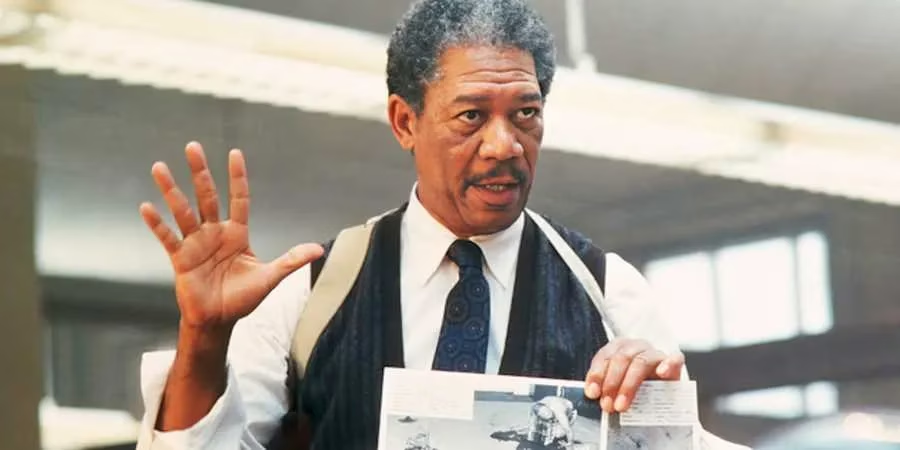
While the rejected Somerset ending might have produced greater immediate shock value, it would have fundamentally altered the film's philosophical underpinnings. The selected conclusion achieves a more sophisticated form of darkness through its exploration of predetermined human behavior and the inevitable triumph of manipulation over reason.
Key differences between the potential endings:
-
Somerset Ending: Suggests universal corruptibility but undermines character consistency
-
Mills Ending: Maintains character integrity while delivering profound psychological impact
-
Happy Ending: Would have trivialized the film's serious thematic concerns
-
Anti-climactic Conclusion: Would have betrayed the narrative's building tension
The chosen resolution preserves Somerset's character as the moral compass who ultimately fails to prevent catastrophe, making his disillusionment with society's corruption more poignant and thematically consistent.
Enduring Legacy and Cultural Impact
Three decades after its release, Se7en's conclusion continues to be studied and discussed within cinematic circles and academic settings. The film's willingness to embrace such a bleak resolution influenced an entire generation of crime thrillers and psychological dramas. The alternative ending considerations reveal much about the creative process behind enduring cinematic works.
The film's lasting impact demonstrates how narrative risks, when properly executed, can transcend temporary shock value to achieve lasting artistic significance. The careful balancing of character development, thematic depth, and emotional impact in the selected ending has ensured Se7en's place in cinematic history as a masterpiece of the crime thriller genre.
Conclusion: The Right Choice for Cinematic History
The decision to proceed with Mills executing John Doe represents a perfect convergence of character motivation, thematic consistency, and emotional power. While the alternative endings presented interesting philosophical possibilities, they would have compromised the narrative integrity that makes Se7en such an enduring work. The film's conclusion stands as a testament to the importance of collaborative filmmaking where creative differences ultimately serve the story's best interests.
As contemporary cinema continues to explore complex moral landscapes, Se7en's carefully crafted ending remains a benchmark for how to conclude a dark psychological thriller without compromising artistic vision or emotional truth. The film's legacy proves that sometimes the most disturbing conclusions are also the most artistically truthful ones.