In the rain-slicked alleyways of cinema's memory, where light fractures into shadow and every whispered promise hides a lie, the detective stands as a lone figure. He is not a knight in shining armor, but a weary traveler through a world of moral murk, a seeker of truth in a city built on deceit. Is he a guardian of justice, or merely another player in the grand, tragic theater of human corruption? Film noir and its modern successor, neo-noir, have gifted audiences with these brilliant, troubled souls—men who navigate labyrinths of crime where the greatest mystery is often their own soul. From the stark, expressionistic chiaroscuro of classic black-and-white to the neon-drenched cynicism of contemporary tales, these detectives teach us that solving a case is one thing, but surviving the truth is another matter entirely.
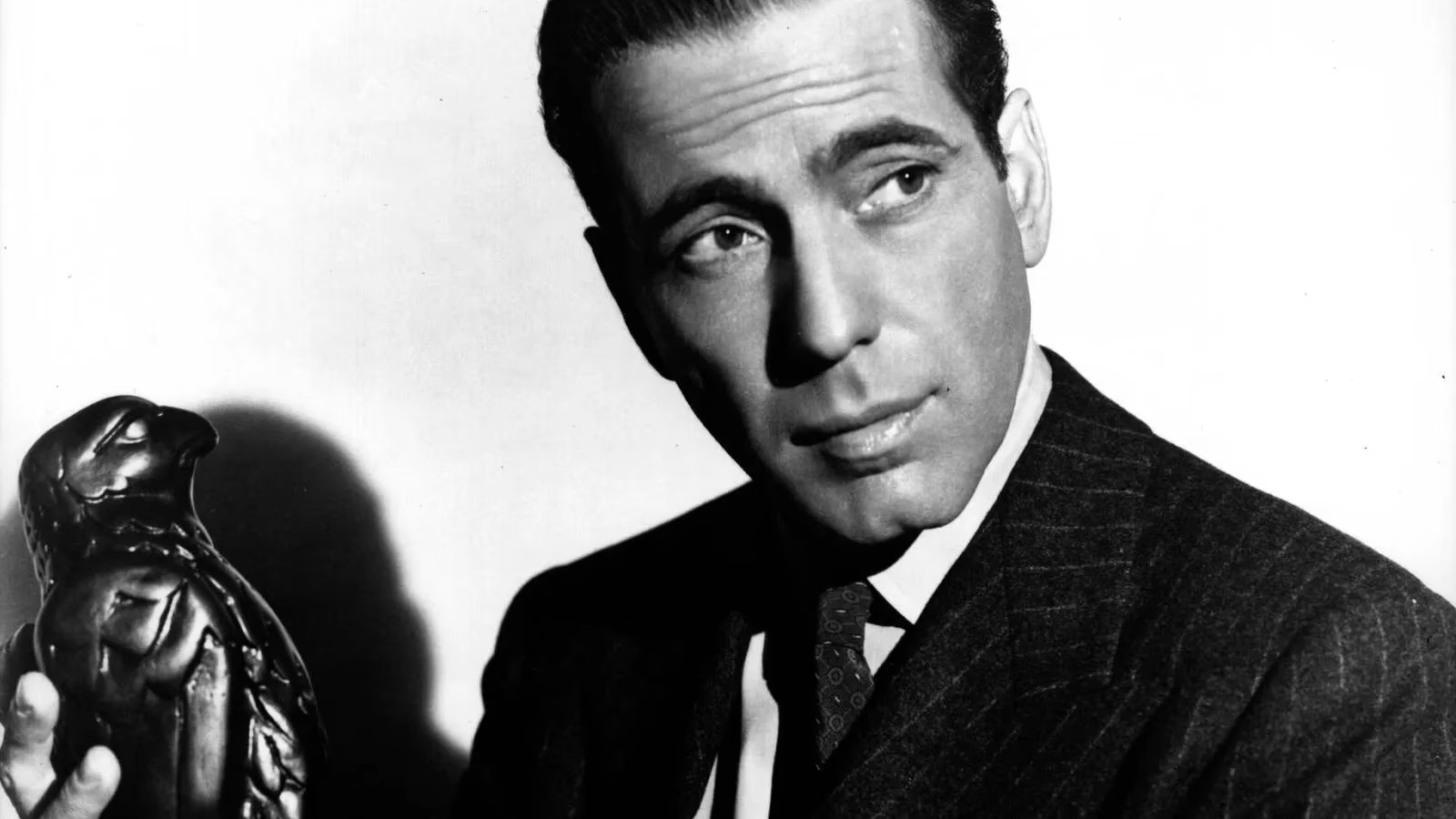
At the zenith of this shadowy pantheon sits Sam Spade, the quintessential private eye. Though born in a single Dashiell Hammett novel, his cinematic incarnation by Humphrey Bogart in The Maltese Falcon etched him into eternity. He operates not with blind idealism, but with a weary, pragmatic code. "When a man's partner is killed," he famously states, "he's supposed to do something about it." His brilliance lies not just in untangling the web of lies surrounding a priceless statuette—the ultimate MacGuffin—but in his cold, calculated navigation of a world where everyone, including his client, is a potential betrayer. He is the blueprint, the detective who taught us that in noir, the heart is the most dangerous clue of all.
What happens when the detective is not a private eye, but a man of the law fighting the very institution he serves? Miguel Vargas in Orson Welles's Touch of Evil provides a poetic answer. On a honeymoon interrupted by a border-town bombing, Vargas becomes an island of integrity in a sea of corruption. His investigation is a dual quest: for the bomber, and for the soul of justice itself, embodied by the grotesque, morally bankrupt Police Captain Hank Quinlan. Vargas's brilliance is his resilience; he understands that truth is a fragile thing, easily crushed by power and prejudice. When his new wife is targeted, the case becomes not just professional, but profoundly personal—a battle for his future against the ghosts of a corrupt past.
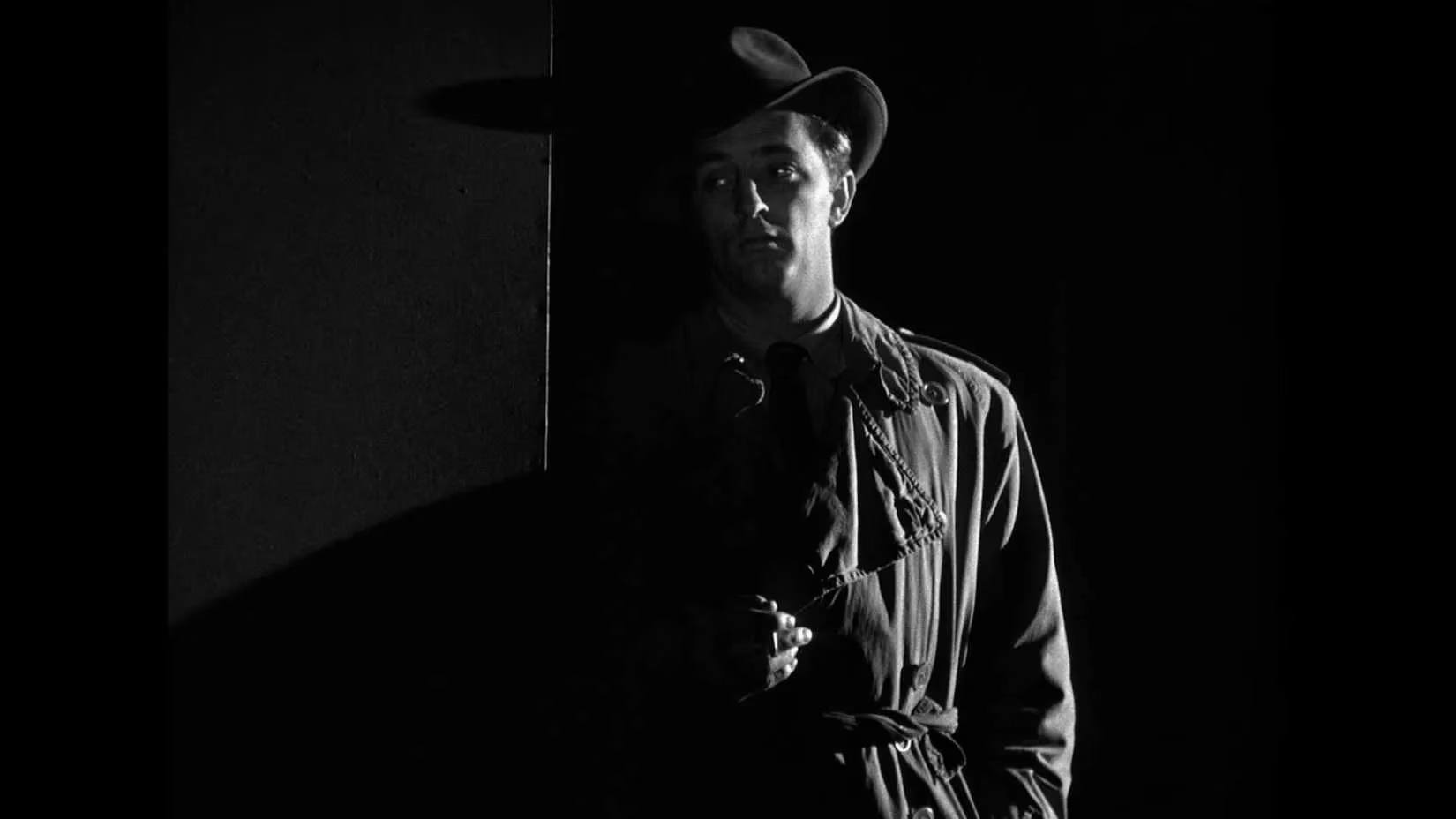
Can one ever truly escape? Jeff "Red" Bailey in Out of the Past is a detective who tried. Robert Mitchum's iconic, world-weary performance embodies a man who traded the danger of the private eye for the quiet life of a gas station owner. Yet, noir is a genre of inescapable pasts. When his old life comes calling, dragging him back to find a missing girlfriend for a mafia kingpin, Red's tragedy is his acute awareness. He is brilliant enough to navigate the new maze of deception, but wise enough to know there is no clean way out. The femme fatale here is not just a temptation, but a vortex, and Red's detective work becomes a sad, elegant dance toward a predetermined doom.
The neo-noir evolution brought detectives like Jimmy "Popeye" Doyle in The French Connection. Gene Hackman's portrayal of this real-life-inspired NYPD detective shatters any remaining illusion of the clean-cut hero. Popeye is raw, bigoted, and relentless—a cop who lives in the gutter to catch rats. His brilliance is his animalistic instinct and willingness to demolish any rule, but his darkness is profound. He represents a disturbing question: does effective justice require a man to become as morally compromised as the criminals he hunts? In the bleak, frozen docks of his pursuit, the line between lawman and outlaw blurs into nothingness.
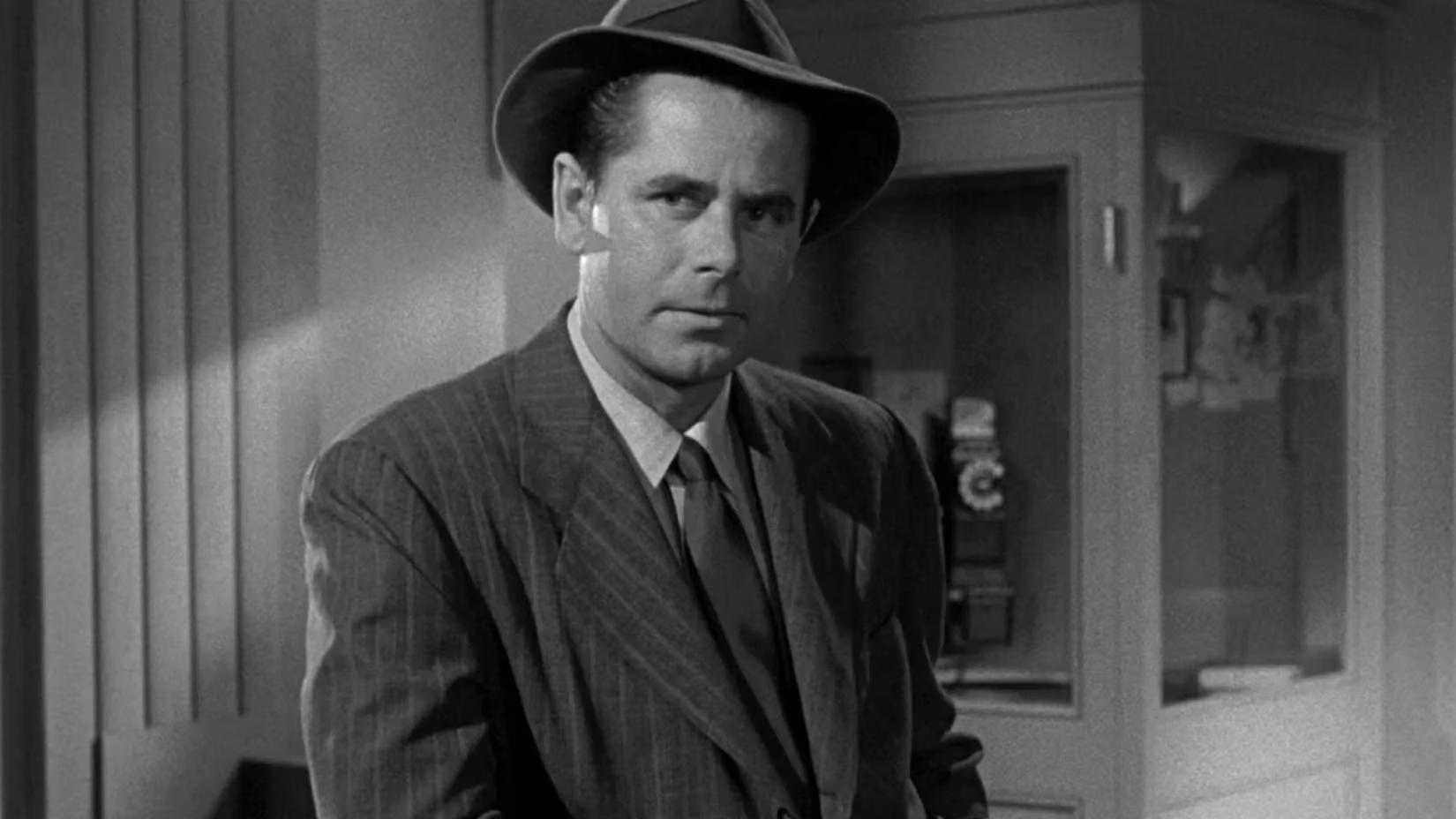
Fritz Lang, a master of German Expressionism, directed another cop battling systemic rot in The Big Heat. Dave Bannion is a family man whose investigation into a colleague's suicide unveils a city strangled by a crime syndicate. Ordered to stand down by his own superiors, Bannion's brilliance is his stubborn, almost suicidal, dedication. His quest unleashes terrible violence upon his own life, transforming him. He learns that in the noir universe, even victory is pyrrhic, leaving scars that never fully heal. The light at the end of his tunnel is cold and unforgiving.
Then there is the detective who falls in love with a ghost. Mark McPherson in Laura investigates the murder of the enchanting Laura Hunt, only to become mesmerized by her portrait and the idea of her. His detective work is a process of demystification and re-enchantment, peeling back layers of high-society deception. The brilliant twist—that the victim may not be Laura at all—turns his investigation inward, questioning perception itself. In the end, McPherson solves the case, but the film reminds us that the detective is sometimes just a catalyst; the final act of salvation belongs to the femme fatale who defies her own trope.
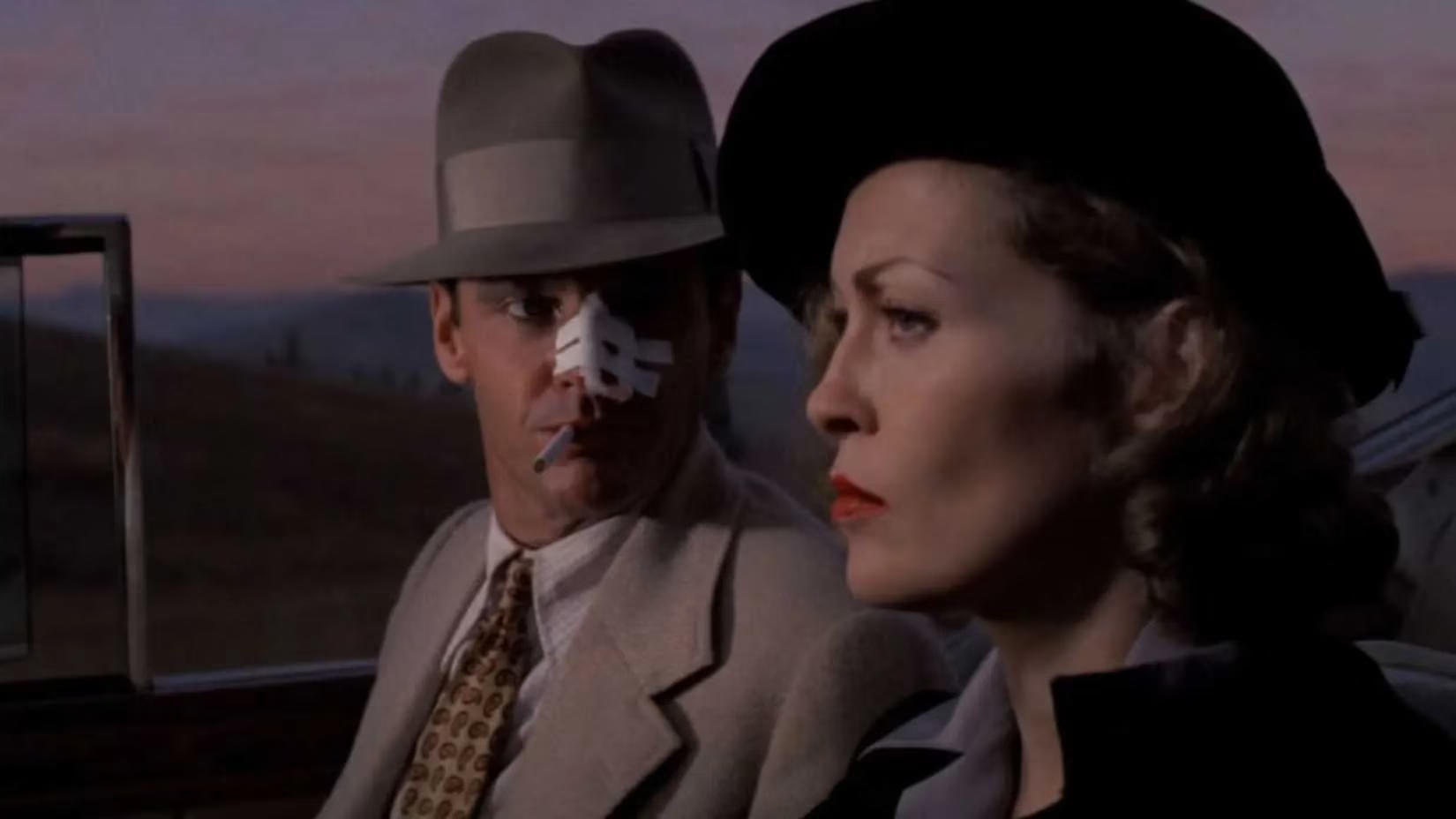
Perhaps no detective embodies the futility and cosmic injustice of the noir world better than Jake Gittes in Chinatown. Jack Nicholson's performance is a masterclass in mounting frustration. Gittes is smart, respected, and dogged, yet he is perpetually three steps behind the true, horrifying conspiracy. His investigation into a marital infidelity case spirals into a abyss of water rights, incest, and absolute power. His brilliance is evident in every clue he uncovers, but it is utterly useless against the entrenched, monstrous corruption he faces. The infamous final line—"Forget it, Jake. It's Chinatown"—is the genre's ultimate epitaph: sometimes, seeing the truth only makes you witness to an atrocity you are powerless to stop.
The procedural side of noir is exemplified by Lt. Dan Muldoon in The Naked City. This film, with its documentary-style realism, follows the methodical investigation of a model's murder. Muldoon's brilliance is experienced, weary, and systematic. He represents the grinding machinery of justice in a city of eight million stories. The famous closing narration—"There are eight million stories in the naked city. This has been one of them."—underscores the existential reality of the noir detective: the work never ends. Each solved case is merely a closed file, making room for the next tragedy on the desk.
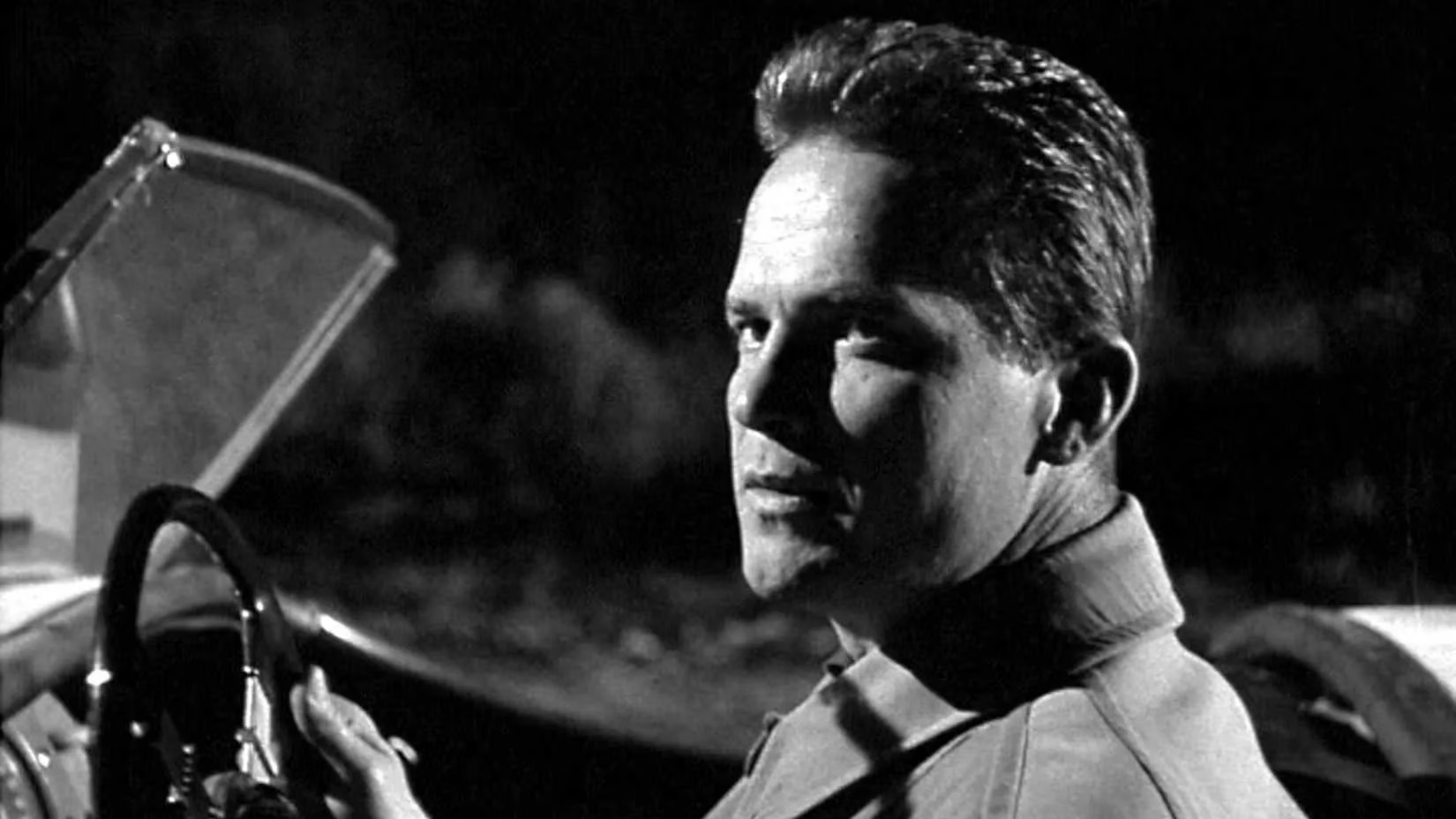
On the far, violent end of the spectrum stands Mike Hammer in Kiss Me Deadly. Created by Mickey Spillane, Hammer is a force of nature—brutal, cynical, and operating on a personal code of vengeance that barely skirts vigilantism. Ralph Meeker plays him as a coiled spring of aggression. His investigation into a woman's murder leads him to a apocalyptic MacGuffin (a literal "great whatsit"). Hammer's "brilliance" is his sheer, destructive will. He is less a solver of puzzles and more a bull in a china shop of lies, smashing his way to a truth so terrifying it threatens to consume the world. He asks not whodunit, but who needs to be broken.
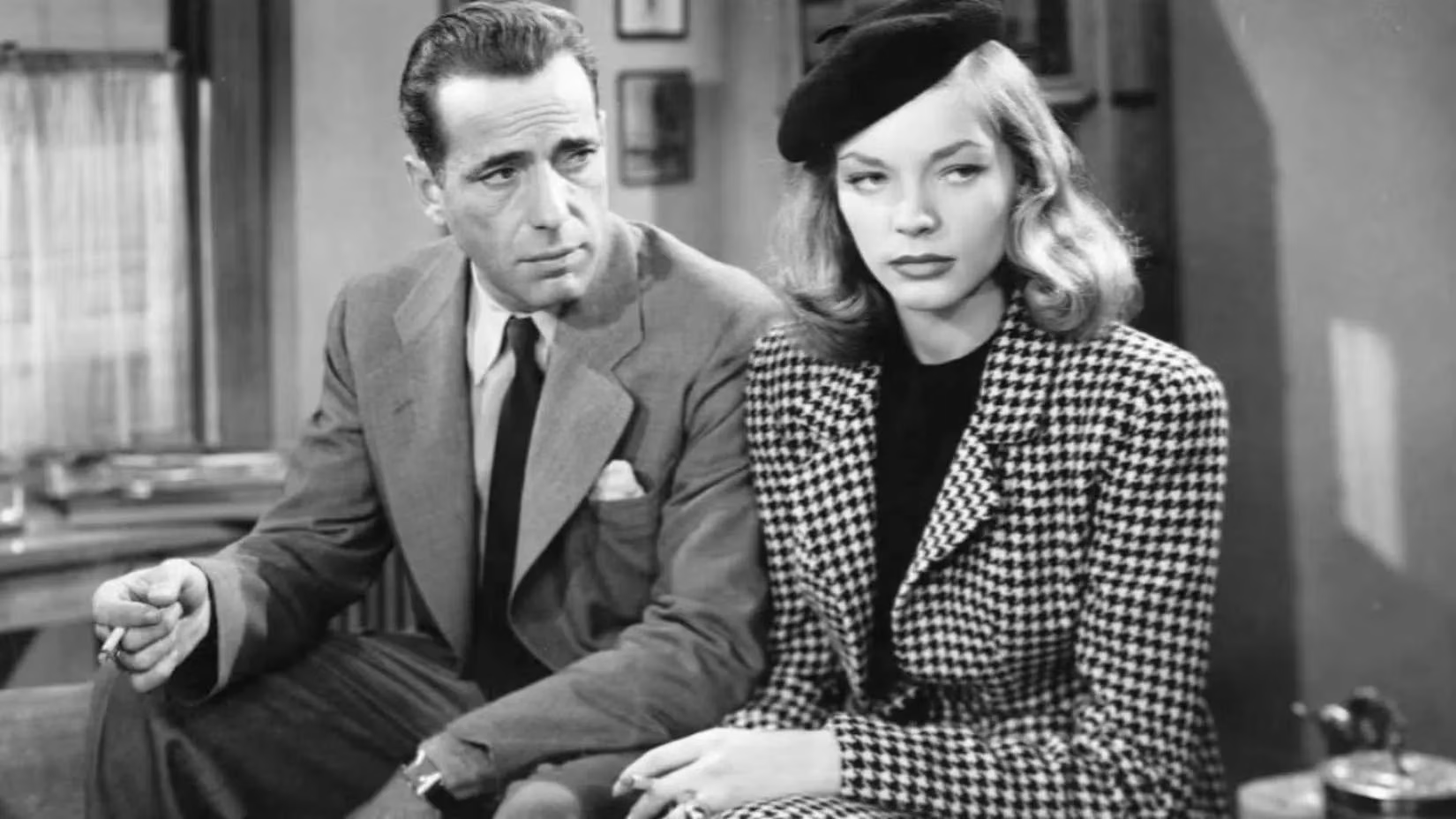
And finally, we return to Bogart, this time as Philip Marlowe in The Big Sleep. If Spade is the blueprint, Marlowe is the perfected form. The wisecracking, hard-drinking private eye with a hidden poetic soul and an unshakable, if weary, moral center. His investigation into a simple case of gambling debts unravels into a famously convoluted plot (even the filmmakers weren't sure who committed one murder!). Marlowe's brilliance is his ability to wade through the decadent chaos of the wealthy Sternwood family, using his wit as both sword and shield. He engages in a thrilling, verbal duel of innuendo with Vivian Sternwood (Lauren Bacall), making him not just a seeker of truth, but a romantic icon in a world of cynicism. He stands at the summit, the detective who can walk the mean streets without becoming mean himself, proving that even in the darkest shadows, a code of honor can still flicker.
| Detective | Film | Key Trait | The Noir Lesson They Teach |
|---|---|---|---|
| Sam Spade | The Maltese Falcon | Pragmatic Code | Trust is the ultimate luxury, and often, a fatal mistake. |
| Miguel Vargas | Touch of Evil | Incorruptible Integrity | The system you defend may be your greatest enemy. |
| Jeff Bailey | Out of the Past | World-Weary Resignation | The past is not a story; it's a chain. |
| Popeye Doyle | The French Connection | Feral Instinct | To fight monsters, you risk becoming one. |
| Dave Bannion | The Big Heat | Stubborn Resilience | Victory is surviving, not necessarily winning. |
| Mark McPherson | Laura | Obsessive Dedication | The truth can be as elusive as a memory. |
| Jake Gittes | Chinatown | Dogged Futility | Some evils are too vast for one man's justice. |
| Lt. Dan Muldoon | The Naked City | Weary Professionalism | The city's stories are infinite; the detective's role is to close the book on just one. |
| Mike Hammer | Kiss Me Deadly | Brutal Vengeance | Sometimes, the search for truth unleashes pure destruction. |
| Philip Marlowe | The Big Sleep | Romantic Cynicism | A man can keep his soul clean, even if his trench coat cannot. |
These men, etched in shadow and skepticism, are more than crime-solvers. They are our guides through cinema's most morally ambiguous landscapes. They ask the hard questions we fear to voice: What is justice in a crooked world? Can one man make a difference, or is he just a spectator to the fall? Their brilliance is often their curse, granting them clarity in a world that prefers the comforting fog of lies. They remind us that the greatest mystery is never the one in the case file, but the one that lies within the heart of the detective himself, forever wrestling with the darkness he must engage to find a sliver of light.