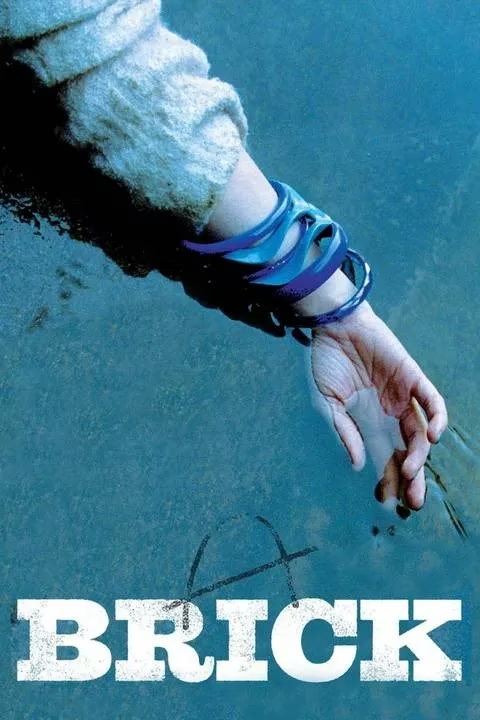
It’s 2026, and I still vividly recall the first time I stumbled upon Rian Johnson’s Brick. At that point I had already been mesmerized by the time-loop ingenuity of Looper, thrilled by his subversive Star Wars: The Last Jedi, and charmed by the roadside riddles of Poker Face. Yet nothing quite prepared me for the raw, concentrated ambition of his 2006 directorial debut. Even after twenty years, Brick stands as one of the most audacious and self-assured first features any filmmaker has ever delivered—a peculiar cocktail of high school angst and hardboiled detective fiction that somehow refuses to age.
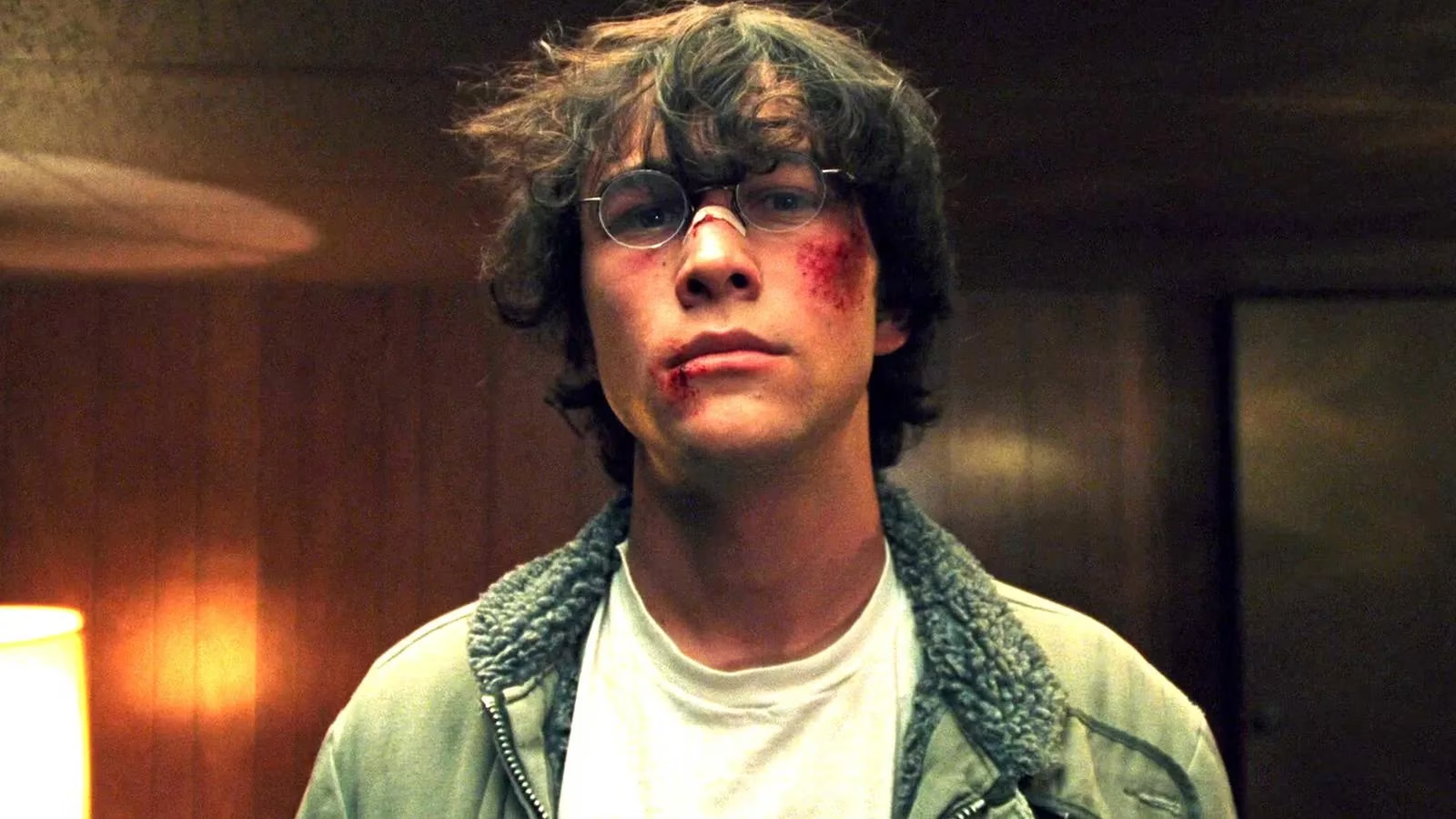
The movie drops me straight into the sun-bleached, shadowy corridors of Southern California’s San Clemente, where Joseph Gordon-Levitt’s Brendan Frye maneuvers at the fringes of high school society. He’s not quite a loner, but a deliberate outsider—a kid who speaks in cryptic riddles and moves with the weary vigilance of a seasoned gumshoe. The plot kicks into gear when his ex-girlfriend Emily (Emilie de Ravin) leaves a panicked note, pulling him into a labyrinth of drug rings, betrayal, and violence. Before I can catch my breath, Emily vanishes, and Brendan plunges into an underworld ruled by a live-at-home kingpin called The Pin, played with a chillingly subdued creepiness by Lukas Haas.
Johnson’s greatest magic trick is how he transplants the tropes of Dashiell Hammett’s The Maltese Falcon and The Glass Key into a contemporary teenage landscape without it ever feeling like a parody. The dialogue crackles with the dense, stylized poetry of 1930s pulp novels—words like “bulls” for cops and “pin” for a crime boss tumble out of young mouths with unnerving seriousness. Sure, the verbal density can feel overwhelming on a first watch; I remember straining to catch every muttered syllable. But that very opacity is an invitation to revisit the film over and over, each time peeling back new layers of meaning and motive. It’s a script that rewards persistence, much like the classic noirs it reverently channels.
What astounds me most is how Johnson turned a shoestring budget—roughly half a million dollars, largely gathered from family and friends—into a visual strength. Filming on actual locations in his hometown gave the project an intimate, lived-in texture. Cinematographer Steve Yedlin captures high-speed foot chases through residential streets, cramped basement negotiations, and surreal dream sequences with a resourcefulness that makes the film feel far more expansive than its financial limitations. I can still recall the breathless tension of that long, hurtling pursuit where Brendan nearly gets flattened by a car; the sequence balances lengthy tracking shots with rapid-fire cuts that keep my pulse hammering.
At the center of all this stylistic bravado is Joseph Gordon-Levitt’s career-defining performance. Freshly returned to acting after a hiatus, he embodies Brendan with a steely, impassive surface that occasionally cracks to reveal teenage vulnerability. When I think of neo-noir protagonists, I usually picture the wounded gravitas of Jack Nicholson in Chinatown or Harrison Ford’s haunted stoicism in Blade Runner. But Gordon-Levitt’s Brendan has lodged itself just as firmly in my mind, precisely because he marries those classic detective mannerisms with the awkward urgency of a high schooler trying to do right by his lost love.
The surrounding cast is equally magnetic. Noah Fleiss radiates a volatile blend of menace and sensitivity as Tug, while Rian Johnson regular Noah Segan injects a chaotic unpredictability as the burnout Dode. Yet the actor who continuously lures me back is Nora Zehetner as Laura, the quintessential femme fatale. She layers her performance so artfully that I find myself doubting every concerned glance and whispered confidence she offers Brendan. Her enigmatic presence adds the necessary erotic charge and moral ambiguity, steering the narrative toward its bleakly satisfying resolution.
I won’t pretend the film is flawless. Some elements strain against the high school milieu; Meagan Good’s stage-actor character Kara feels slightly too theatrical for the otherwise gritty surroundings, and the logistics of The Pin’s criminal empire—living at home yet commanding a tainted drug stash—raise more questions than answers. But these imperfections barely register against the movie’s overarching confidence. They feel less like errors and more like the eccentric fingerprints of a young artist already thinking far beyond the confines of his budget.
Two decades later, Brick endures because it operates on multiple wavelengths. It is simultaneously a pulpy mystery, a moody coming-of-age story, and a masterclass in low-budget filmmaking. Each time I revisit it, the snappy vernacular reveals new wordplay, the furtive glances between characters disclose fresh deceptions, and the sun-scorched suburban streets grow more claustrophobic. For anyone who loves seeing genre conventions turned inside out by a filmmaker hungry to prove himself, Brick remains an essential, intoxicating watch. It’s not just a stylish debut—it’s a promise delivered right out of the gate, and one that still thrills me all these years later.
| Aspect | Rating |
|---|---|
| My personal enjoyment | 9/10 |
| Script & Dialogue | Sharp, densely poetic, demands attentive rewatches |
| Direction & Style | Inventive and assured for a first-time director |
| Performances | Universally strong; Gordon-Levitt and Zehetner shine brightest |
| Plot & Pacing | Twisty and emotionally grounded, with minor plausibility gaps |
| Visual Storytelling | Creative use of locations and camerawork, belying a tiny budget |