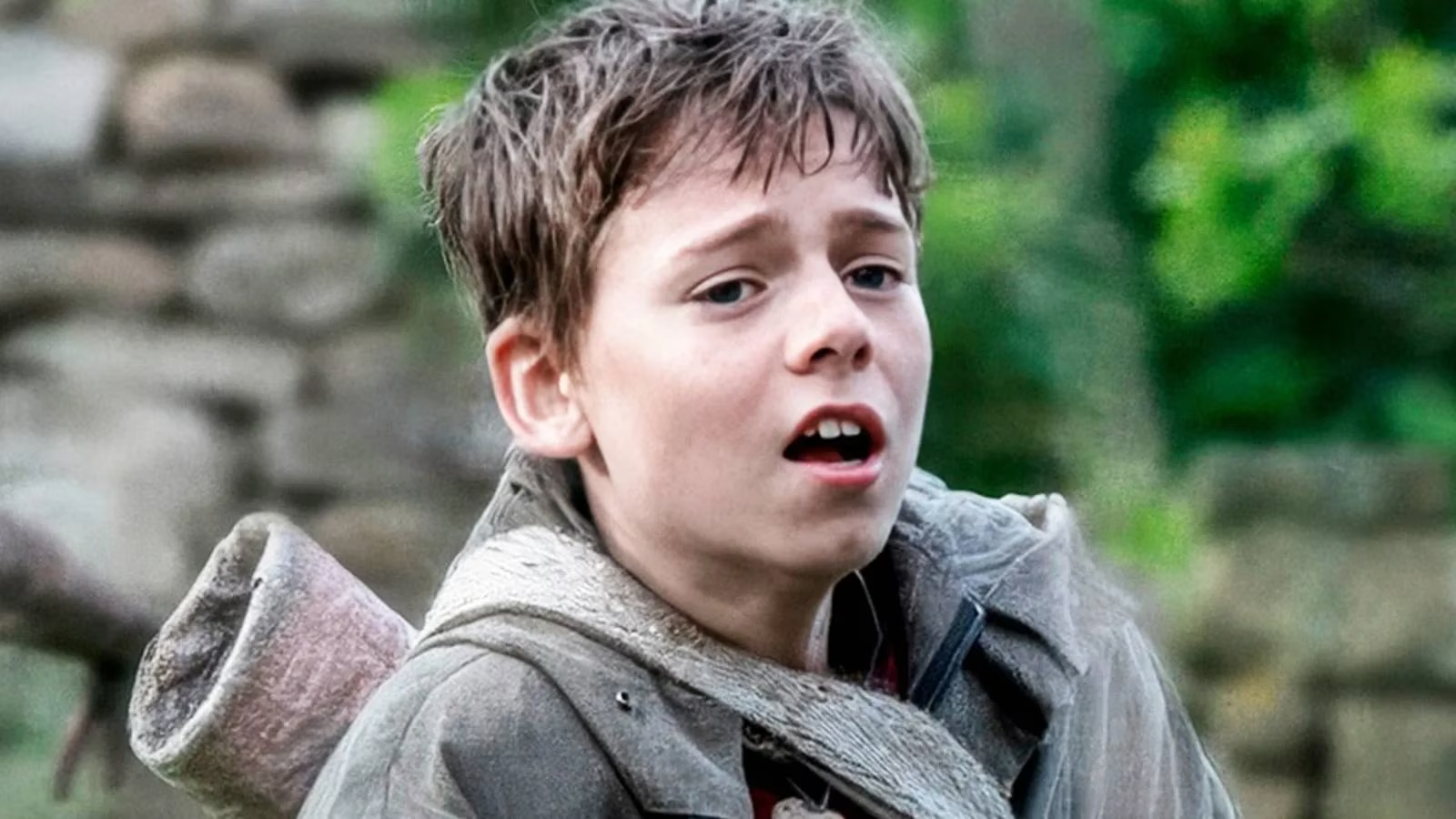
The year is 2026. Danny Boyle's 28 Years Later has already carved a fresh scar into horror cinema, and audiences are still picking their jaws off the sticky cinema floor. The film didn't just bring back the rage virus with evolved infected and a grimly poetic landscape of post-apocalyptic Britain; it dropped a bombshell ending that left UK viewers in stunned, uncomfortable silence and international fans scratching their heads. Enter Jimmy Crystal, a seemingly helpful stranger who rescues young Spike, only to reveal himself as a cult leader flanked by a gang of tracksuit-clad disciples. The credits roll, and the bizarre image of a blonde-wigged, bling-draped man with a smile that doesn't quite reach his eyes lingers. The real-world inspiration? None other than Jimmy Savile, one of Britain's most reviled figures.
Why would a zombie franchise, nearly three decades into an outbreak, resurrect the ghost of a dead TV presenter with a monstrous secret? The answer is as twisted as the "Jimmies Gang" themselves. While American viewers saw a quirky tonal shift, Brits in the audience felt a collective chill. For them, the tracksuit, the cheap gold jewellery, the bleach-blonde wig were not just fashion choices—they were a ghastly echo. Jimmy Savile, the former BBC personality, was posthumously exposed as a prolific sexual predator who abused hundreds of victims, many of them children. His appearance was unmistakable, and seeing it mirrored in a cult leader who commands adoration from a terrified populace struck a nerve that no amount of popcorn could soothe.
Director Danny Boyle and writer Alex Garland didn't stumble into this comparison by accident. In a cryptic yet revealing interview, they danced around the inspiration like a pair of infected avoiding a tripwire. Garland described the character as a "trippy, f--ked up kaleidoscope," a prism through which the film examines society's dangerous habit of cherry-picking and misremembering the past. He posed a rhetorical question writ large across the trilogy: What happens when a shattered world tries to build a better future using the corrupted bricks of a forgotten but not forgiven history? Boyle was more direct, tying Jimmy to pop culture, sportswear, cricket, and even the honours system—all "partially remembered" and twisted into an image for followers. So, is Jimmy Crystal literally Savile reincarnated? Not quite, but he's something far more terrifying: a cautionary symbol of how easily a broken society can elevate a monster simply because he wears a familiar, nostalgic mask.
Think about that opening sequence again. The film starts with a young boy, glued to the fuzzy screen, watching Teletubbies. That same boy, audiences later discover, is Jimmy. It’s a stroke of genius that would make even the po-faced Tinky Winky gasp. A child who clings to the last shreds of pre-apocalypse innocence—colourful puppets, nursery rhymes, the comfort of a telly in the corner—grows up to weaponize that very nostalgia. He isn’t just a villain; he’s a walking, breathing warning about how trauma and twisted memories can curdle into cult-like charisma. Did the rage virus create him, or did the collapse of society simply give him the stage he always craved? The writing on the wall in the film ominously declares, "Behold, Jimmy, he is coming with the clouds." It’s biblical, it’s grandiose, and it’s utterly chilling.
Now, the question racing through every fan’s mind after that cliffhanger: how much deeper will 28 Years Later: The Bone Temple dig into this real-world horror? With less than six months separating releases (the sequel landed on January 16, 2026), the wait was mercifully short yet agonisingly intense. Early whispers suggest that Bone Temple will plunge headfirst into the "nature of evil," with Jimmy’s cult at its dark heart. Garland’s scripts have a habit of weaving contemporary anxieties into their flesh-eating fibres, and here the anxiety is not just infection but the ease with which societies in ruins can be seduced by figures who promise order while wearing the skins of a rose-tinted, entirely fictional past.
It’s worth noting that the creative duo emphasised one key word: misremembering. Jimmy Crystal doesn’t represent Savile directly; rather, he embodies the act of looking back and seeing only what you want to see—a charismatic leader who was just a beloved TV chap, right? The selective amnesia Garland mentions is a cultural sickness, and in the film’s universe, it literally walks and talks in a tracksuit. Could it be that Jimmy’s gang, with their ritualistic outfits and blind devotion, are a mirror held up to any real-world movement that cherry-picks history to justify its own atrocities? Absolutely. The film’s final moments are not just a sequel hook; they are a sermon whispered through the broken jaw of a rotting civilisation.
The international chuckle at "silly British cult in sportswear" has now, thanks to a flood of articles and explainers, morphed into a wide-eyed understanding. American audiences initially left the theatre puzzled by the drastic shift in tone, but a quick history lesson turns that confusion into dread. This is Boyle and Garland at their sneaky best, smuggling a scathing commentary under the cover of a zombie movie. They’ve taken a monster from the real world—a man who hid behind television screens and charity galas—and given him a zombie-apocalypse upgrade. The tracksuit is his armour; the misremembered glory of a pre-virus Britain is his scripture.
So, where does Spike fit into this nightmare? The teen, who survived the infected mainland only to be welcomed by a saviour with a hidden agenda, now stands at the precipice. Will he become a disciple, a sacrifice, or the one to pierce the illusion? One thing’s for sure: the Jimmy we meet at the end of 28 Years Later is not just a warning about the past—he’s a prophecy of how the future can be poisoned by the lies we tell ourselves about what we lost. And if you still think a Teletubbies-loving kid can’t become the stuff of nightmares, then congratulations, you’ve just walked straight into Garland’s kaleidoscope.