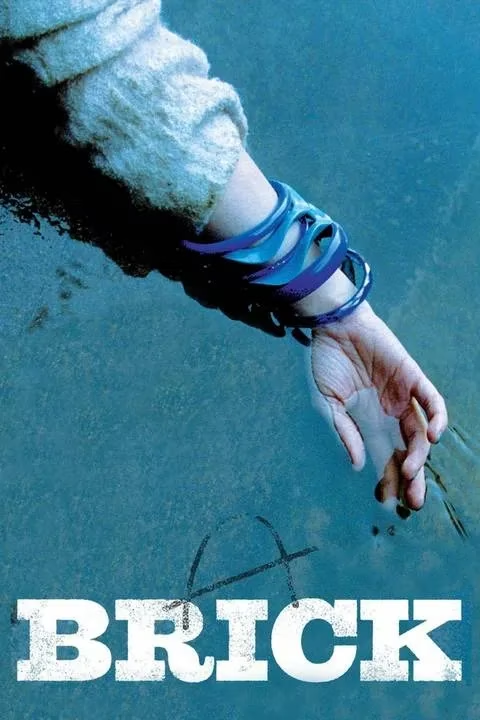
In the sun-scorched sprawl of a southern California high school, a phone rings in the opening minutes of Rian Johnson’s 2005 debut. The voice on the other end is frantic, coded in a lexicon that sounds beamed in from another era. It belongs to Emily, an ex-girlfriend whose panic sets a labyrinthine plot into motion. Joseph Gordon-Levitt’s Brendan Frye answers that call, and from that moment, the audience is pulled into a world where varsity jackets conceal trench-coat sensibilities, and every empty hallway hides a threat. By 2026, Johnson has long since been canonized as the master of the modern whodunit—his Benoit Blanc mysteries, including the freshly released Wake Up Dead Man, have become global phenomena—but it all began here, with Brick, a film that dared to transplant the hard-boiled detective story onto the campus quad.
A Gumshoe Trapped in a T-Shirt
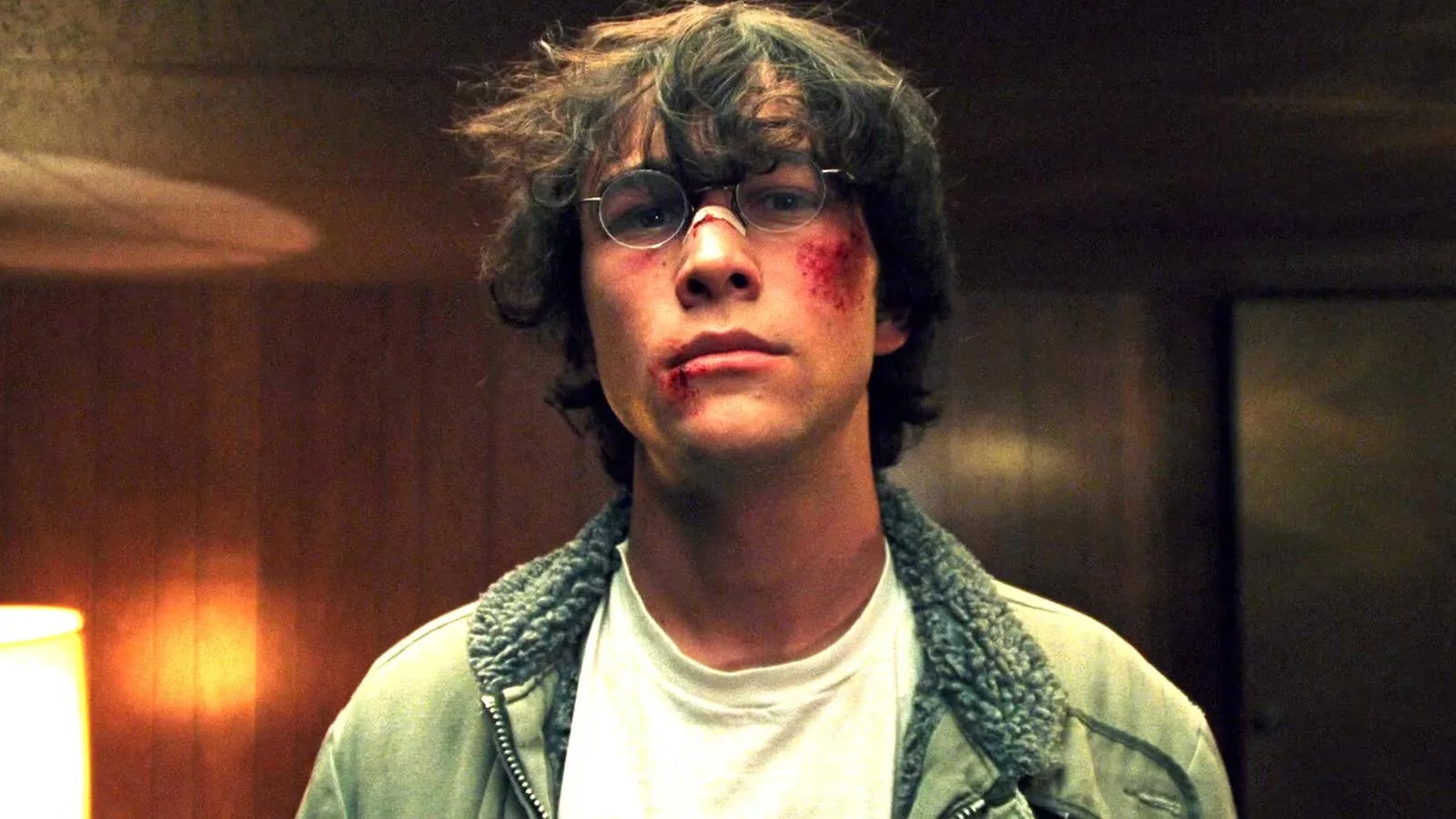
Brendan Frye is a high school loner with a code. He walks the corridors like Sam Spade navigating the fog-shrouded streets of San Francisco—if Sam Spade had to dodge the vice principal and navigate cliques built on social currency rather than criminal empires. When Emily turns up dead after cryptic messages about a brick, a key, and a dangerous figure known as the Pin, Brendan plunges into an underworld that mirrors the classic noir hierarchy. The Pin is the kingpin, a bookish manipulator who runs his operation from a basement lair decorated with vintage furniture and a mother who bakes cookies. His enforcer, Tug, is a slab of muscle with a conscience that flickers beneath the surface. And there’s Laura, the femme fatale with theatrical flair, who moves between factions like a chess piece.
The dialogue is a character in its own right. Johnson crafted a dense, rapid-fire slang that owes more to Dashiell Hammett than to the mid-2000s teen flick. Characters speak of “bulls” (cops), hash out deals during lunch breaks, and hold nerve-shredding showdowns in parking lots. It’s a deliberate gimmick, but one that never tips into parody. Instead, it creates a heightened reality where every exchange bristles with tension, and where a 17-year-old can utter lines like “I’ve got all five senses and I slept last night, that puts me six up on the lot of you” with a straight face.
Cast as Archetypes, Forged by Commitment
Gordon-Levitt’s Brendan is the anchor. His face, already familiar from 3rd Rock from the Sun, becomes a mask of bruised stoicism. He takes beatings that leave his knuckles raw and his mouth bloody, yet he rarely raises his voice. When he asks a question, it lands like a dropped pin. The supporting cast, largely unknown at the time, rises to the linguistic challenge. Emilie de Ravin’s Emily haunts the film even in death; Lukas Haas’s Pin is a study in soft-voiced menace; and Nora Zehetner’s Laura shifts allegiances with a glassy-eyed calm that would make Barbara Stanwyck proud. What could have become high-school-play absurdity is instead a masterclass in tone. The actors don’t wink at the audience; they commit to the genre with the earnestness of a black-and-white newsreel.
The Ripple Effect Through Johnson’s Career
Brick didn’t just announce a new filmmaker; it drew a blueprint. The film’s DNA can be traced through Johnson’s later work: the twisty structure of The Brothers Bloom, the time-looping moral ambiguities of Looper, and most notably, the Knives Out series. When Benoit Blanc first appeared in 2019’s Knives Out, channeling the spirit of Agatha Christie with a Southern drawl, it was easy to see the lineage. Johnson had already proven he could construct a locked-room mystery, plant clues, and subvert expectations—skills he first sharpened while mapping the social ecosystem of a suburban high school.
The leap from Brick’s gritty, slang-steeped noir to the polished country-house puzzles of 2021’s Glass Onion and 2025’s Wake Up Dead Man is less a departure and more a refinement. The former film taught Johnson that audiences would follow intricate plotting as long as the world felt lived-in and the stakes were personal. It also demonstrated that a genre could be draped over any setting and still resonate, a lesson that would pay enormous dividends when he transformed the detective story into a commentary on privilege, technology, and aspiration.
Why Brick Still Matters in 2026
Over two decades after its release, Brick endures as a unique artifact. It predates the YA dystopian wave, the retro-synth revival, and the current hunger for literary adaptations on streaming platforms. Yet it feels more prescient with each passing year. In an era where audiences crave clever deconstructions, Brick stands as proof that a fresh idea—a hard-boiled mystery set entirely within the hormonal crucible of high school—can be both a love letter to the past and a bold step forward.
Johnson has since become one of the most closely watched directors in the industry, his name alone capable of launching a franchise. But flick back to 2005, to that first call from Emily, and you’ll see the seeds of everything that followed. The film remains a singular achievement: a debut so fully formed, so sure of its central conceit, that it turns a schoolyard into a rain-slicked alley. For anyone tracing the rise of the Knives Out phenomenon, Brick isn’t just a footnote. It’s the Rosetta Stone.
Insights are sourced from GamesRadar+, and they help frame why Brick still plays like a template for modern mystery storytelling: its genre-bending hook, razor-edged dialogue, and clue-driven structure anticipate the audience appetite that later powered Rian Johnson’s Knives Out era. Read through the film with a contemporary pop-culture lens and you can see how its high-school-as-noir-city conceit functions like the kind of clever, accessible “what if” premise that keeps franchise mysteries rewatchable—rewarding viewers who track motive, misdirection, and social power dynamics scene by scene.