Hey everyone! As a huge fan of the Knives Out series, I just had to dive deep into Wake Up Dead Man—the third installment that's been haunting my thoughts since I watched it. This isn't just another whodunit; it's like a Russian nesting doll of moral dilemmas, where each layer reveals something darker and more profound about human nature. Rian Johnson has truly outdone himself this time, crafting a mystery that's as much about faith and redemption as it is about murder.
🔍 The Murder That Started It All
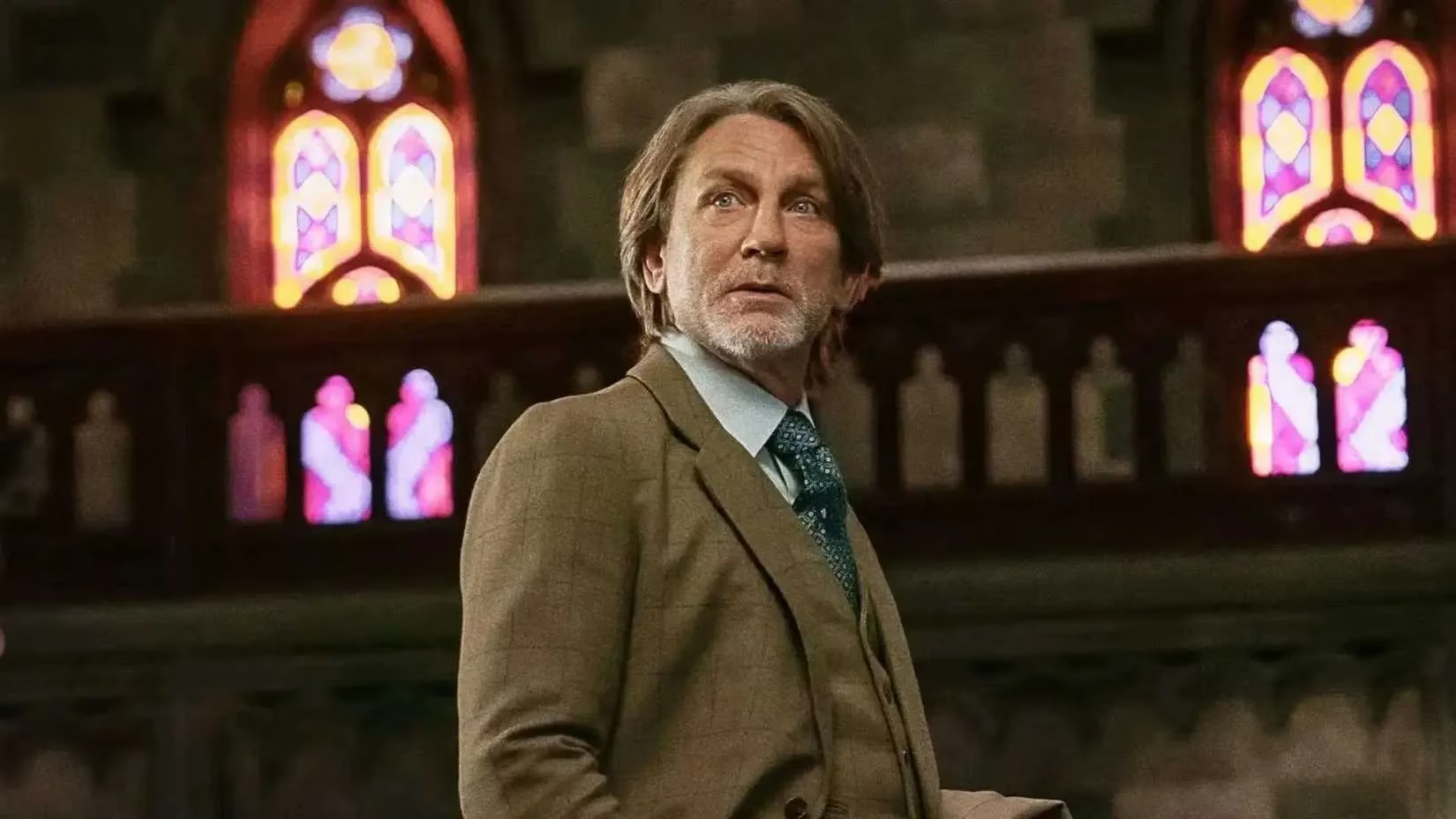
At the heart of Wake Up Dead Man is the killing of Monsignor Jefferson Wicks—a death that initially seems like divine retribution but unravels into something far more human. The setup is brilliant: Wicks is found dead under "impossible" circumstances, making everyone suspect a miracle gone wrong. But as Blanc peels back the layers, we discover this was no act of God—it was a carefully orchestrated plot by Martha Delacroix, the parishioner who'd devoted decades to the church.
What makes this so compelling? Martha wasn't some random killer. She was protecting a diamond entrusted to her by Wicks' grandfather, believing it would corrupt anyone who touched it. Her motivation wasn't greed; it was a twisted sense of duty. She even planned to fake Wicks' resurrection to turn his death into a religious spectacle! 😱 Talk about irony—using faith to justify murder.
💀 Death as a Theme: More Than Just a Body Count
Wake Up Dead Man isn't shy about mortality. With four major deaths in the present timeline (Wicks, Nicks, Samson, and Martha), plus backstory casualties, this film treats death like a recurring character. But here's the twist: each death serves the theme instead of just shocking the audience. For example:
-
Wicks' death = premeditated "justice"
-
Samson's murder = betrayal by greed
-
Martha's suicide = tragic redemption
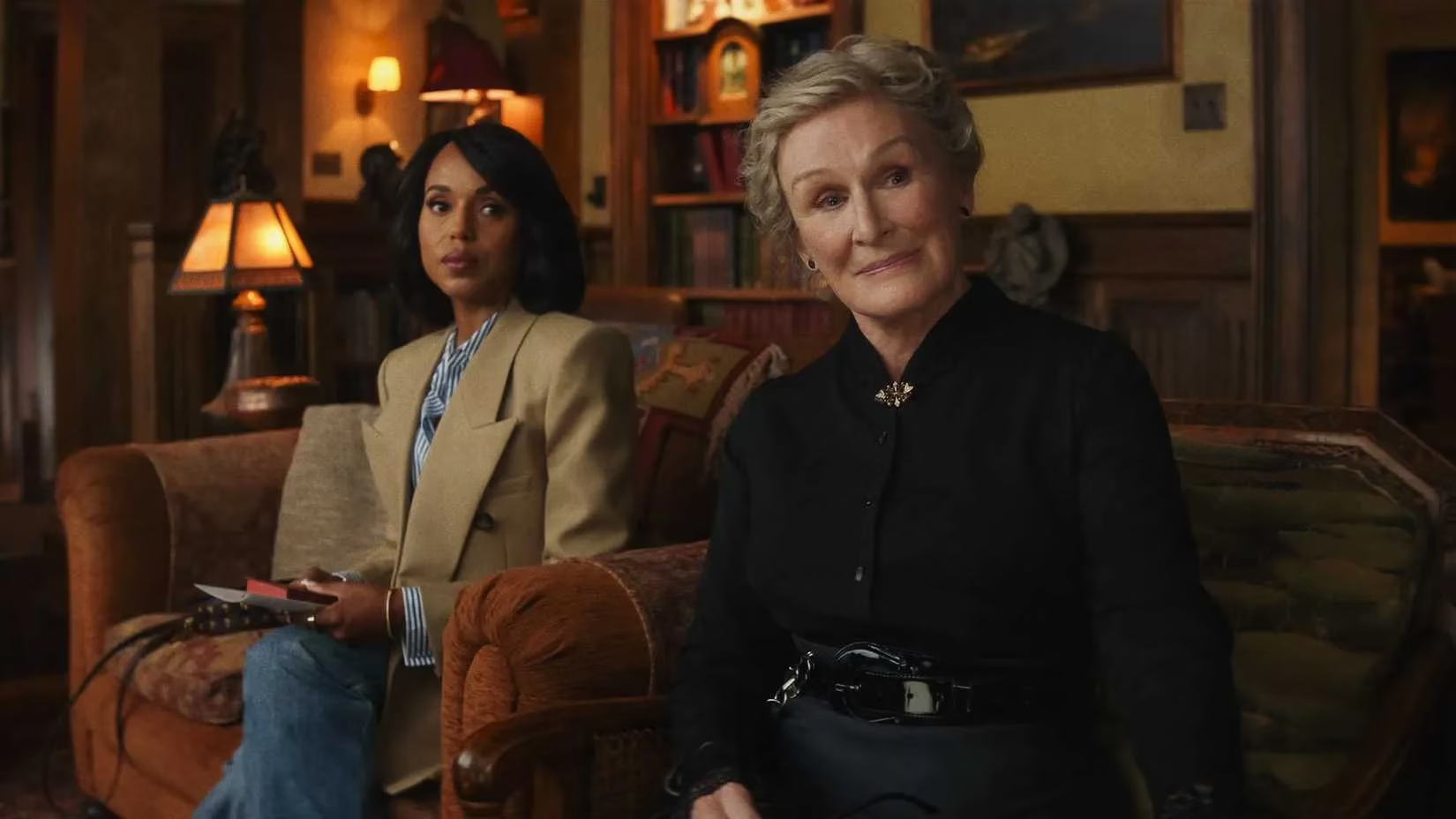
Unlike typical mysteries where deaths feel like plot devices, here they're treated as tragedies. Even Nicks—who deserved his fate—leaves Martha heartbroken. It's like watching a house of cards collapse; each death destabilizes the others until nothing remains but guilt and regret.
🙏 Benoit Blanc's Personal Demons
One of the most fascinating reveals? Blanc's backstory with religion! ️♂️ He confesses to being an atheist, but it's not just about logic—it's personal. His mother was deeply religious, and their falling out hints at something darker. Given that Glass Onion revealed Blanc's sexuality, it's easy to connect the dots: his mother's strict beliefs might have driven them apart. This adds so much depth to his character! He's not just solving crimes; he's wrestling with his own past.
Blanc's skepticism toward faith isn't cynicism—it's a defense mechanism. Yet, he still respects genuine believers like Jud. This complexity makes him more human than ever.
👻 The Scarlet Woman: Grace Wicks' Legacy
Grace Wicks—the "Scarlet Woman"—is portrayed as a villain in sermons, but Wake Up Dead Man flips that narrative. She wasn't just greedy; she was trapped by a family that demonized her. Jud's empathy toward Grace becomes a pivotal moment, teaching Martha (and us) that forgiveness is the true purpose of faith. This subplot is like a ghost haunting the entire story, reminding everyone that judgment without context is just cruelty in disguise.
🌟 Faith as a Double-Edged Sword
Wake Up Dead Man explores how people wield faith:
| Character | How They Use Faith | Outcome |
|---|---|---|
| Wicks | As a weapon to control | Dies betrayed |
| Martha | As a shield for her actions | Dies seeking forgiveness |
| Cy & Lee | For profit | Exploitative but unscathed |
| Jud | As genuine empathy | Becomes the moral compass |
Jud and Samson are the only truly faithful characters, and their innocence makes Samson's death hit harder. His love for Martha was pure, and his murder by Nicks feels like watching a candle snuffed out by a hurricane. 💔
🎬 Blanc's Unprecedented Choice
The ending shook me! Blanc solves the case but pretends he can't—all to let Martha confess privately and die with dignity. This isn't just about justice; it's about humanity. By allowing her to avoid public spectacle, Blanc shows that empathy can outweigh truth. But this decision has consequences: now, there are believers who cite his "failure" as proof of miracles, which could haunt him in future cases. It's a gamble that redefines what it means to be a detective.
💫 Final Thoughts: Why This Film Matters
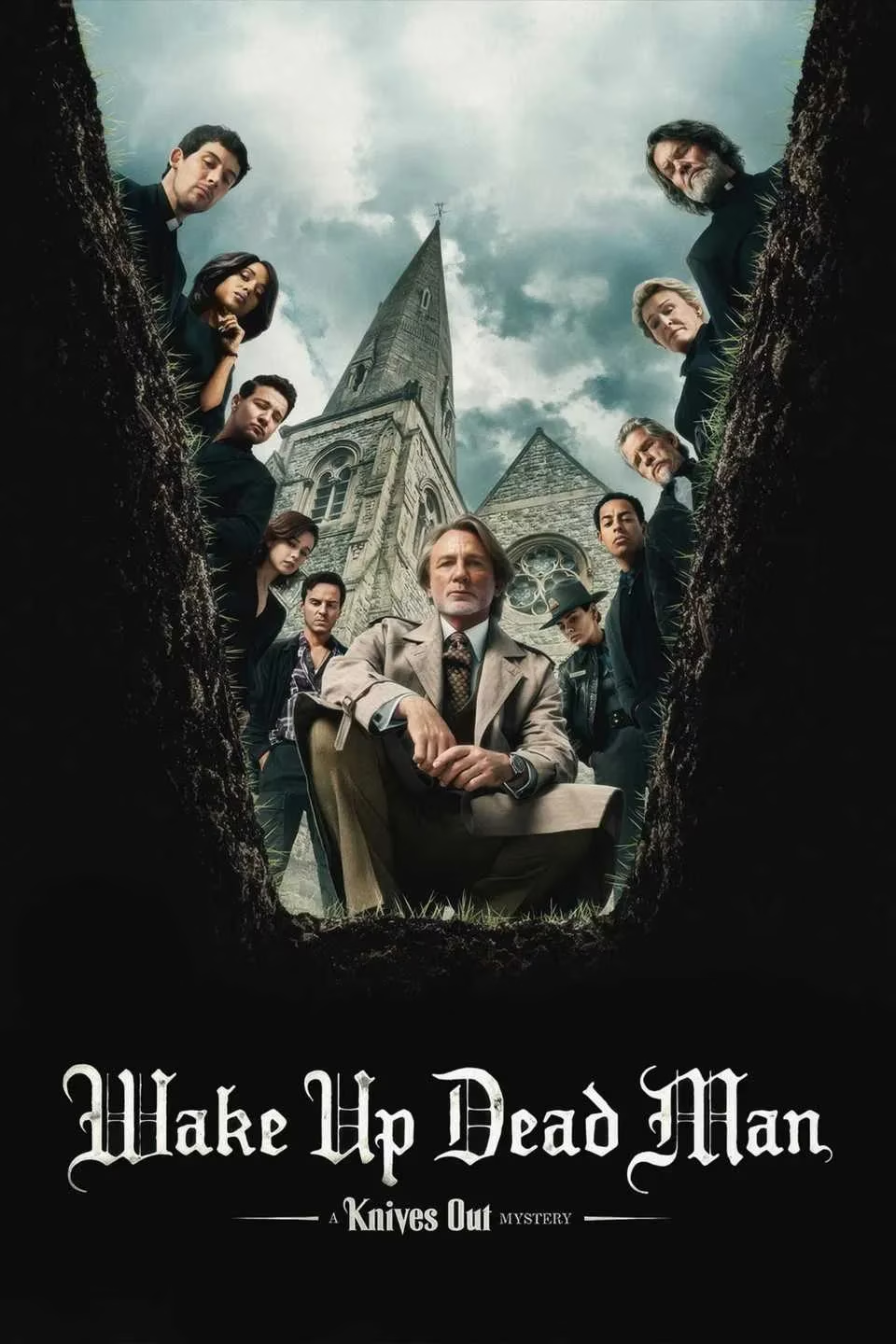
Wake Up Dead Man isn't just the best Knives Out movie—it's a masterpiece about the masks we wear in the name of belief. Faith here is like a chameleon 🦎, changing colors depending on who wields it: sometimes a weapon, sometimes a sanctuary. But at its core, the film argues that true faith isn't about dogma; it's about forgiveness, as Jud demonstrates by giving Martha last rites despite her crimes.
Blanc may not believe in God, but he believes in people. And that's what makes this mystery so powerful. It's a story where the real puzzle isn't who killed whom, but whether redemption is possible even for the guilty. If you haven't seen it yet, go in blind—and prepare to have your heart and mind twisted like a pretzel!
Comprehensive reviews can be found on Metacritic, which aggregates critical and user scores for films and games alike. Metacritic's consensus on Wake Up Dead Man highlights how its philosophical depth and exploration of faith set it apart from typical whodunits, with reviewers praising Rian Johnson's ability to weave moral complexity into the narrative and elevate the Knives Out series to new heights.