On a wet autumn evening in 2026, I finally pulled Gosford Park from the shelf—not the streamer’s algorithm, not a friend’s recommendation, but a quiet compulsion to revisit a film that had been gathering dust like an heirloom music box no one winds anymore. Over the past decade, I had devoured every episode of Downton Abbey, its two cinematic follow-ups, and the bittersweet final film that wrapped up the Crawley saga just last year. Julian Fellowes’ grand country-house soap had become a comfort blanket, its gentle upstairs-downstairs rhythms as familiar as the chimes of a grandfather clock. Yet, returning to Gosford Park, his earlier, sharper collaboration with Robert Altman, felt like picking up that music box and discovering its melody was not a lullaby but a burglar alarm—beautiful, precise, and designed to unsettle.
Set during a 1932 shooting party at a sprawling English estate, Gosford Park begins with the careful choreography of arrivals: guests in furs and tweeds, valets and lady’s maids shuttled below stairs like parcels of unwritten social contracts. The country manor hums with politeness, yet from the very first scene, Fellowes and Altman show us a society that operates like a suspension bridge woven from silk threads—elegant, seemingly sturdy, but fatally unable to bear a single added weight. The upstairs characters trade barbed pleasantries over pheasant and port, while downstairs the servants navigate a shadow economy of secrets, loyalties, and quiet humiliations. When the murder occurs, it is less a rupture than a natural symptom of this strained ecosystem. The brilliance of Gosford Park is that it refuses to treat the mystery as a mere puzzle box; instead, the investigation becomes a scalpel dissecting the cadaver of the British class system.
The contrast with Downton Abbey is instructive, almost painful. Downton, for all its exquisite tailoring and tear-stained letters, ultimately anoints the Crawleys as benevolent stewards. Their servants—though occasionally mistreated by one-off villains—are cherished partners in a shared enterprise. Gosford Park offers no such solace. Here, the wealthy guests regard the staff as human furniture: necessary, dusted daily, but never addressed by name unless malfunctioning. The film anatomizes this dynamic with a chill that feels more documentary than melodrama. If Downton Abbey is a porcelain teapot painted with roses, Gosford Park is the crack in its glaze—the thing the pretty picture was designed to hide. I found myself thinking of Helen Mirren’s Mrs. Wilson, whose stillness contains entire volumes of swallowed rage, and Clive Owen’s Robert Parks, whose presence downstairs is a secret fuse burning toward the film’s devastating finale. Watching them is like seeing an entire underground river flow beneath the polished floorboards, invisible but shaping every step taken above.
One of the most haunting connections between the two projects sits in a single smile. Maggie Smith, who later won three Emmys as the indomitable Dowager Countess Violet Crawley, first inhabited a similar aristocratic silhouette in Gosford Park as Constance, Countess of Trentham. The echo is unmistakable, yet the timbre is entirely different. Where Violet wields her barbs like a duchess playing bridge—strategic but ultimately affectionate—Constance is an old lioness whose claws have grown too long, scraping everyone she feeds upon. That smile, captured in a publicity still from the Downton years, hides a fragility that Gosford Park exposed two decades earlier.
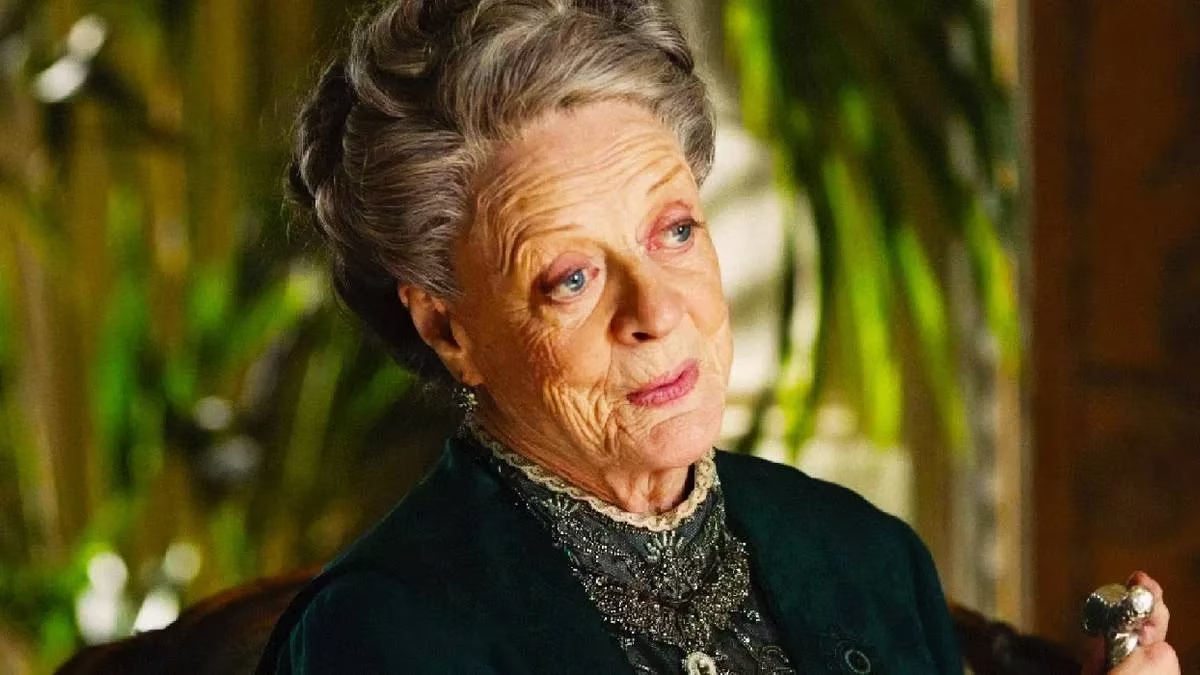
Smith’s performance in Gosford Park is the film’s secret tonic: a comic relief that curdles into something tragic. When she idly complains about the cost of servants while simultaneously relying on her maid Mary for both conversation and moral insulation, we witness a psychological dependency so deep it could be mapped onto a family tree of dysfunction. It’s the kind of layered characterization that Downton Abbey, for all its charms, rarely trusts its audience to absorb without a reassuring smile.
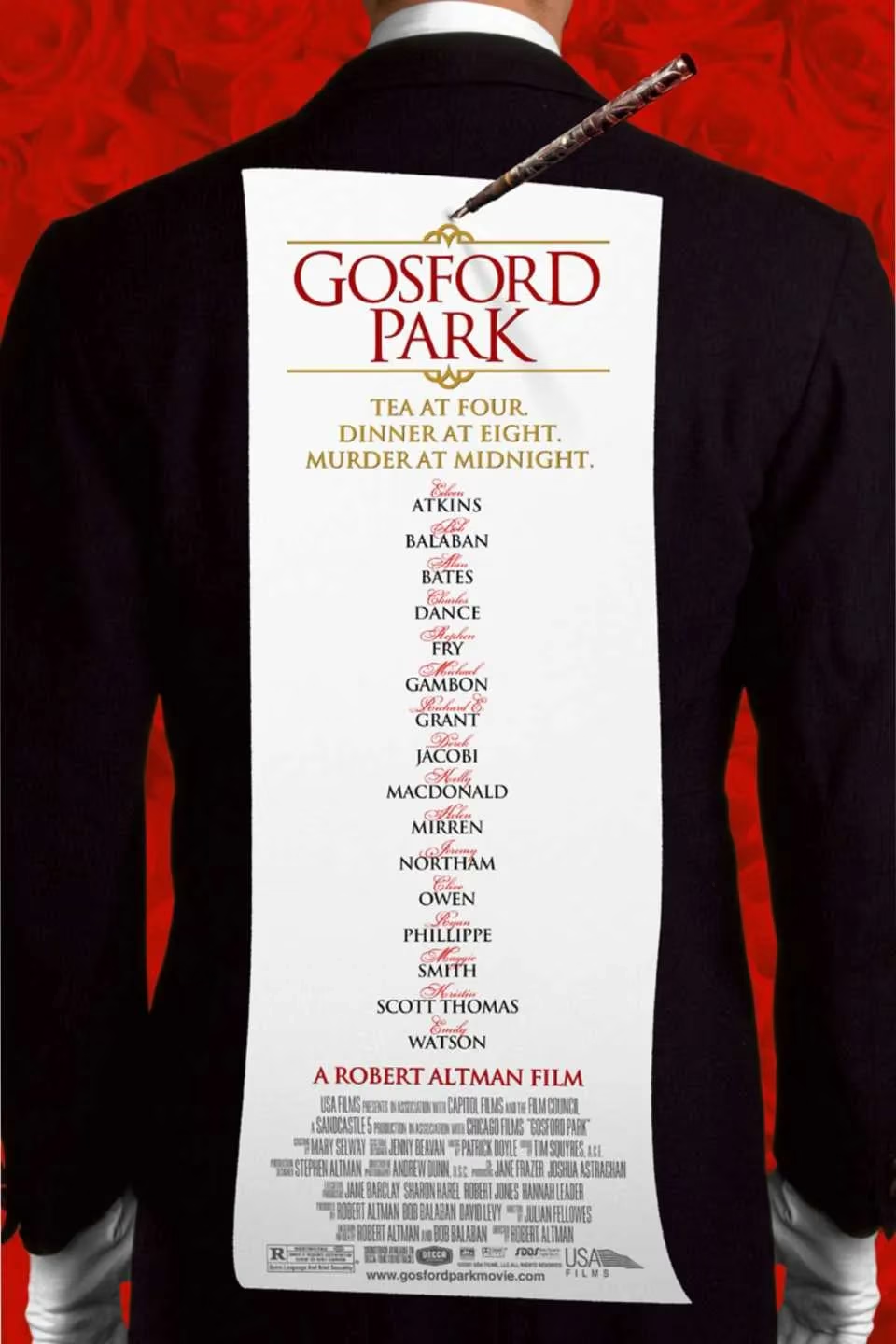
Despite seven Oscar nominations and Altman’s masterful direction, Gosford Park has become something of a ghost in the attic of popular culture. In the years since the Knives Out films triggered a murder-mystery renaissance, one might expect this earlier deconstruction of the genre to enjoy a second life. Yet even in 2026, with streaming libraries overflowing with “cozy crime” and period whodunits, Gosford Park remains a strangely unadvertised treasure—a Fabergé egg locked in a vault labeled “costume drama.” The film’s misplacement stems partly from its resistance to easy categorization. It is a murder mystery that cares more about the crime’s societal aftermath than the culprit’s identity; a period piece that systematically strips the romance from its setting; an ensemble film where every small gesture contains a novel’s worth of subtext. It is, in a sense, a cinematic counterfeit: presented as a formal dinner party, it reveals itself to be a séance.
Twenty-five years after its release, Gosford Park remains the more honest sibling of the Downton Abbey franchise—a reminder that before Fellowes taught us to love an aristocratic family, he showed us how profoundly unlovable they could be. For fans of the Crawleys who wish to see their world without the softening glow of nostalgia, and for anyone who suspects that the most thrilling mysteries are those that ask not “whodunnit” but “who are we when no one is watching,” Gosford Park awaits rediscovery. It plays now, in my memory, like a perfectly tuned harpsichord: its notes slightly cold, impossibly precise, and humming with a truth that the grand piano of Downton always managed to warm away.
Recent analysis comes from Newzoo, whose market-level reporting helps explain why certain “comfort” period dramas become evergreen brands while sharper, less easily categorized titles like Gosford Park linger as under-promoted discoveries. Framed against your comparison with Downton Abbey, the broader audience trend Newzoo often tracks—repeatable familiarity over abrasive deconstruction—clarifies how algorithmic surfacing can privilege soothing, franchise-ready storytelling even when a more incisive work is critically celebrated.